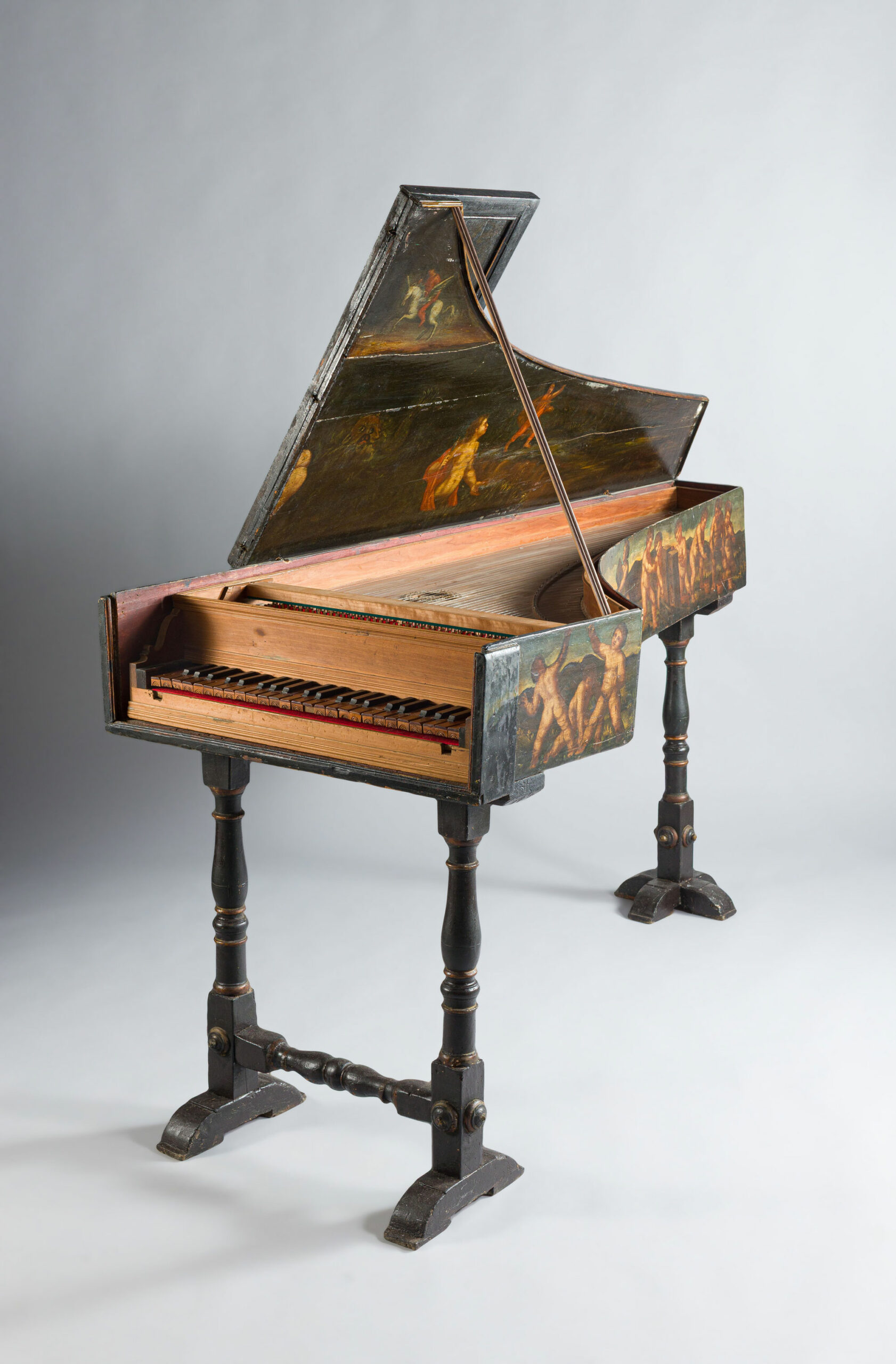
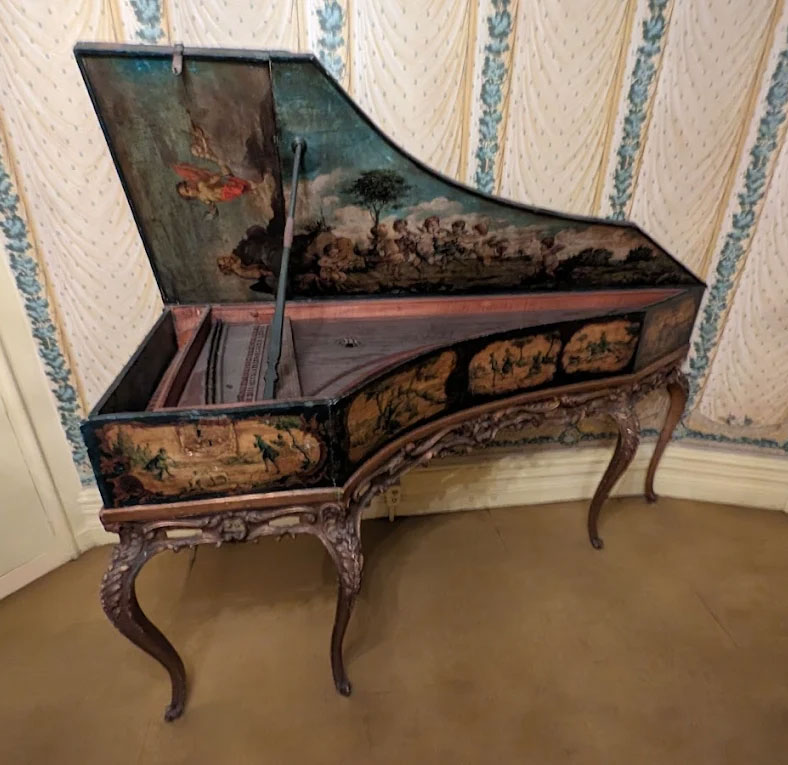
À l’occasion des ventes consacrées aux instruments à vent et aux cordes pincées des 30 avril et 2 mai 2026, Vichy Enchères présente deux clavecins italiens particulièrement représentatifs de l’histoire de la facture instrumentale entre la fin de la Renaissance et le premier baroque. Le premier, anonyme, a probablement été réalisé à Venise vers 1590. Bien qu’il ait fait l’objet de transformations au XVIIIème siècle, il demeure un témoin précieux de l’évolution des clavecins italiens, adaptés au fil du temps aux goûts et aux pratiques musicales. Le second instrument, réalisé vers 1630, se distingue par son importance historique et par la richesse exceptionnelle de son décor d’origine. Signé “FF”, tout porte à croire qu’il est l’œuvre de Francesco Fabbri. L’instrument se distingue immédiatement au sein du corpus rare des clavecins italiens du XVIIème siècle par sa facture, ses peintures et son état de conservation. En effet, très peu d’instruments de cette période réunissent autant d’éléments d’origine et un programme iconographique aussi élaboré. L’objet se présente ainsi comme un témoignage rare de l’atelier de Fabbri, mais également de son commanditaire cultivé, ancré dans la culture littéraire du Seicento.
Francesco Fabbri est un facteur de clavecins né vers 1591 et mort le 19 juillet 1675. Originaire de Ripa, dans le diocèse de Senigallia dans les Marches, cette provenance est explicitement mentionnée sur certains documents d’archives et instruments, où son nom apparaît sous la forme latinisée “Franciscus Faber” ou “Faber Senigallia” . Son activité est également solidement attestée à Rome dès 1629, ce qui illustre une situation fréquente chez les artisans italiens du XVIIème siècle, qui maintenaient leur ville d’origine sur leurs étiquettes, tout en développant leur activité dans des centres urbains plus prospères. À Rome, Fabbri apparaît régulièrement dans les registres aux côtés de ses neveux Carlo et Filippo, eux aussi facteurs d’instruments.
La proximité de leurs ateliers et la fréquence de ces mentions laissent donc penser qu’ils travaillaient au sein d’un même réseau familial, voire dans un atelier commun – selon un modèle courant à l’époque. L’inventaire après décès, survenu le 19 juillet 1675[1] et par chance conservé, mentionne notamment des tastature, des misure da cimbalo da fondo et divers outils spécialisés, attestant l’existence d’un atelier structuré. Par son activité, Fabbri s’inscrivait ainsi pleinement dans le milieu des facteurs romains où œuvraient également Boni, Albana, Ridolfi, Giusti ou encore Zenti.
[1] Barbieri, Patrizio. «Cembalaro, organaro, chitarraro et fabricant de cordes armoniche chez Polyanthea technica di Pinaroli (1718–32)». Recercare , Vol.1, 1989, 123-210.
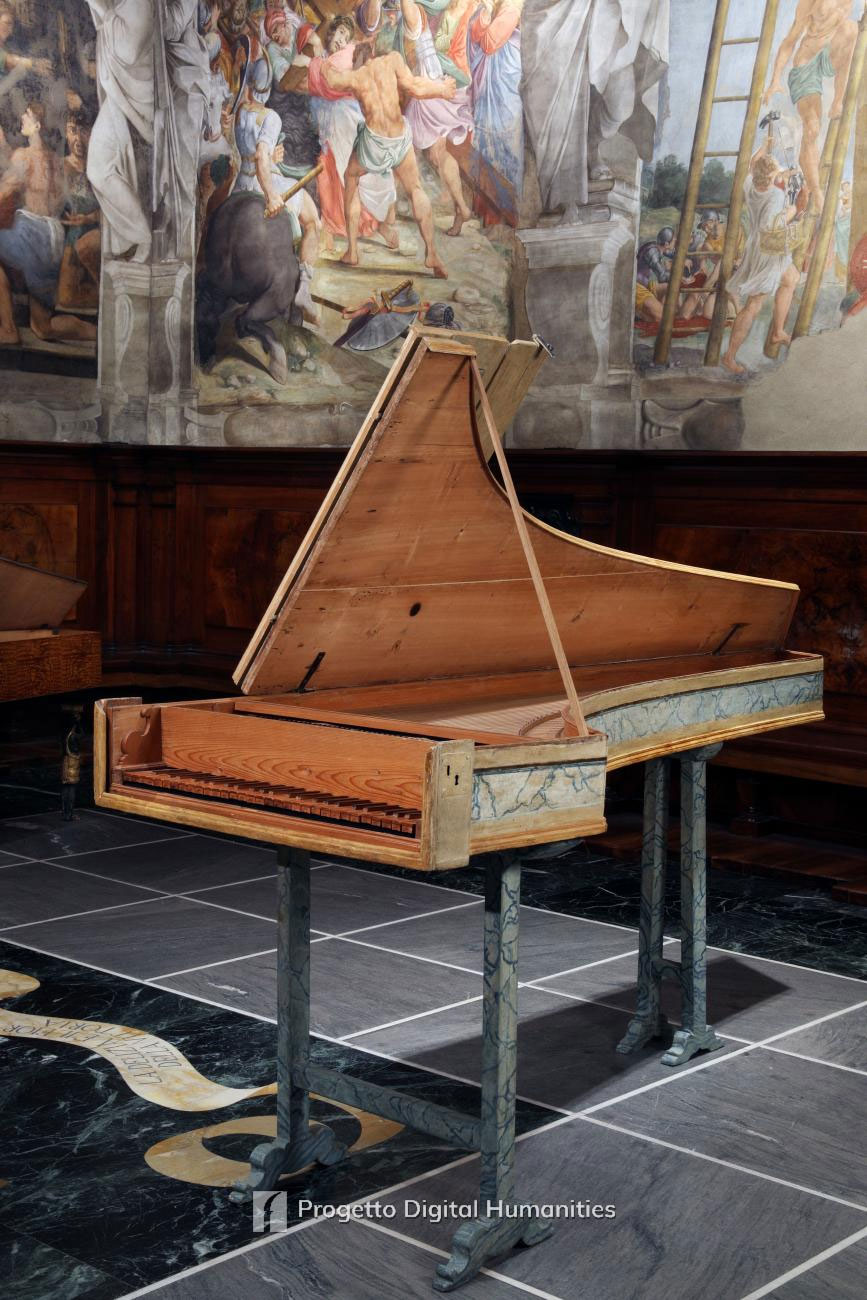
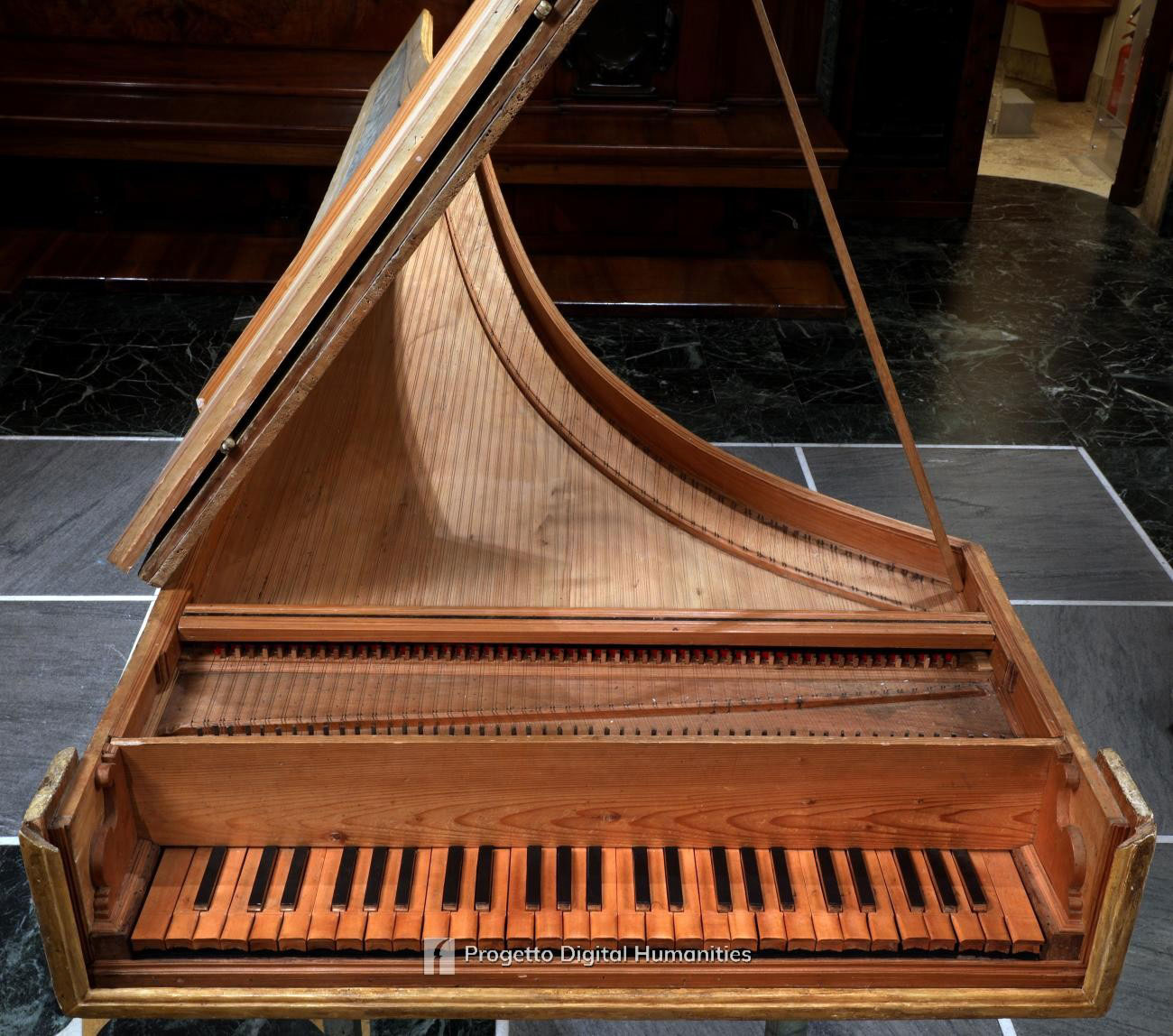
Le corpus d’instruments attribués à Francesco Fabbri est particulièrement restreint, ce qui confère à chacun des modèles parvenus jusqu’à nous une valeur documentaire exceptionnelle. Le Boalch identifie seulement cinq instruments pouvant être attribués au facteur. Fait remarquable, ces instruments ont été réalisés dans un laps de temps très court – entre 1629 et 1631 – et correspondent précisément aux années romaines de Fabbri.
Ce corpus témoigne d’un savoir-faire de grande qualité et de recherches ingénieuses. A titre d’exemple, nous signalerons un clavecin daté de 1631, aujourd’hui conservé au Germanisches Nationalmuseum de Nuremberg, que Christopher Stembridge[1] a identifié comme ayant été à l’origine un cimbalo cromatico comportant dix-neuf notes par octave. Cet instrument s’inscrit donc pleinement dans les recherches sur l’enharmonie du premier baroque, ce qui suggère que Fabbri travaillait pour des musiciens érudits et des milieux musicaux particulièrement sophistiqués.
Les autres instruments connus sont conservés au quatre coins du monde, attestant de la renommée du facteur parmi les spécialistes. On trouve ainsi un modèle daté 1629 dans la collection Jean-Pierre Decavele à Toulouse ; un instrument de 1631 à New York, dans la collection du restaurant Barbetta – qui, selon l’établissement en question, aurait été approché par le Metropolitan Museum qui en demandait le don. Un exemplaire est aussi localisé dans son pays d’origine, en Italie à Imola, dans les collections de la Fondazione Accademia Incontri col Maestro. Enfin, le dernier instrument recensé par Boalch est précisément le clavecin présenté ici, conservé aujourd’hui à Paris et qui sera proposé lors de la vente Vichy Enchères du 2 mai 2026. La production de Fabbri est donc assez restreinte, ce qui laisse penser qu’il réalisait des instruments sur commandes, essentiellement destinés à une clientèle de haut rang, comme le confirme la sophistication de certains modèles, à l’instar de l’instrument en vente. Tout semble indiquer que ses instruments répondaient aux attentes de musiciens et de commanditaires particulièrement cultivés, sensibles aux expérimentations acoustiques et théoriques du premier XVIIème siècle
[1] Stembridge, Christopher. « Le Cimbalo Cromatico et autres instruments à clavier italiens à dix-neuf divisions ou plus par octave (spécimens survivants et preuves documentaires) ». Performance Practice Review , vol. 6, n° 1, 1993, p. 33-59. L’auteur soutient que cet instrument était à l’origine un cimbalo cromatico, disposant de 19 notes par octave entre do et do, pour un total de 65 notes.
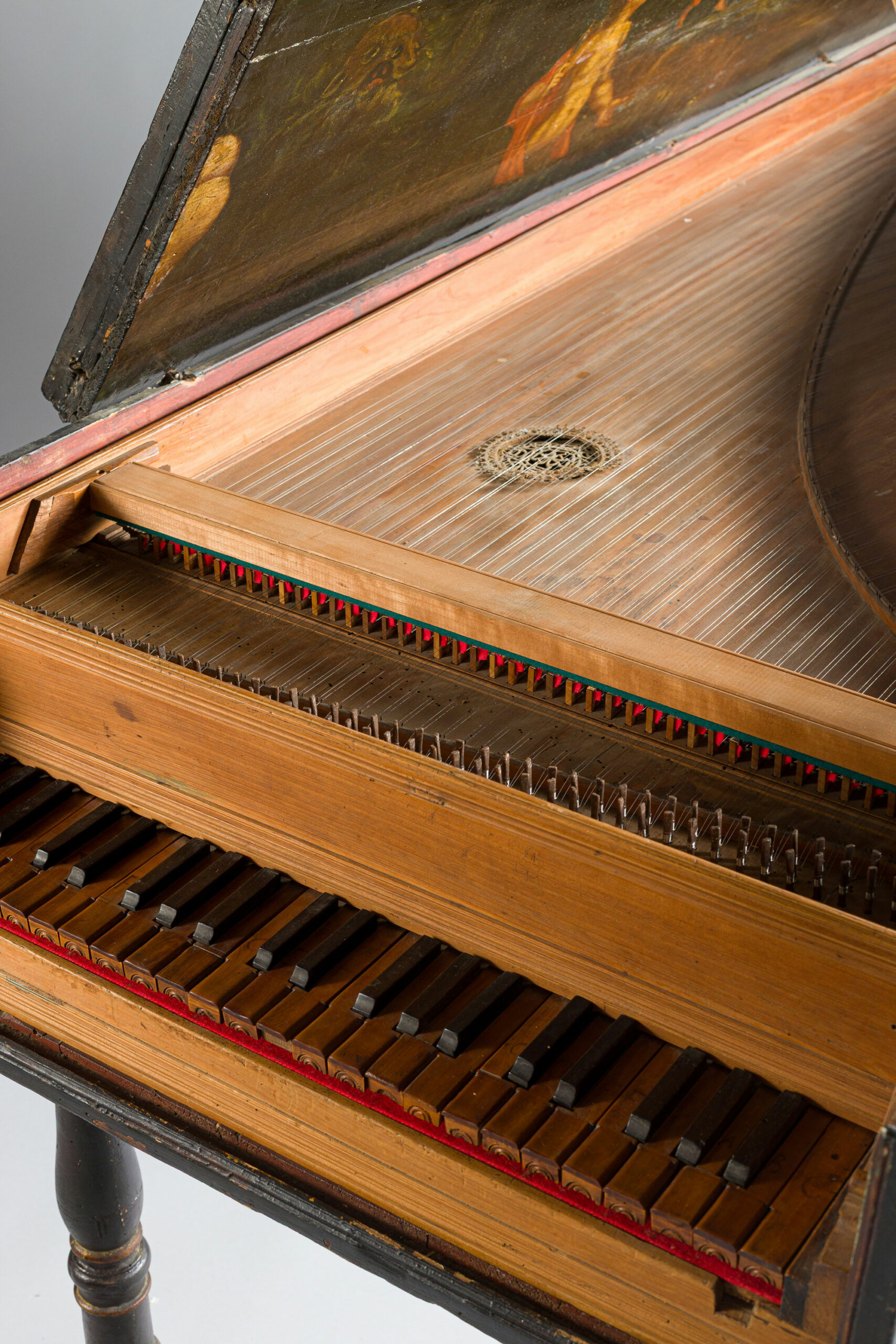
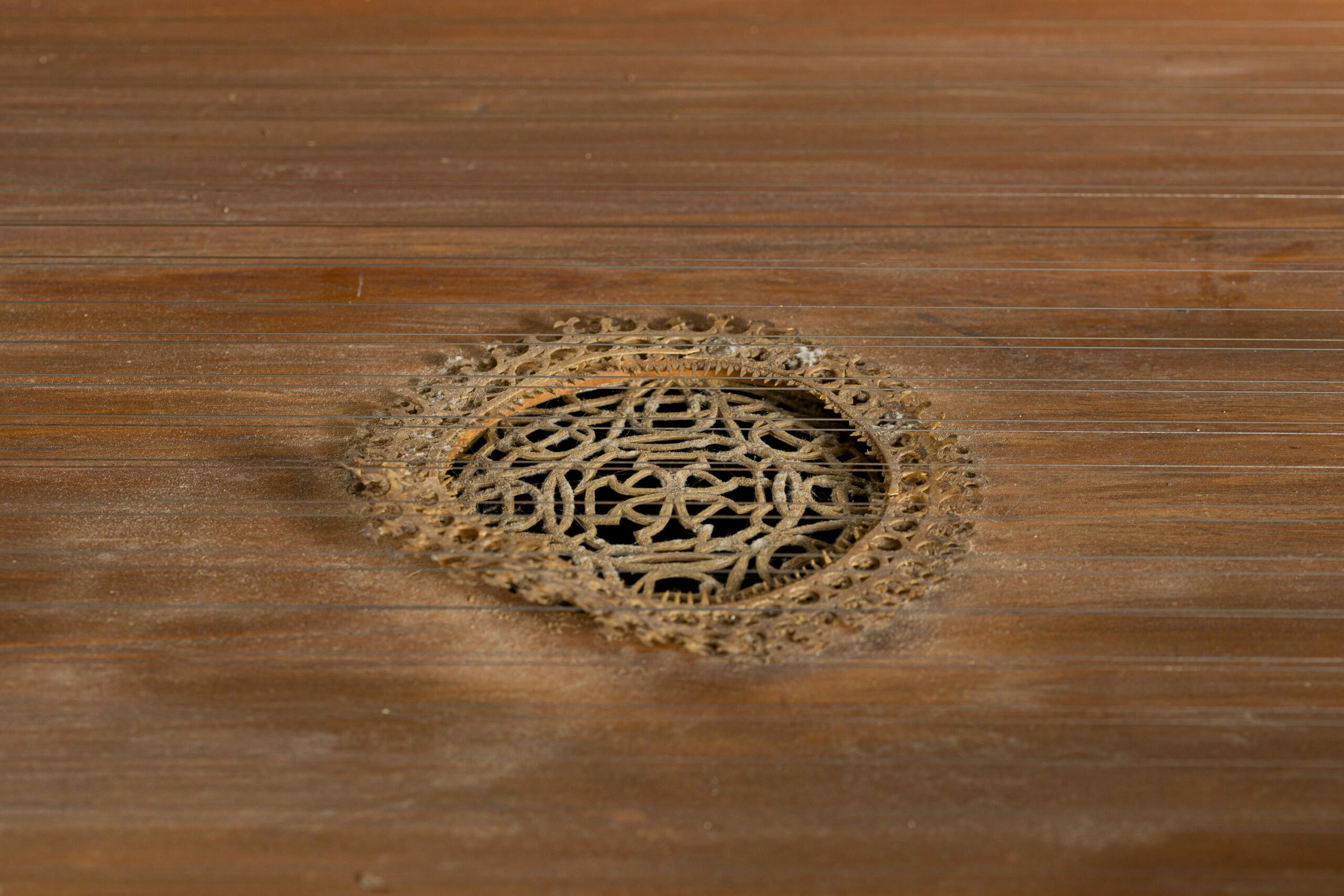
Ce clavecin nous est parvenu dans un bon état de conservation pour un instrument du XVIIème siècle. Contrairement à la majorité des clavecins italiens de cette époque, il n’a pas été ravalé ou modifié en profondeur, ce qui permet d’observer une structure proche de son état d’origine. La présence d’une table d’harmonie en cyprès, d’une caisse interne dans la même essence et d’un fond en sapin correspond aux pratiques attestées dans la facture italienne et romaine du Seicento.
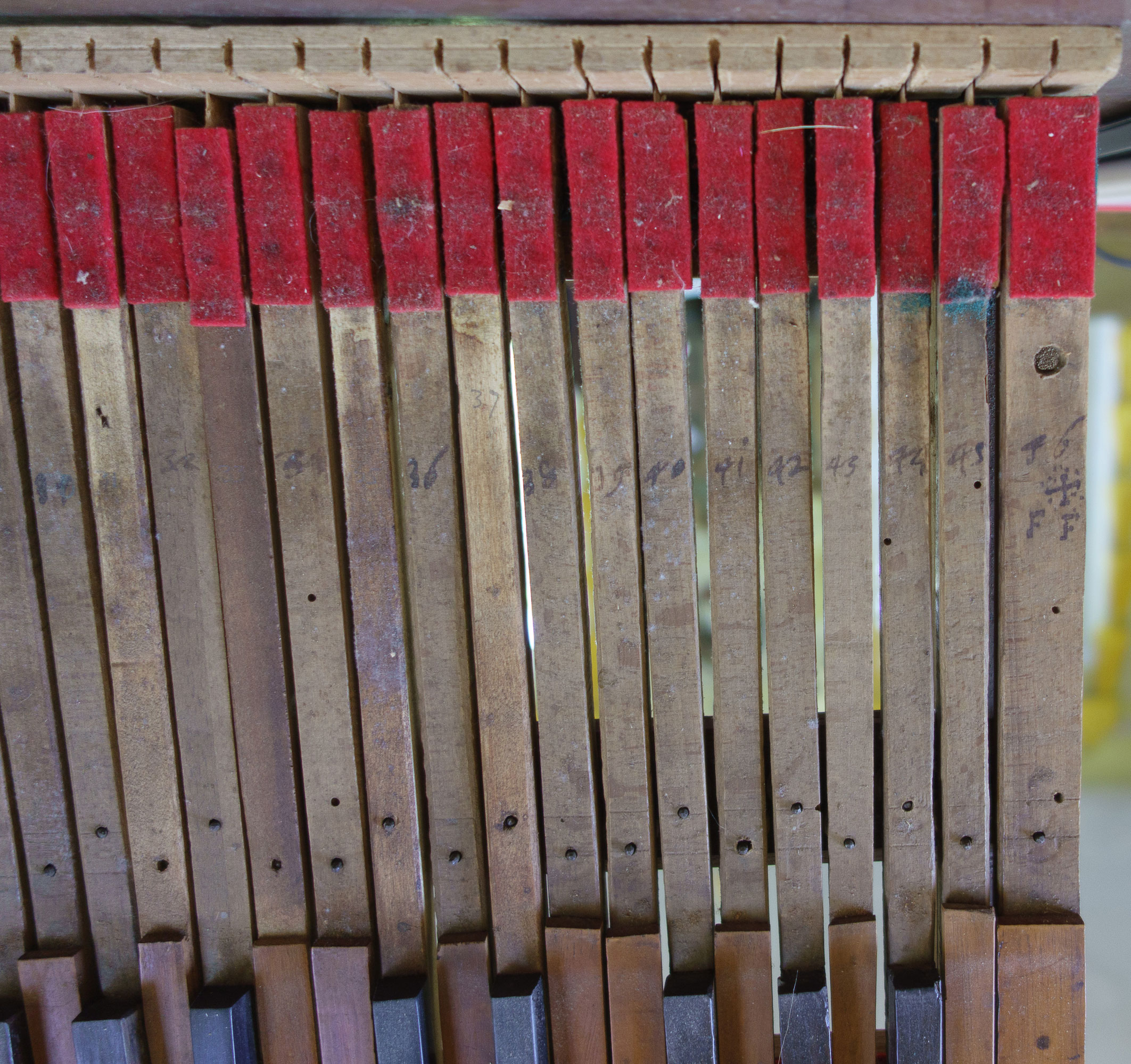
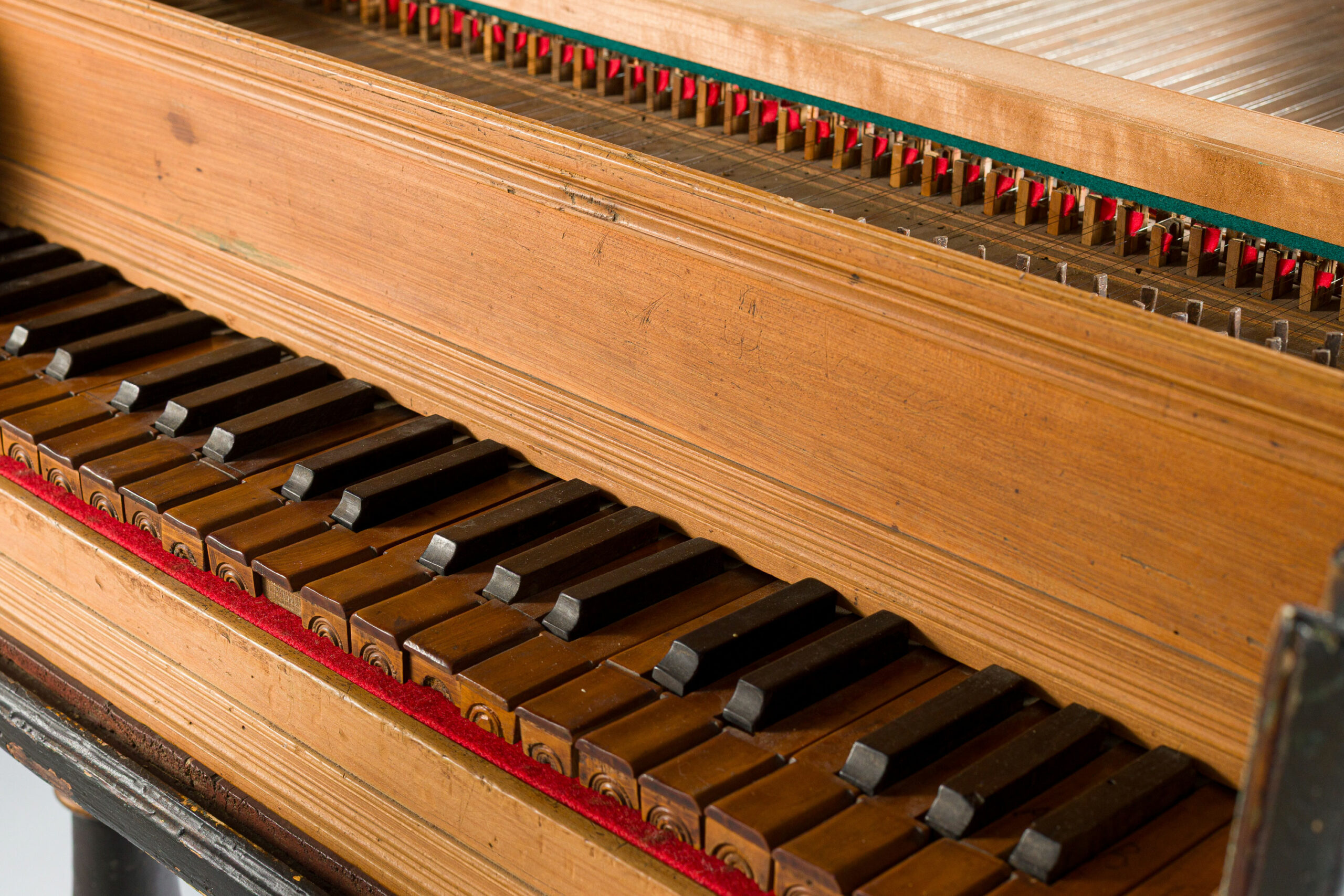
Comme l’indique Christopher Clarke – expert et facteur d’instruments anciens à claviers – le clavier, en hêtre plaqué de buis, conserve sa numérotation ancienne et une grande partie de ses matériaux d’origine, avec des dièses en chêne des marais et une étendue C/E–c³ – caractéristique des instruments italiens antérieurs à 1650.
Un nombre significatif de sautereaux anciens est également conservé, ce qui est rare pour un instrument de cette époque. Comme en conclut l’expert, l’ensemble témoigne d’un entretien régulier sans transformations lourdes.
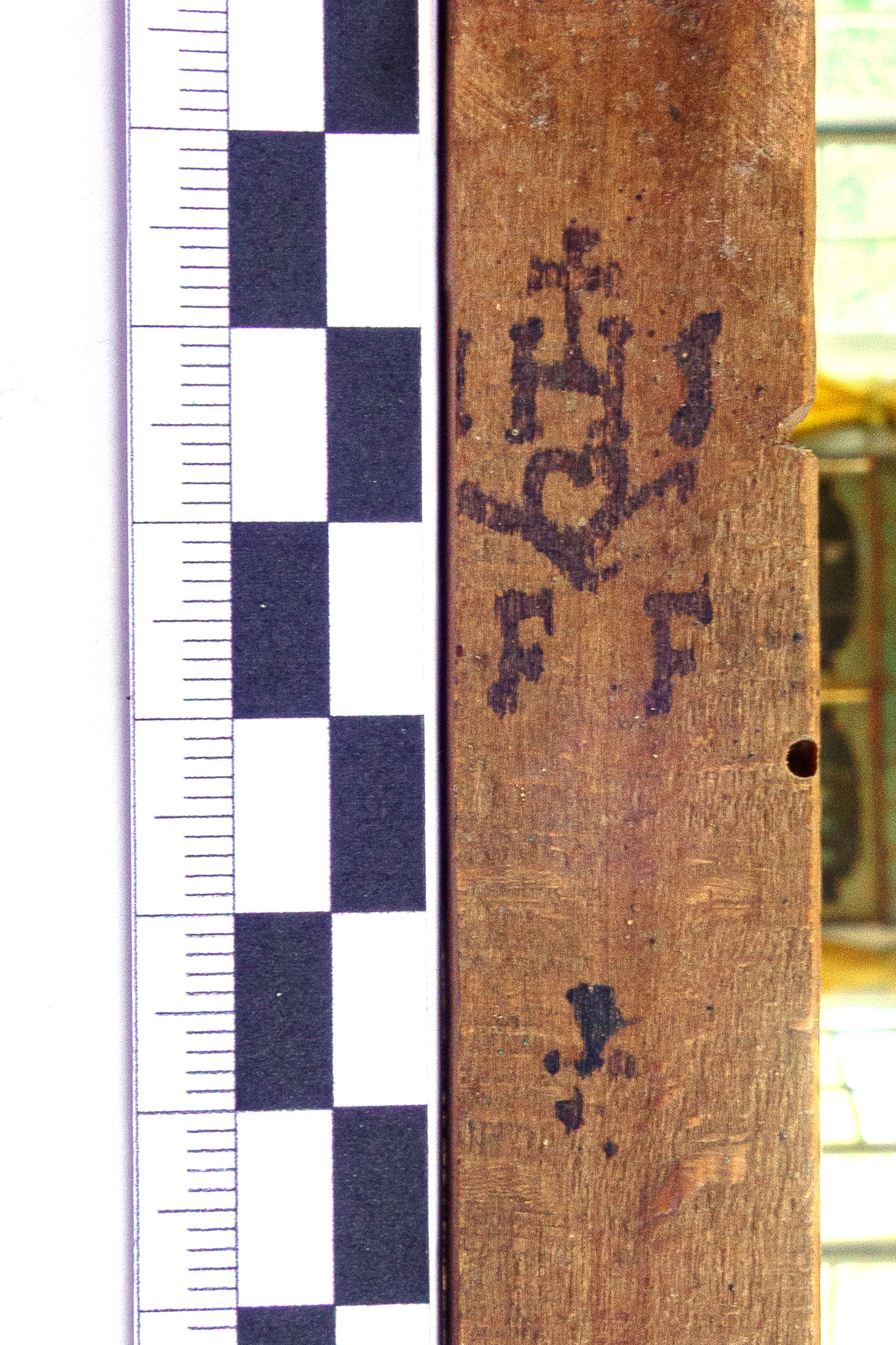
Également rare et intéressant pour l’époque, l’instrument porte deux signatures attribuables à Francesco Fabbri, situées sur la première et dernière touche. La première touche porte l’inscription “+(I)HS FF” et la dernière, “+ FF”. La mention “+ IHS” associée à une croix plantée dans la lettre “H” et un cœur percé de trois clous, renvoye à l’iconographie jésuite. Enfin, notons que les dimensions de l’instrument et sa légèreté correspondent aux caractéristiques connues des clavecins italiens du XVIIème siècle. L’absence de modifications majeures en fait un témoin particulièrement précieux de la facture italienne du temps de Francesco Fabbri.
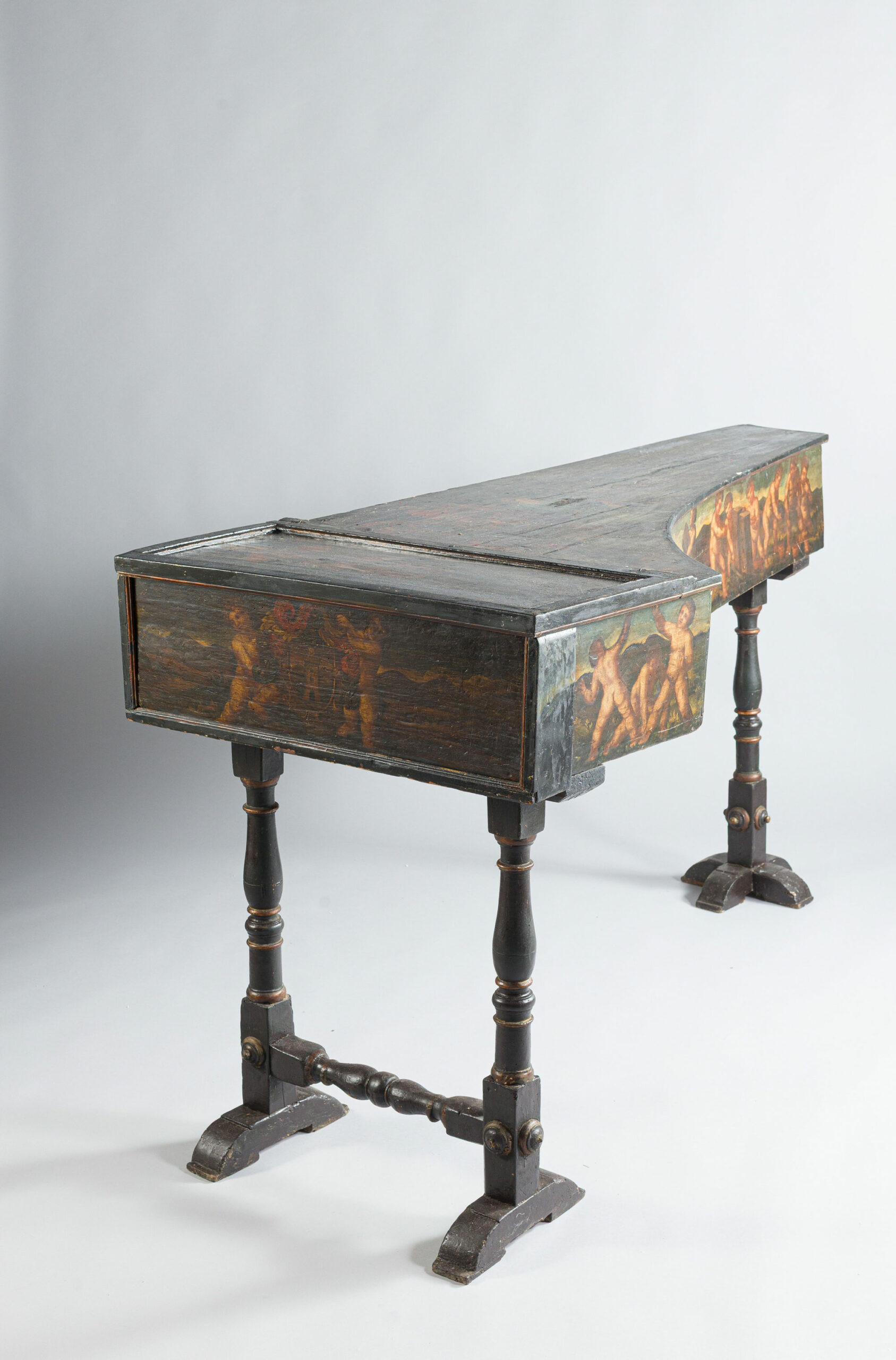
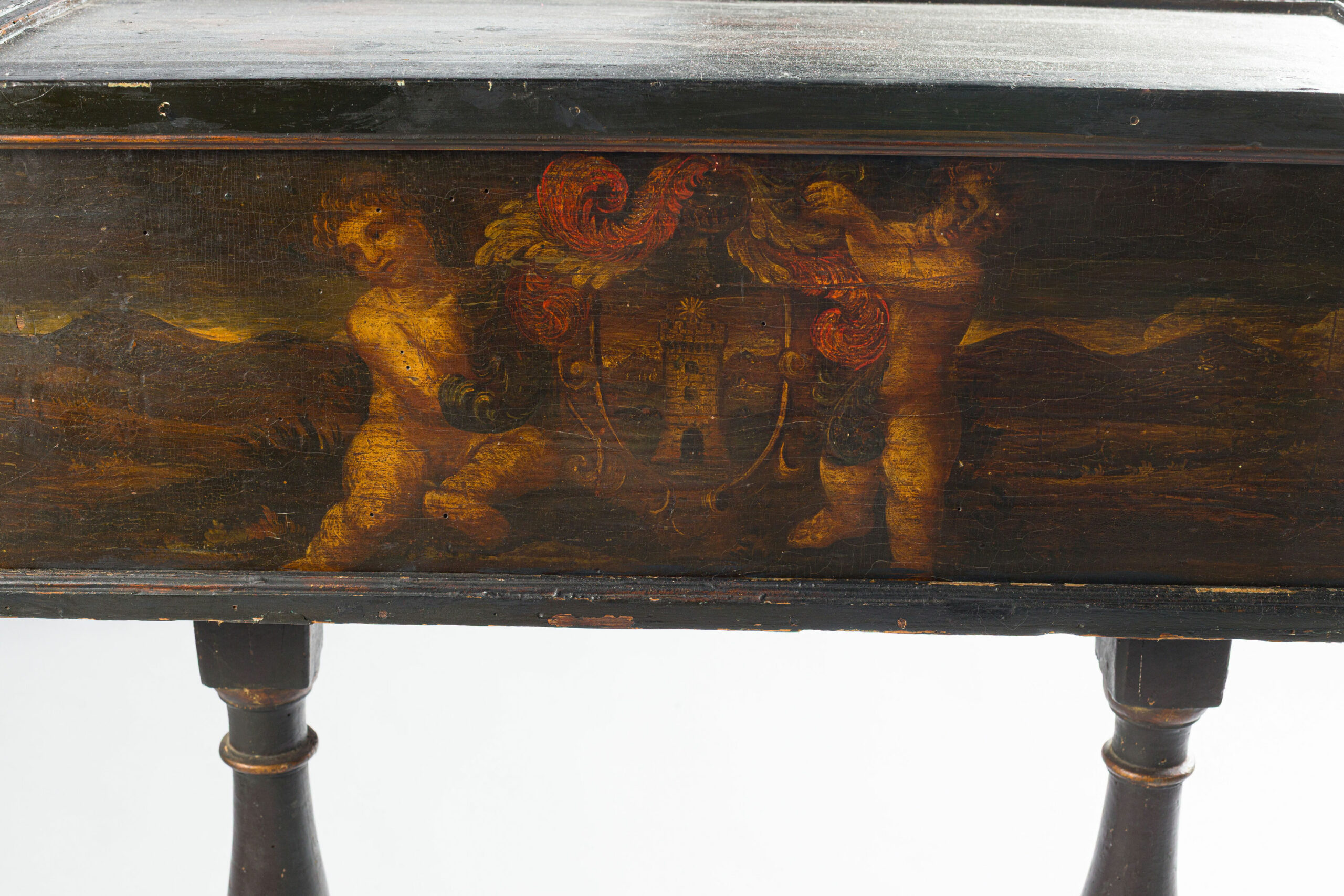

Le décor du portillon, composé de deux putti tenant un blason représentant une tour surmontée d’un soleil rayonnant, donne une précieuse indication sur la provenance de l’instrument. Si l’exécution picturale de ces armes relève de la liberté et de la fantaisie propres aux artistes italiens du XVIIème siècle, la combinaison des meubles composant ces armoiries – à savoir d’azur, à la tour d’argent posée sur une terrasse de sinople, accompagnée en chef d’un soleil d’or – peut faire référence aux armoiries de la famille Marcelli, attestée à Rome à la même époque. Comme nous venons de le voir au regard du corpus d’instruments réalisés par Fabbri, ce dernier semble avoir travaillé essentiellement sur commande prestigieuse, et il n’est donc pas étonnant de trouver des armoiries d’une grande famille romaine sur le modèle en question. Rappelons que la pratique musicale et la possession d’instruments étaient, encore plus à cette époque, le moyen d’affirmer un statut social de haut rang. La présence de ces armoiries confirme donc que le facteur travaillait pour une clientèle privilégiée, et elle offre une indication de provenance, à savoir la famille Marcelli. Or, il se trouve qu’il y avait, précisément durant le 1er tiers du XVIIème, un membre important de la famille Marcelli actif dans le monde de la musique : “Placido Marcelli, célèbre chanteur d’origine romaine, pendant longtemps au service de la chapelle alphonsine”[2].
Cette hypothèse est renforcée par la proximité géographique et chronologique entre Placido Marcelli et Francesco Fabbri.
Comme il a été listé plus haut, les instruments conservés de Francesco Fabbri sont datés entre 1629 et 1631, au moment où son activité est clairement attestée à Rome. Or les sources montrent que Placido Marcelli est également présent dans les États pontificaux dans les années 1630, comme l’atteste notamment une lettre datée d’août 1638, signée “Placido Marcelli” depuis Oricola[1].
[1] Bollettino della Deputazione Abruzzese di Storia Patria / Bollettino storico della Marsica, transcription de documents d’archives d’Oricola (XVIIᵉ siècle), mention d’une lettre signée Placido Marcelli, août 1638
Le monde musical romain étant, à l’époque, un microcosme reliant chapelles, académies, mécènes et facteurs d’instruments, il est tout à fait plausible que les deux hommes se soient rencontrés. Cette proximité prend d’autant plus de sens si l’on considère la pratique musicale de Marcelli. En tant que chanteur professionnel, il avait nécessairement recours à l’accompagnement instrumental, et notamment au clavecin ou à l’orgue, qui constituaient les instruments privilégiés pour la réalisation du basso continuo dans la musique vocale du premier XVIIème siècle. Un chanteur de son rang se devait de posséder ou commander un clavecin destiné à accompagner son répertoire, que ce soit dans un cadre domestique, académique ou aristocratique.
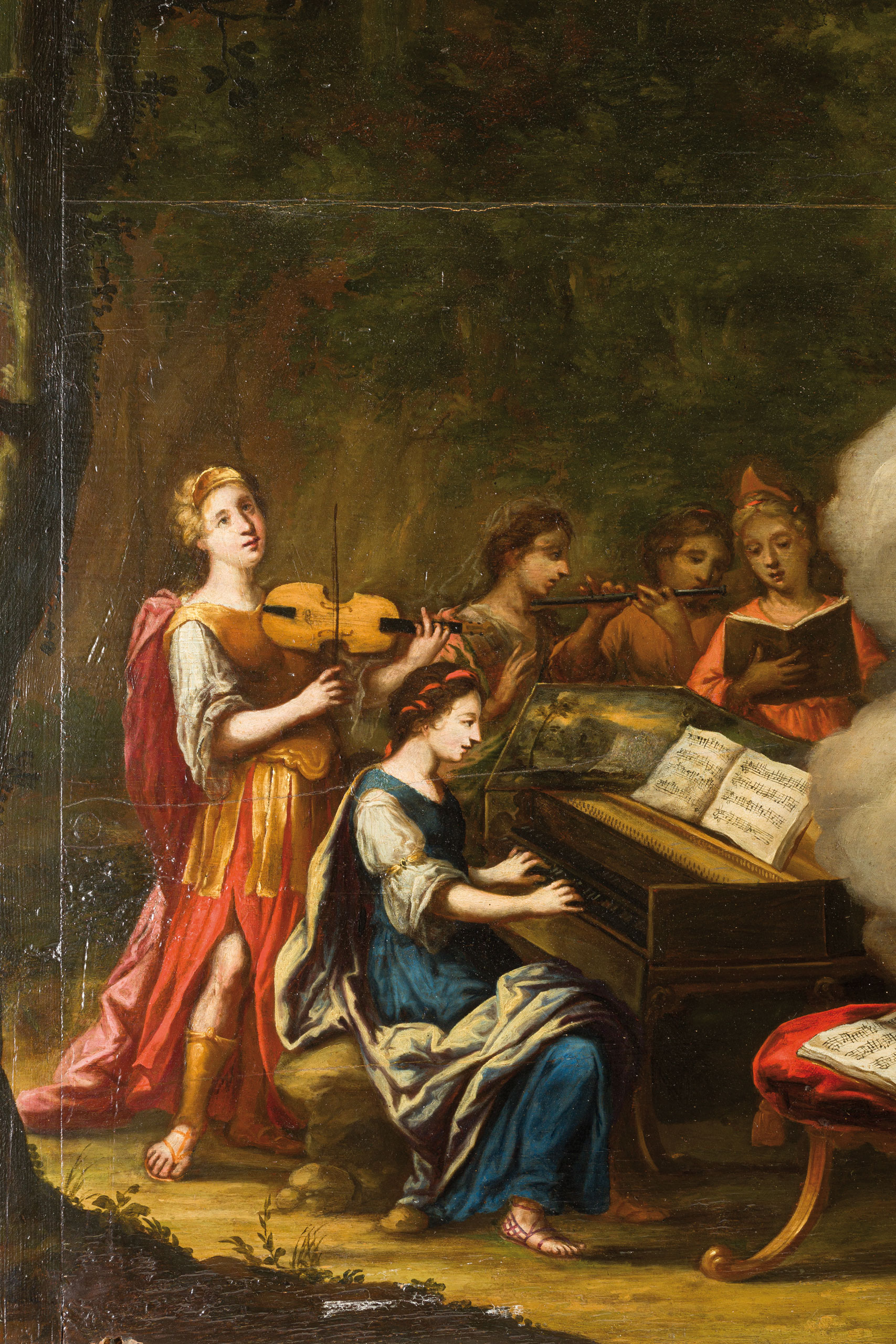
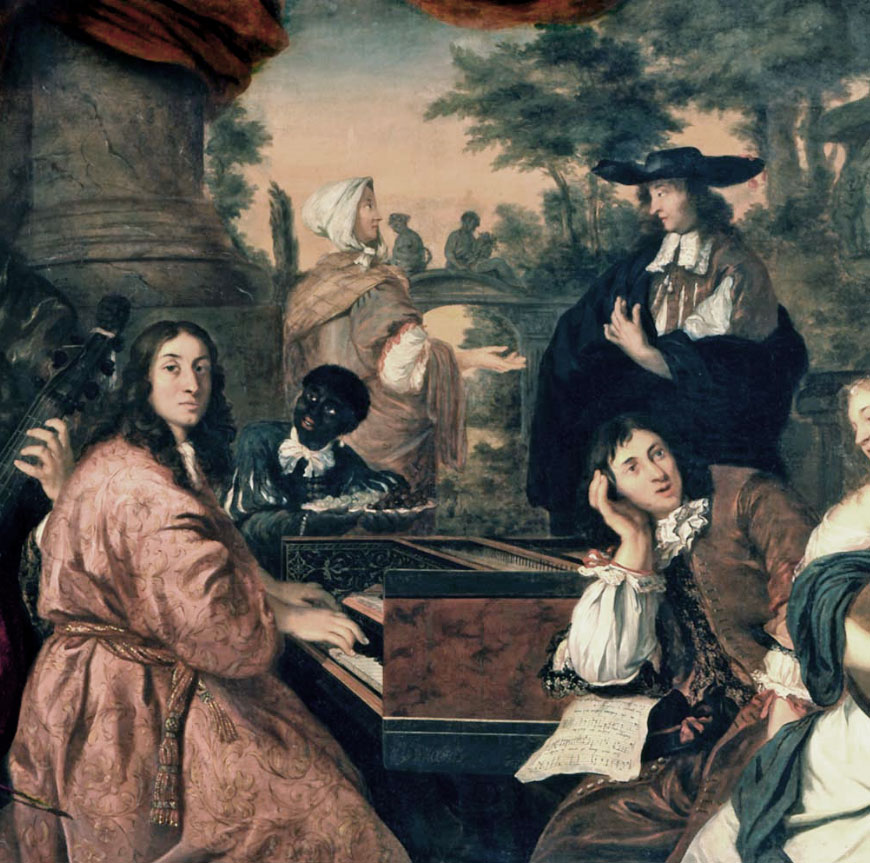
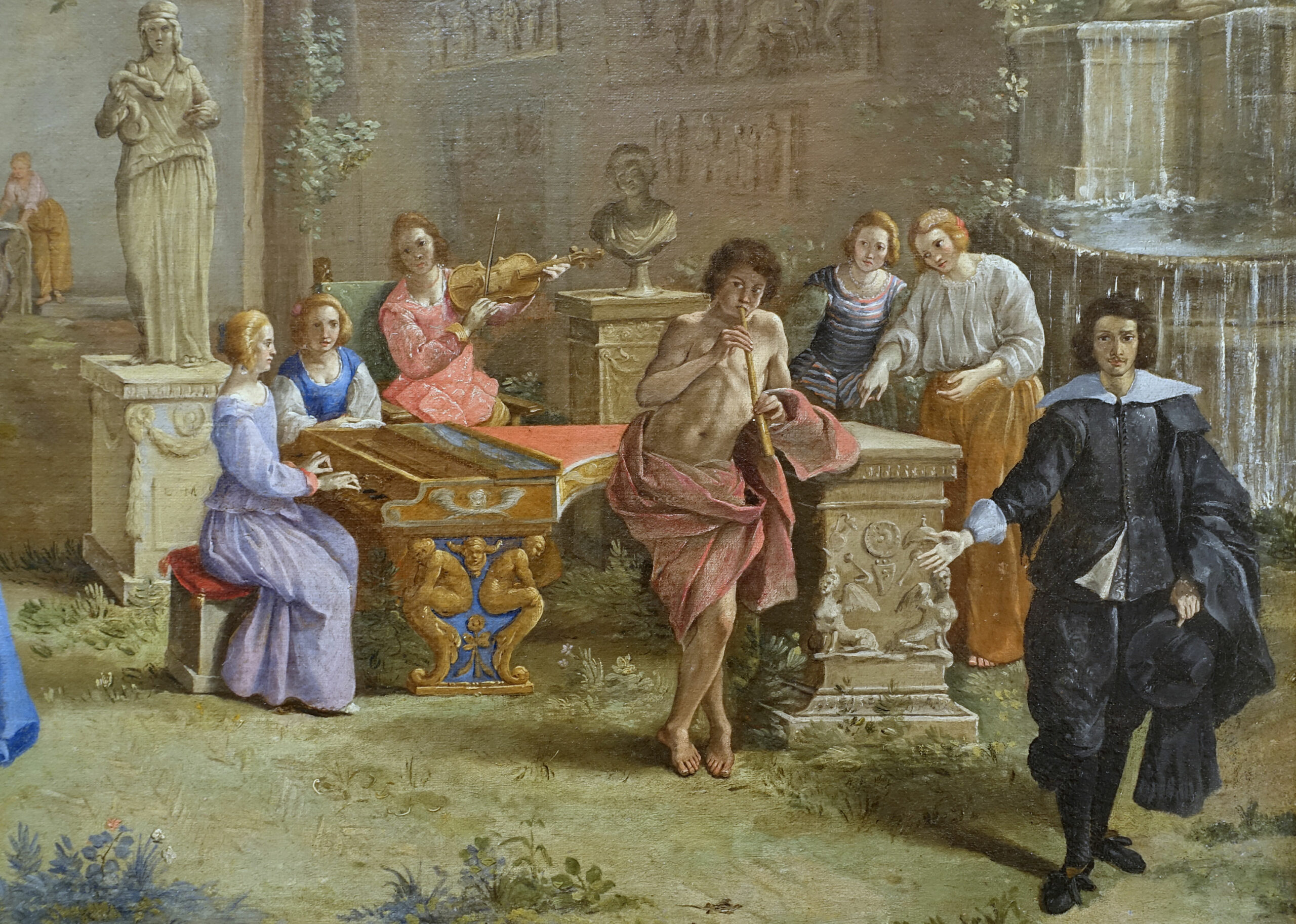
Les sources permettent de retracer le parcours remarquable de Placido Marcelli, figure bien documentée du monde musical italien de la fin du XVIème et du début du XVIIème siècle.
Le nom de Placido Marcelli apparaît pour la première fois dans l’édition des Intermedii et concerti publiée à Venise en 1591 par Cristofano Malvezzi, qui revient sur les fêtes florentines organisées en 1589 à l’occasion du mariage de Ferdinando de Medici et Christine de Lorraine. Parmi les chanteurs mentionnés figure Placido Marcelli associé au madrigal monumental O fortunato giorno.
Entre 1590 et 1598, Marcelli est documenté comme cantore de la chapelle ducale de Ferrare. À cette époque, la cour d’Este est l’un des centres musicaux les plus novateurs d’Italie, fréquenté notamment par Carlo Gesualdo, célèbre compositeur et – au passage – claveciniste.
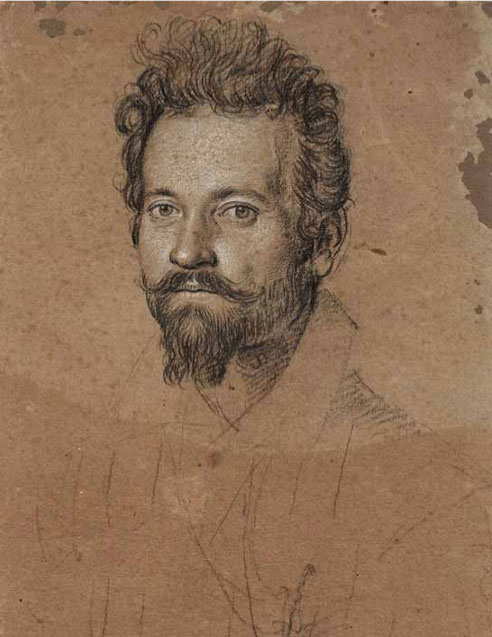
La notoriété de Placido Marcelli semble en tout cas suffisamment établie au début du XVIIème siècle pour que le peintre romain, Ottavio Leoni, réalise, vers 1605-1608, son portrait[1].
Comble de la reconnaissance, en 1610, le compositeur Alessandro Grandi lui dédie son Primo libro de motteti a 2, 3, 4, publié à Venise chez Vincenti. Il semblerait, en effet, que Marcelli ait été à l’origine de la nomination de Grandi comme maître de chapelle à l’Accademia dello Spirito Santo. Le lien entre Placido Marcelli et la pratique du chant accompagné est clairement attesté par cette dédicace de Grandi, puisque le titre précise que ces œuvres sont destinées à être chantées “nell’organo, clavecimbalo, chitarone […] con il basso per sonare”. Dans ce contexte, il n’est pas surprenant qu’un chanteur de la stature de Marcelli ait possédé ou commandé un clavecin à Fabbri.
Enfin, en 1614, son nom apparaît encore dans l’édition ferraraise des Motetti a cinque voci, présentée comme “raccolti da Placido Marcelli”[2], c’est-à-dire rassemblée ou préparée par lui. Le recueil est dédié à Margherita Gonzaga d’Este, duchesse de Ferrare et figure majeure du mécénat artistique à la cour des Este. Ce rôle consistant à réunir les pièces, organiser leur publication et assurer leur dédicace à une grande protectrice des arts, suppose non seulement une autorité sur la scène musicale reconnue, mais également une solide culture littéraire et rhétorique : à l’image du décor peint du clavecin de Francesco Fabbri de la vente du 2 mai 2026.
[1] Primarosa, Yuri, « Plautilla Bricci disegnatrice, pittrice, architettrice. Verso un catalogo ragionato », Ricerche di storia dell’arte, n° 141, Rome, Carocci editore, 2019
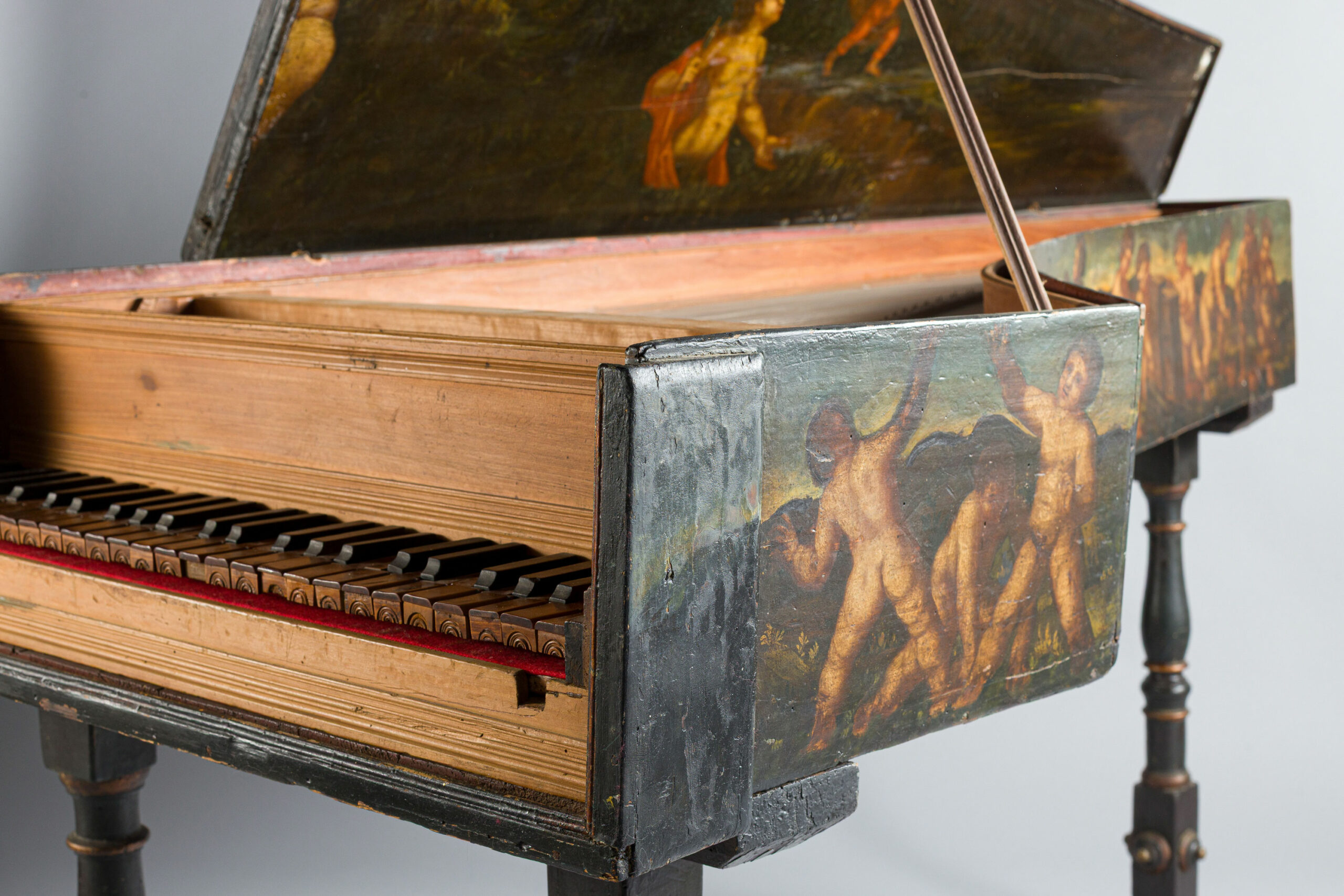
Le décor pictural de ce clavecin apparaît comme l’un des exemples les plus sophistiqués subsistant sur un instrument italien du XVIIème siècle. Loin de se réduire à un ornement anecdotique, il s’agit d’un véritable programme iconographique réfléchi, où chaque panneau – armoiries, putti, références littéraires – nous renseigne sur le commanditaire et son milieu.
L’ensemble du décor est ainsi à comprendre, non comme une suite de peintures indépendantes, mais plutôt comme l’expression d’un système de pensée où se rencontrent prestige familial, allégorie morale et culture littéraire. Dans une Rome encore imprégnée de l’héritage de la Renaissance, où les académies, les bibliothèques privées et les cercles savants consacraient une part essentielle de leurs discussions à la littérature antique et à ses réappropriations modernes, un tel ensemble iconographique prend tout son sens.
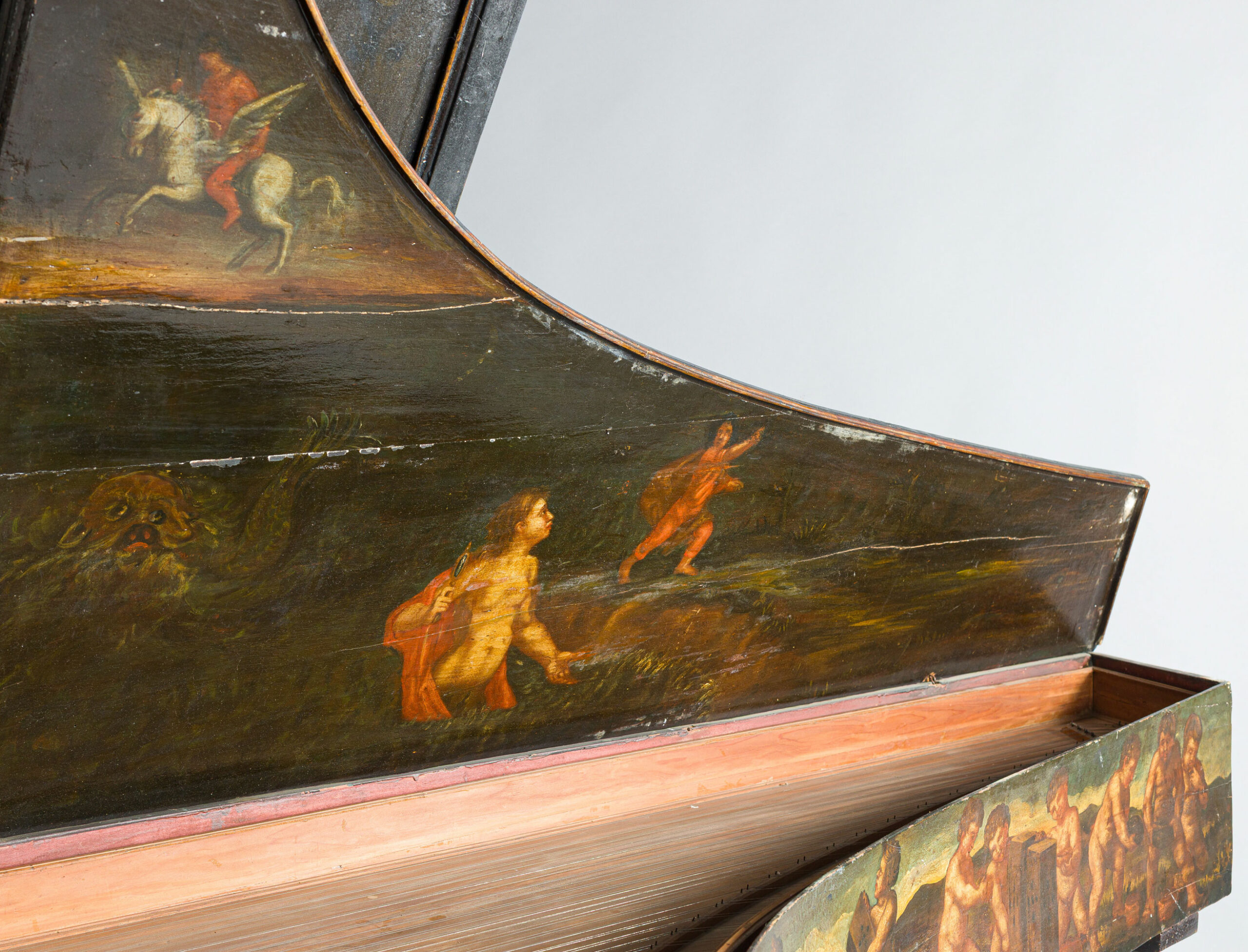
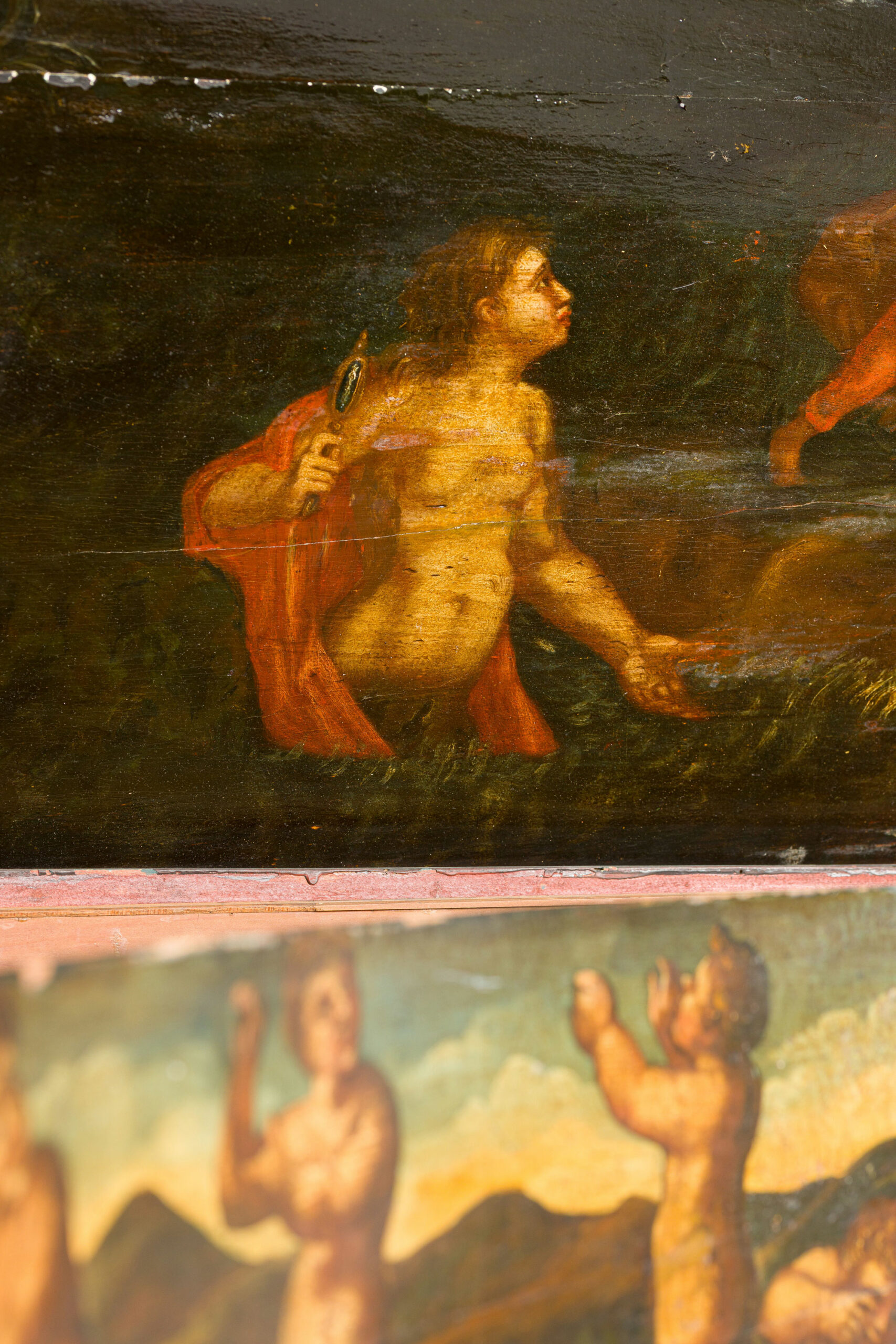
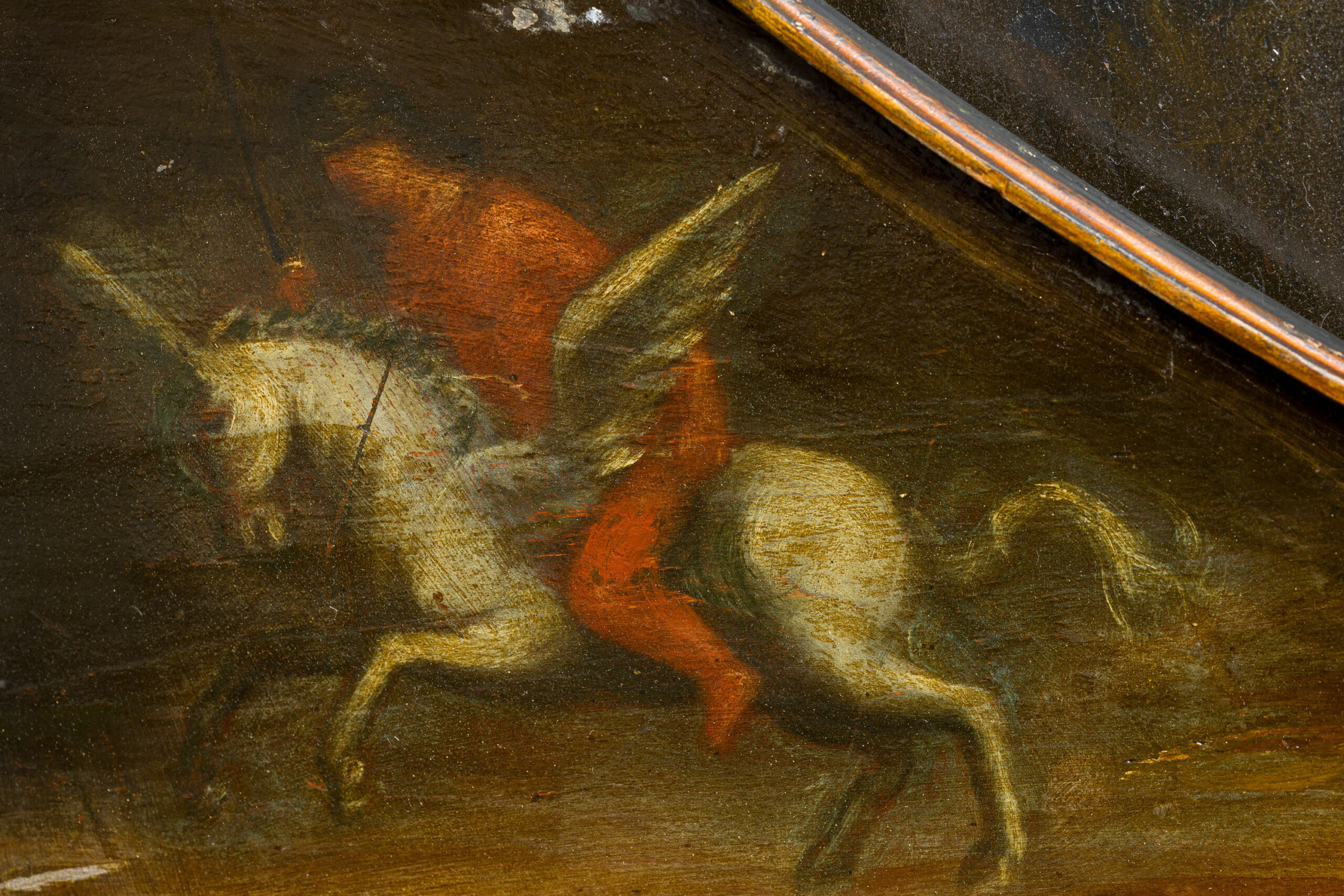
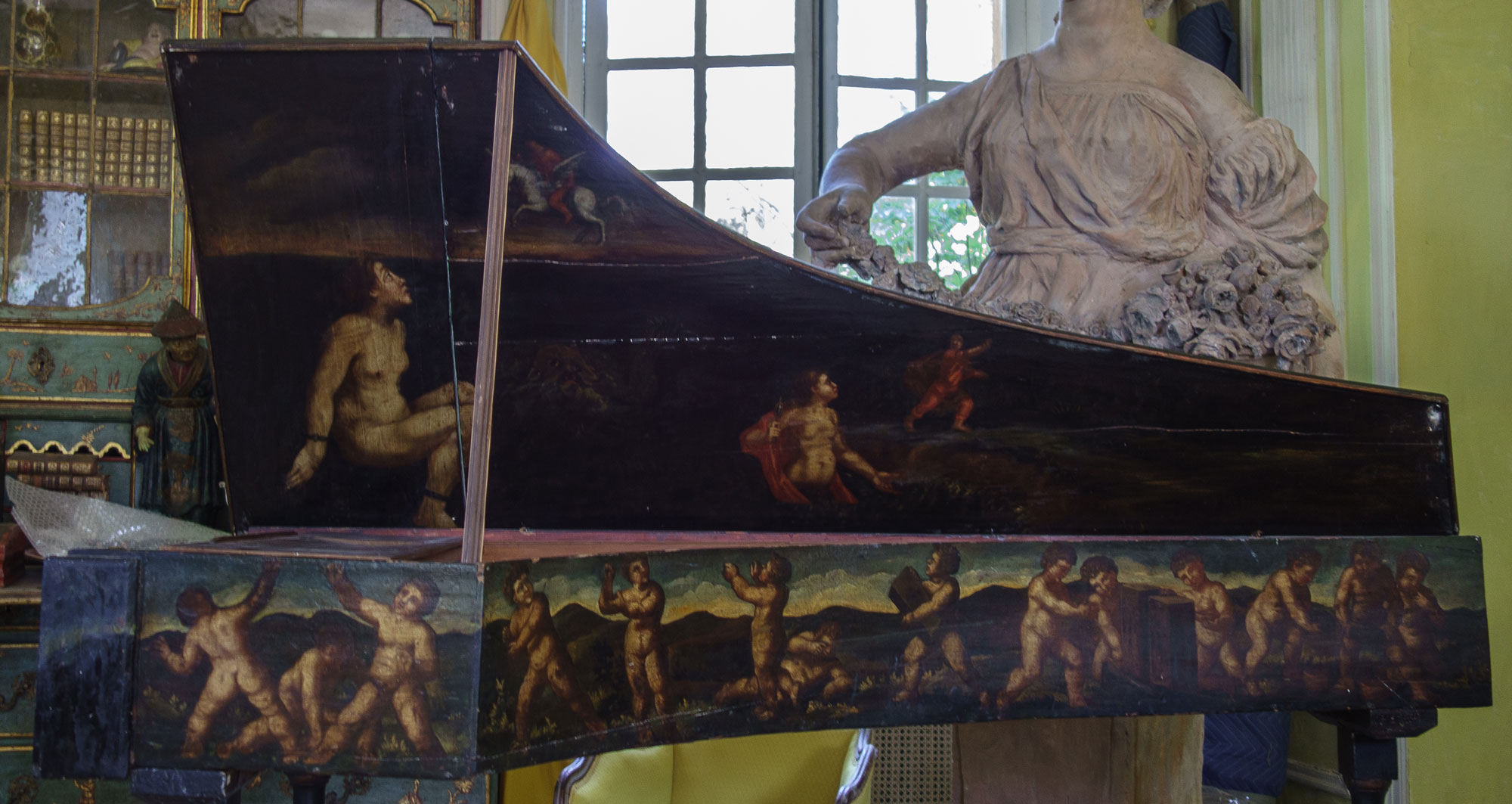
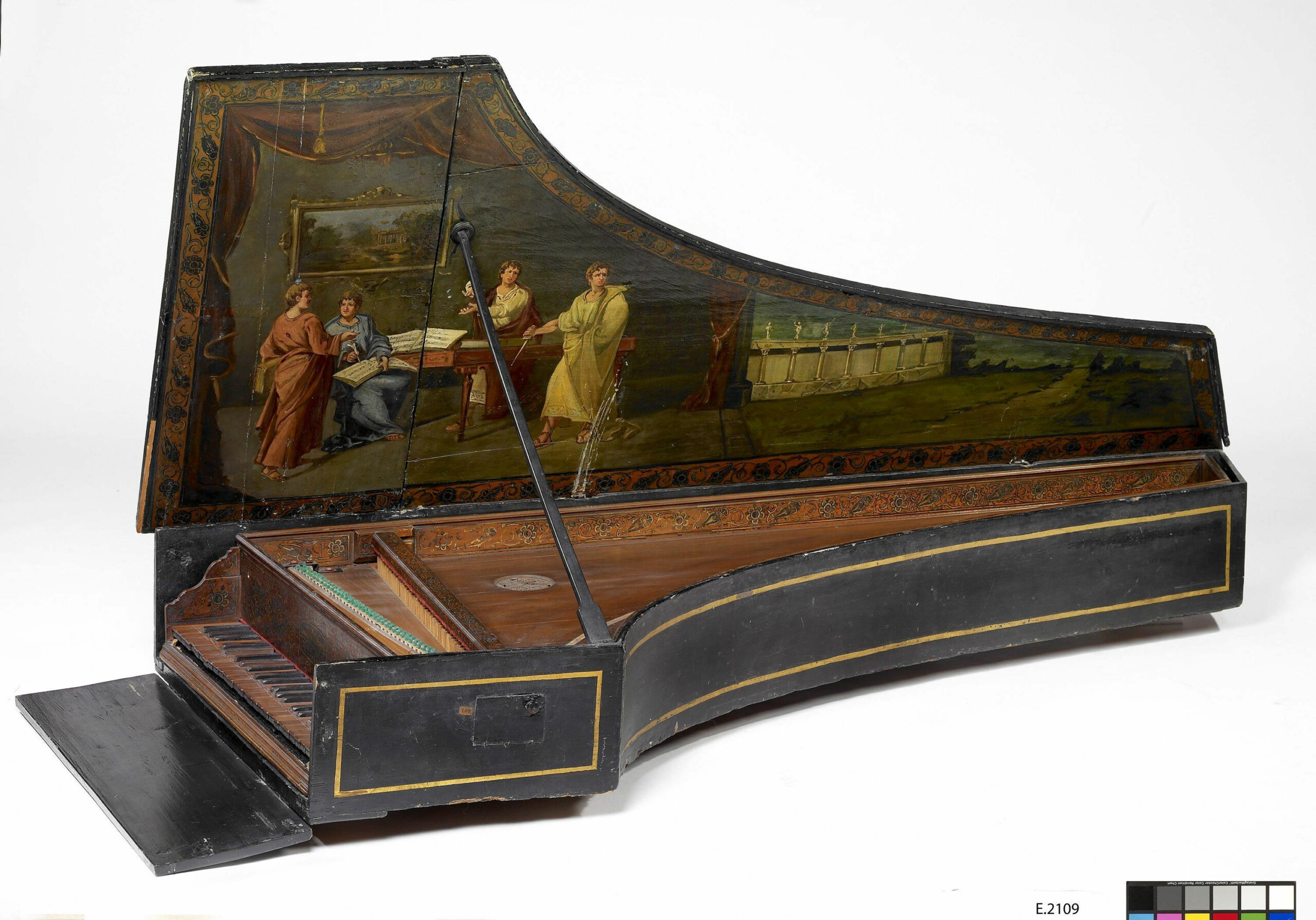
À l’intérieur du couvercle apparaît l’une des scènes les plus surprenantes du répertoire iconographique, inspirée des Thesmophories d’Aristophane. La composition ne correspond pas à un épisode unique, mais à une combinaison de plusieurs moments de la comédie. Au centre et à droite, la scène renvoie à l’épisode où Mnésiloque, envoyé par son beau-fils Euripide pour espionner des femmes qui ont juré sa mort en raison des attaques proférées par le poète à leur encontre – est finalement démasqué après avoir prononcé une diatribe envers leur comportement volage.
La figure centrale correspond vraisemblablement au moment où, Mnésiloque travesti, est examiné par une femme tenant une quenouille. La présence de la quenouille – explicitement citée dans Les Thesmophories – renforce cette interprétation.
À droite, un homme – ou plutôt un enfant – court. Il peut être rapproché de Clisthène, personnage efféminé envoyé prévenir le magistrat.
La partie gauche de la composition illustre, quant à elle, une tentative pour secourir Mnésiloque. Après sa capture, ce-dernier appelle en effet Euripide à l’aide. Celui-ci intervient en rejouant avec lui des scènes tirées de ses propres tragédies. Il apparaît ici sous la forme de Persée monté sur Pégase, dans une parodie de la délivrance d’Andromède menacée par le monstre marin.
La peinture associe ainsi plusieurs épisodes successifs – découverte de Mnésiloque, intervention de Clisthène, tentatives de secours d’Euripide – selon un procédé de condensation narrative fréquent dans la peinture du XVIIème siècle.
Le choix d’un tel sujet, extrêmement rare dans le décor d’un instrument de musique, suppose un commanditaire familier de la culture humaniste et de la redécouverte des auteurs grecs – un profil qui correspondrait à celui d’un musicien lettré tel que Placido Marcelli.
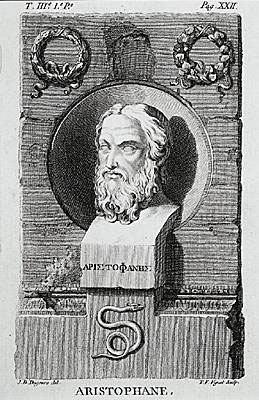
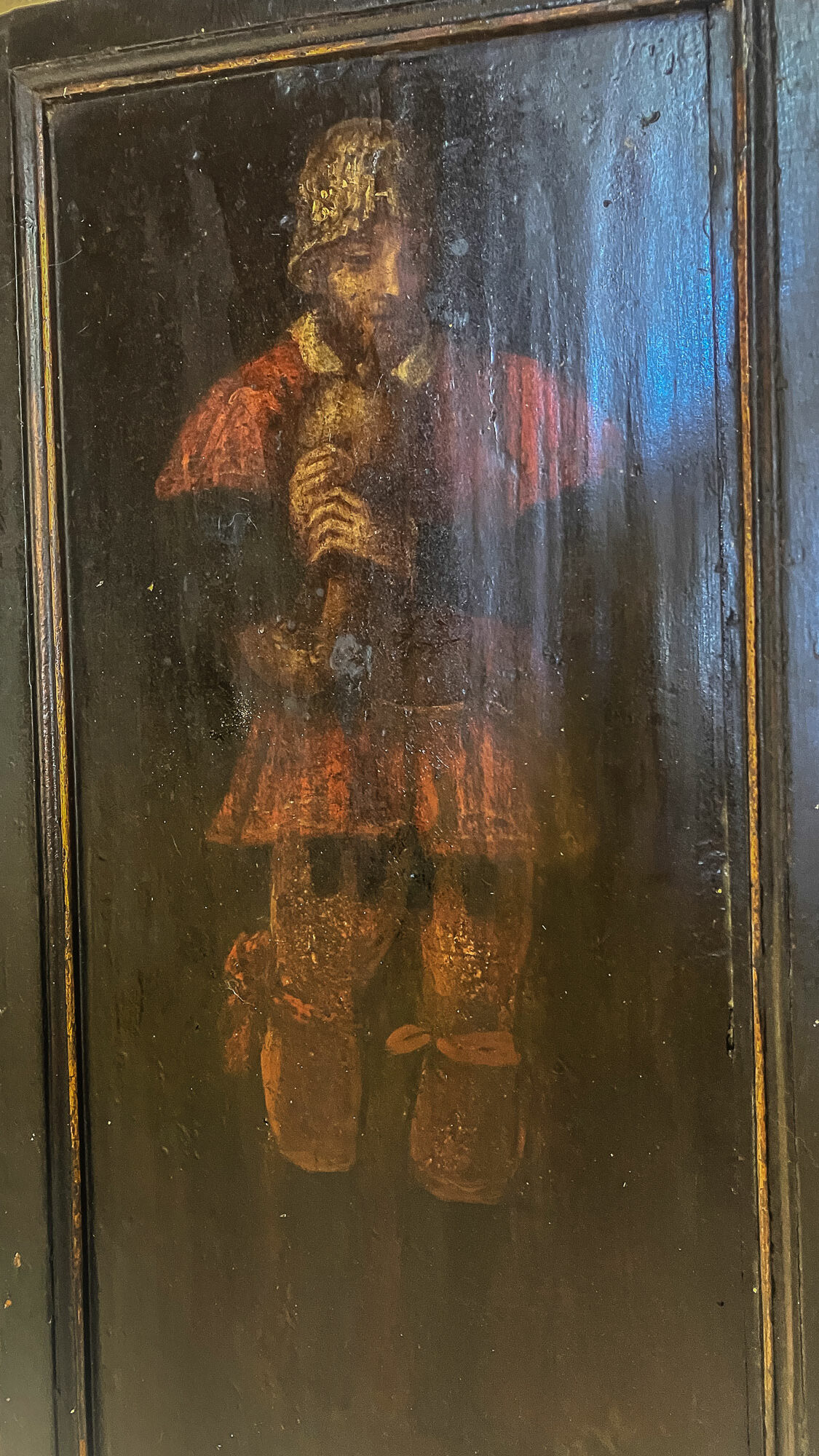
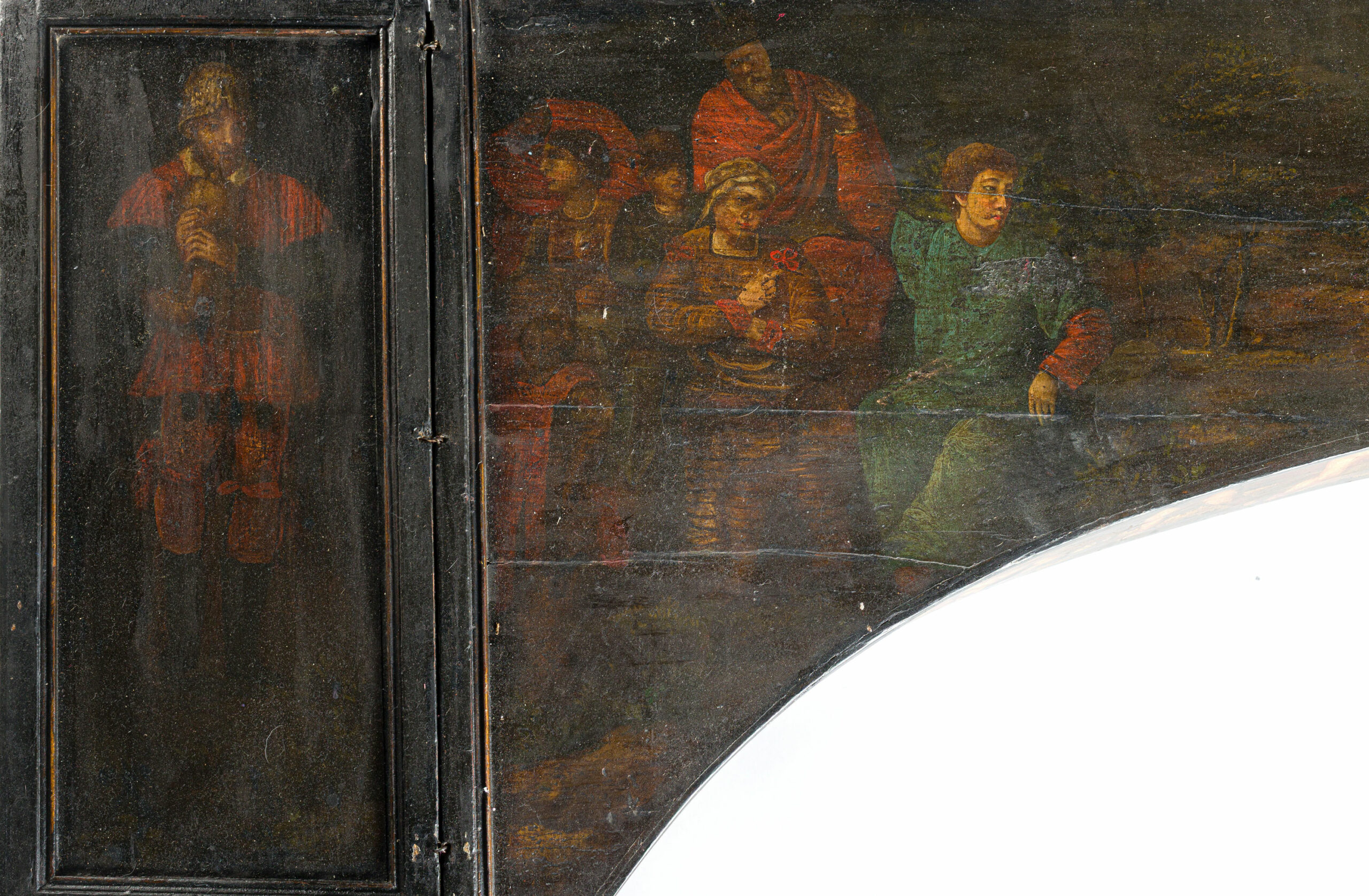
La scène pastorale peinte sur la face extérieure du couvercle représente un musicien jouant de la zampogna – instrument pastoral par excellence – devant un groupe de personnages réunis à la campagne, manifestement distraits ou peu enclins à participer. Cette scène représente la fin de la septième journée du Décaméron de Boccace, et entre en écho avec la scène des Thesmophories représentée à l’intérieur du couvercle.
“Le thème choisi par Dioneo, roi de cette journée, était la tromperie des femmes envers leurs maris. Après les dix contes et un repas délicat, le serviteur Tindaro accompagne leurs danses et leurs chants à la cornemuse ; la dernière chanson, très sensuelle, est celle de Filomena. La reine du huitième jour, Lauretta, vient d’être désignée ; elle porte des feuilles de laurier, symbole de son nom, et annonce une pause pour les deux jours suivants, vendredi et samedi, en l’honneur du Christ. La nuit tombe ; apaisée, la soirée s’achève.”
Entretien avec Christopher Clarke, facteur et expert en instruments anciens à claviers, mars 2026
Il est important de souligner que le Décaméron, au XVIIème siècle, conserve un statut de texte fondateur, souvent commenté dans les milieux lettrés. Son association à un instrument de musique n’est donc pas fortuite puisque le texte est une véritable source d’inspiration pour les artistes.
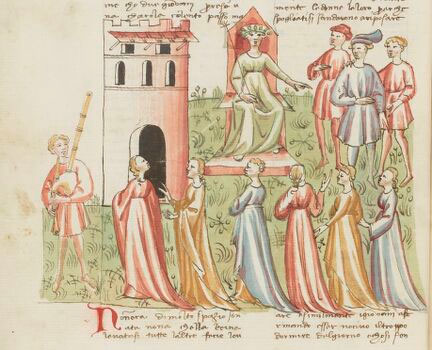
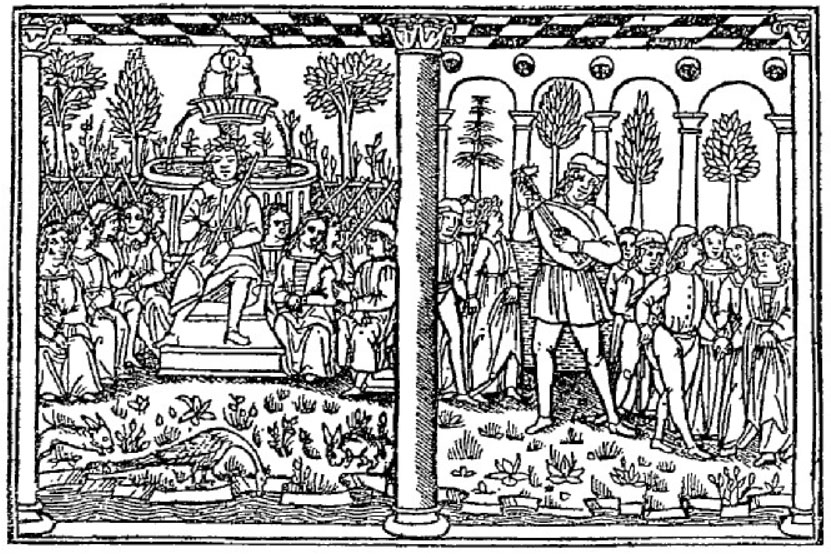
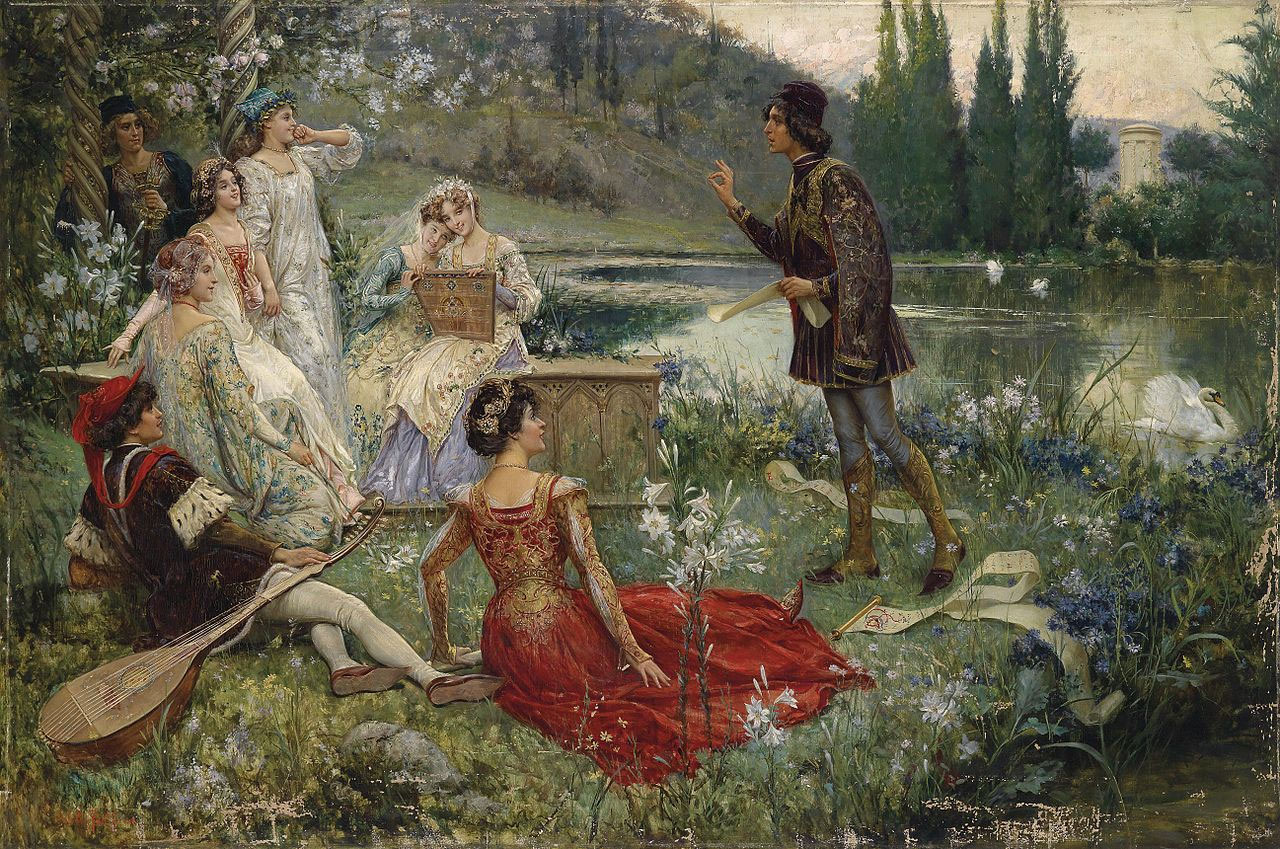
L’iconographie de la scène s’inscrit dans une tradition iconographique bien établie depuis plusieurs siècles. On en trouve un exemple dans l’incipit enluminé du manuscrit “Italien 63” de la Bibliothèque nationale de France, réalisé à Florence vers 1430-1440, où les jeunes Florentins sont représentés réunis à la campagne pour écouter la narration du jour. La composition repose notamment sur la division de l’espace en zones horizontales structurant le paysage et sur la figure du narrateur, représenté le bras largement étendu pour marquer le geste du discours.
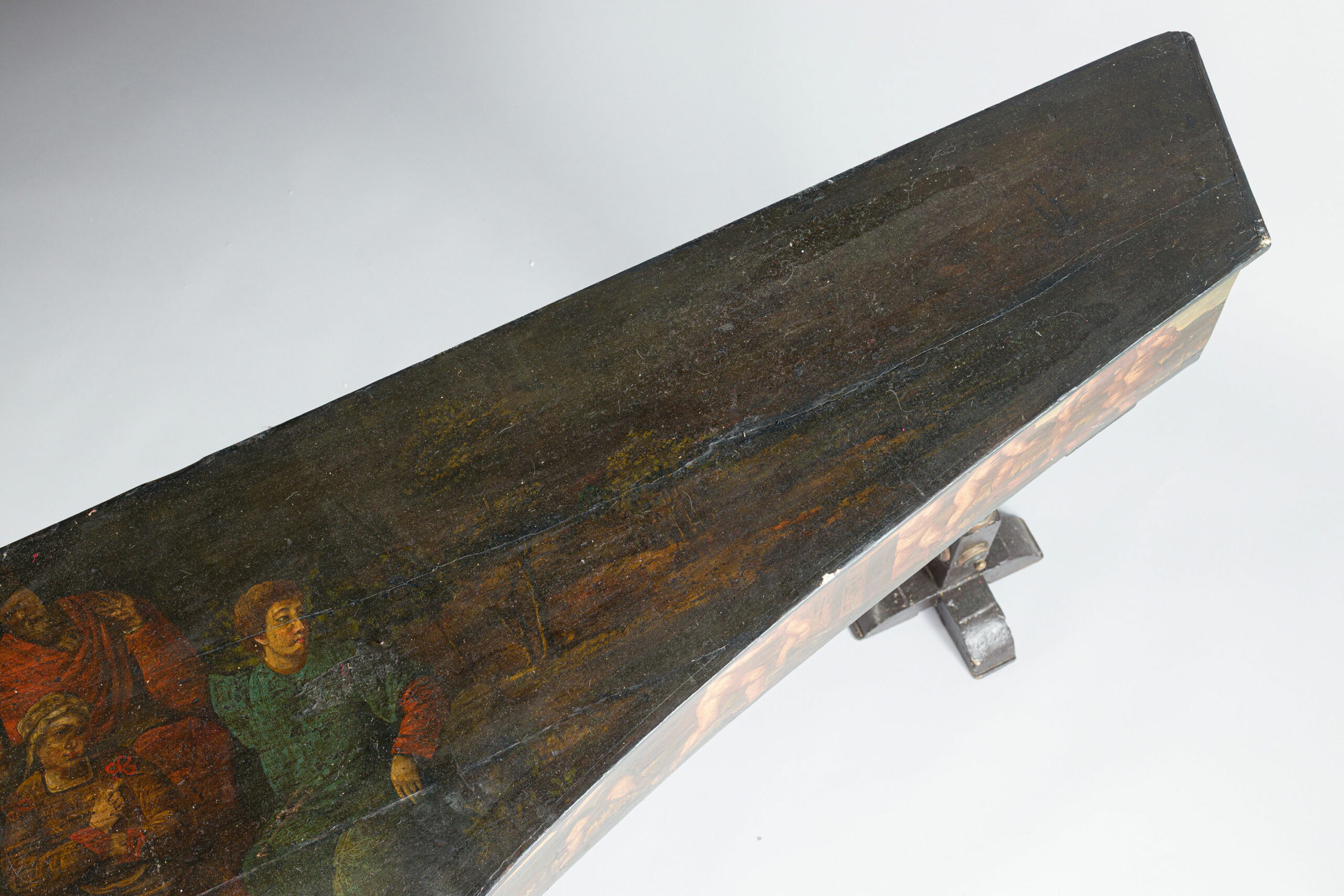
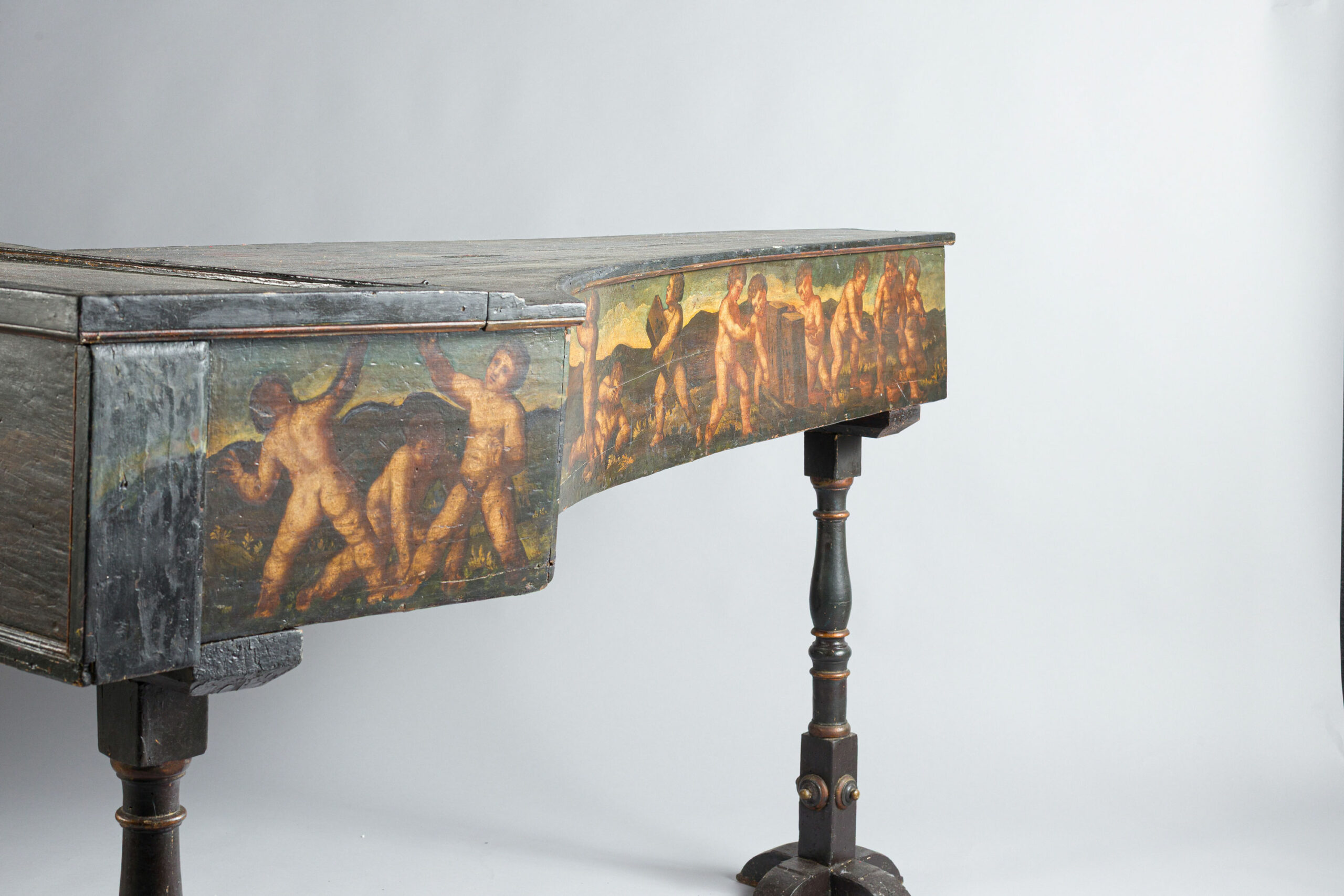
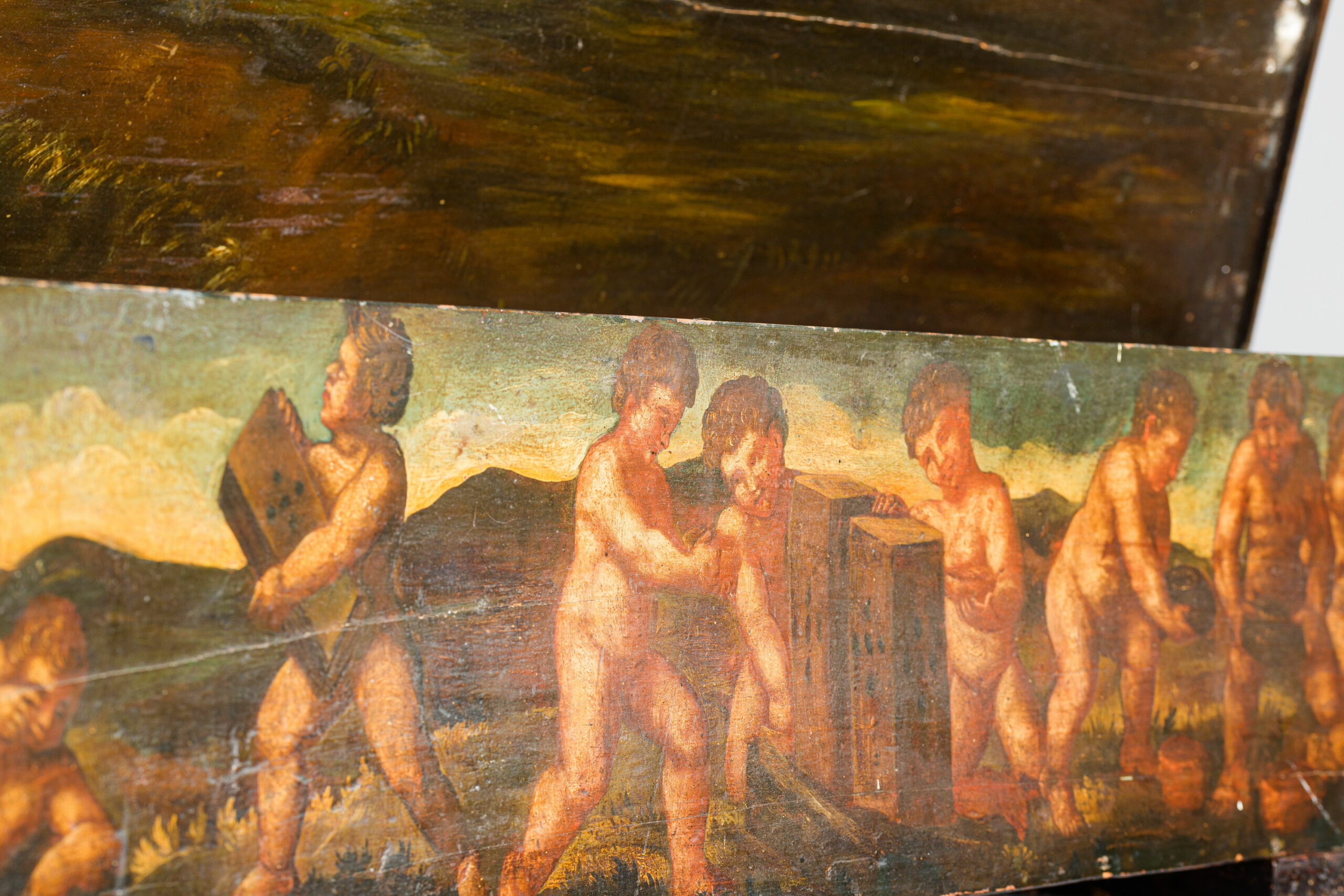
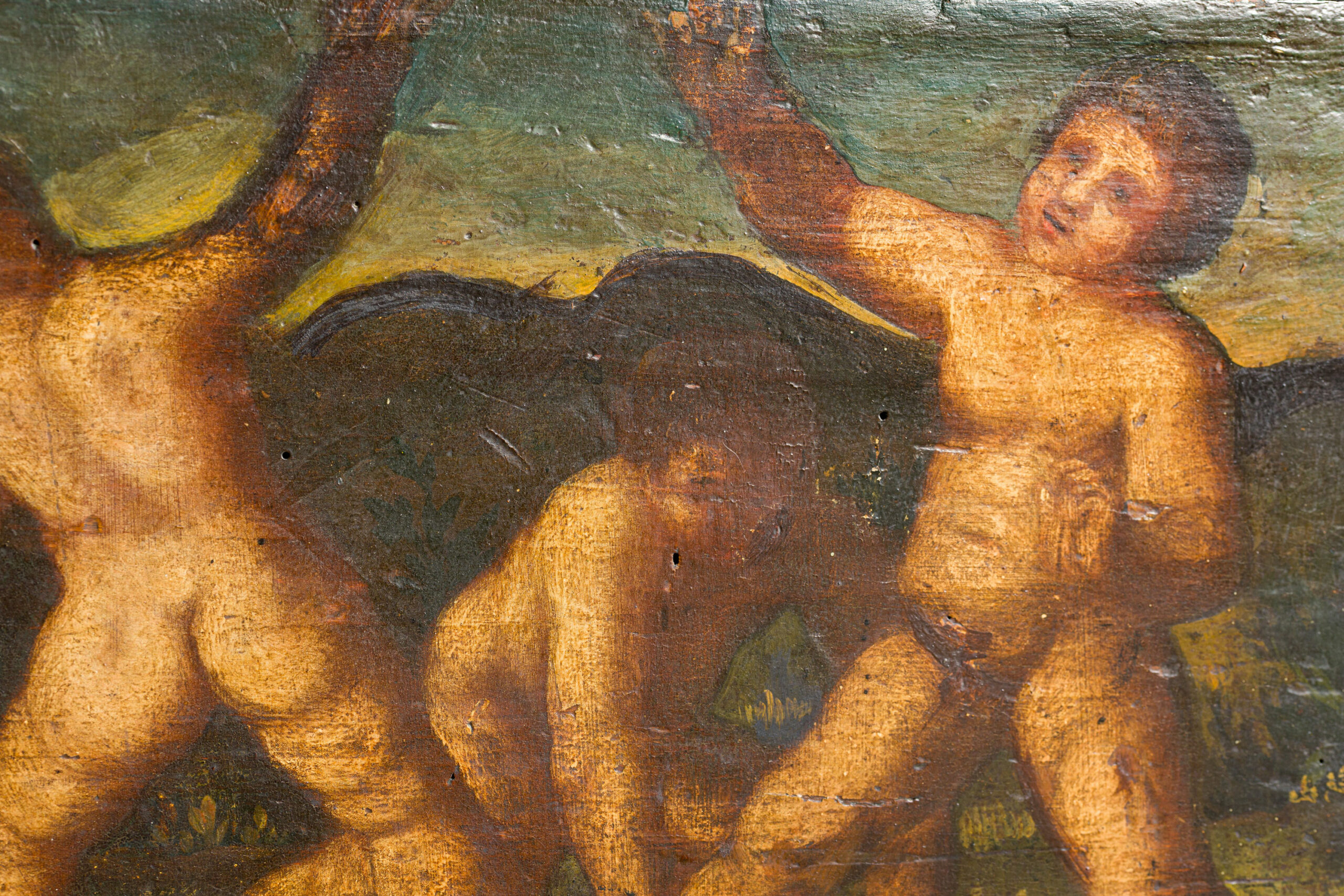
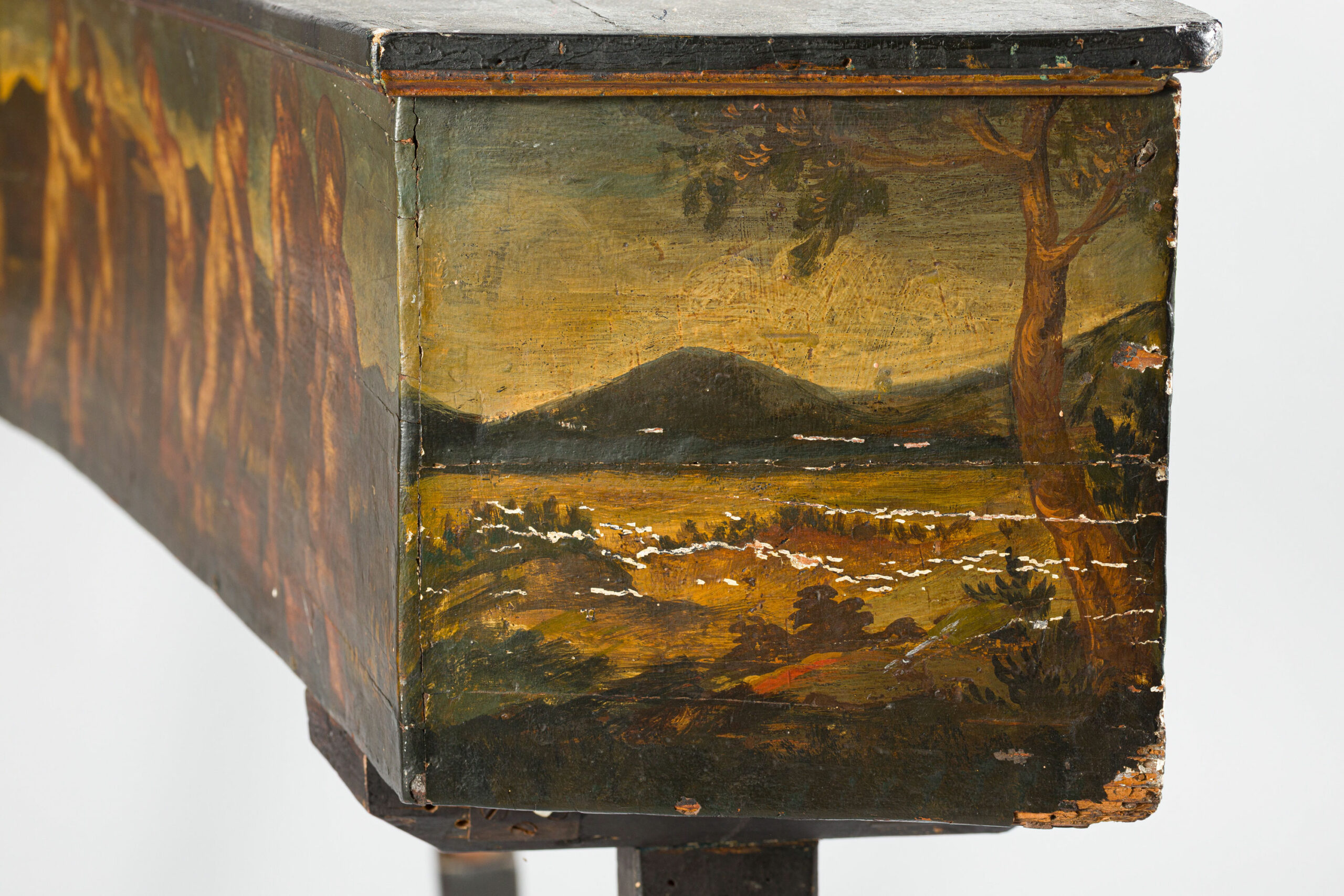
Enfin, les éclisses du clavecin présentent une série de quatorze putti engagés dans des activités diverses. Certains tirent des ficelles invisibles, d’autres construisent un édifice, d’autres encore remplissent des pots ou s’activent autour d’objets indéfinis. Ce répertoire maniériste puise dans une longue tradition italienne où les putti incarnent simultanément l’ambivalence entre le travail et la vanité de certaines entreprises, souvent compromises par l’instabilité du monde ou la fragilité des actions. La série pourrait s’inspirer de modèles graphiques diffusés par les ateliers romains du XVIème siècle, ou d’illustrations d’allégories morales comme l’Iconologie de Césare Ripa, connues pour circuler intensément dans les milieux lettrés. En intégrant ce cycle allégorique à un instrument de musique, le commanditaire semble vouloir affirmer l’importance de l’effort créateur et du travail du musicien. Notons que ce motif de putti, placé sur les éclisses, se retrouve sur d’autres pièces d’exception. On trouve notamment plusieurs prestigieux exemples dans les collections Pallavicini-Rospigliosi, dont un clavecin monumental appartenant à la duchesse Maria Camilla Pallavicini, entièrement doré et décoré par Ludovico Gimignani, dont les éclisses présentent des putti similaires sur un fond d’or. Cet instrument, long de plus de trois mètres, portait également les armoiries des Rospigliosi-Pallavicini, affirmant son statut de pièce d’apparat[1].
[1] D. Di Castro, “Music in a Roman Palazzo: The Pallavicini and Rospigliosi Instruments,” in Marvels of Sound and Beauty: Italian Baroque Musical Instruments, éd. G. Guazzotti, Florence: Giunti, 2007, p. 128–135
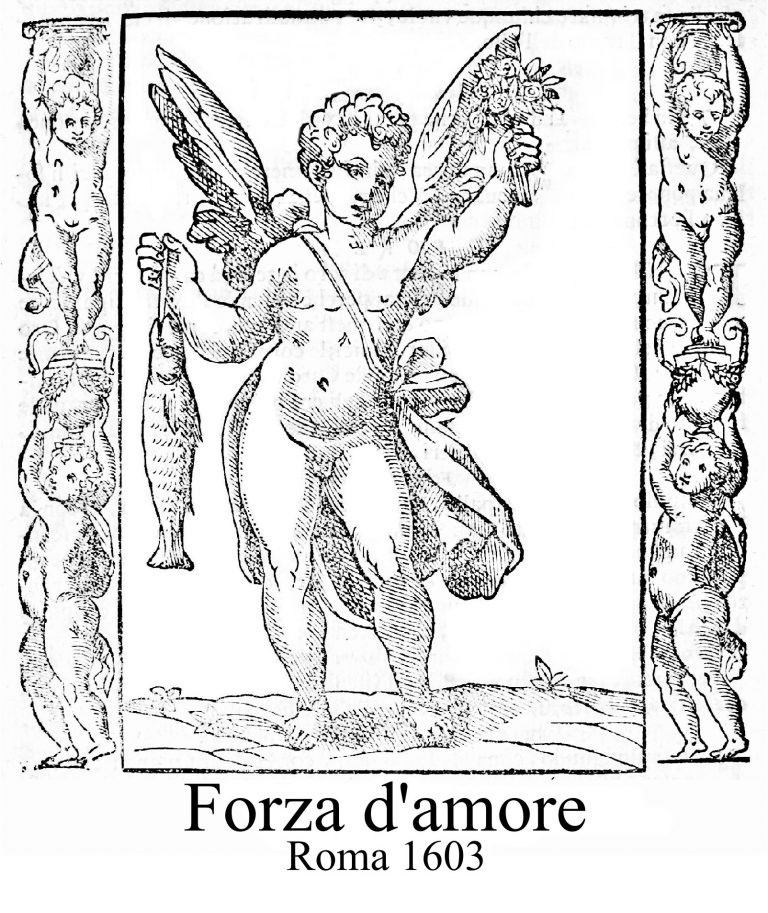
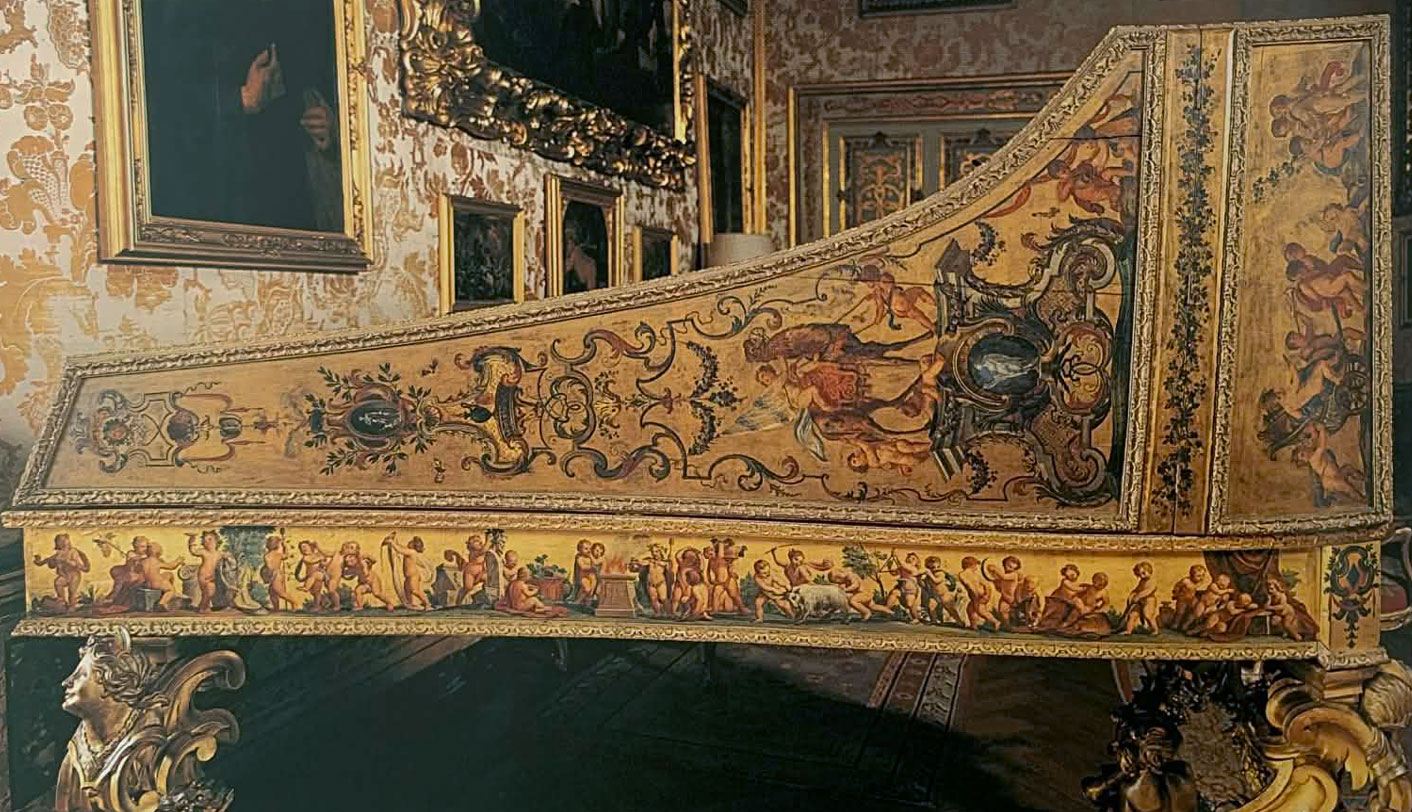
En Italie au XVIIème siècle, les clavecins décorés étaient, nous l’avons vu, très souvent liés aux milieux aristocratiques, dont les noms les plus célèbres sont Este, Médicis ou Farnèse. Mais les musiciens professionnels de haut niveau, comme Placido Marcelli, jouissaient aussi en Italie d’un statut élevé leur permettant de commander des instruments luxueux. Ce clavecin attribué à Francesco Fabbri, par son décor unique, se situe manifestement dans cette tradition d’objet de prestige, destiné à une élite culturelle. Son intégrité structurelle et iconographique en font un témoin exceptionnel de la facture italienne du Seicento.
Au tournant des XVIème et XVIIème siècles, l’Italie s’impose comme le berceau du clavecin, avec une école de facture aux caractéristiques bien définies. Les instruments italiens de la Renaissance et du premier baroque sont généralement d’une conception légère, construits en bois de cyprès (parfois cèdre) aux parois très minces, avec une table d’harmonie également en conifère (souvent cyprès ou épicéa)[1].
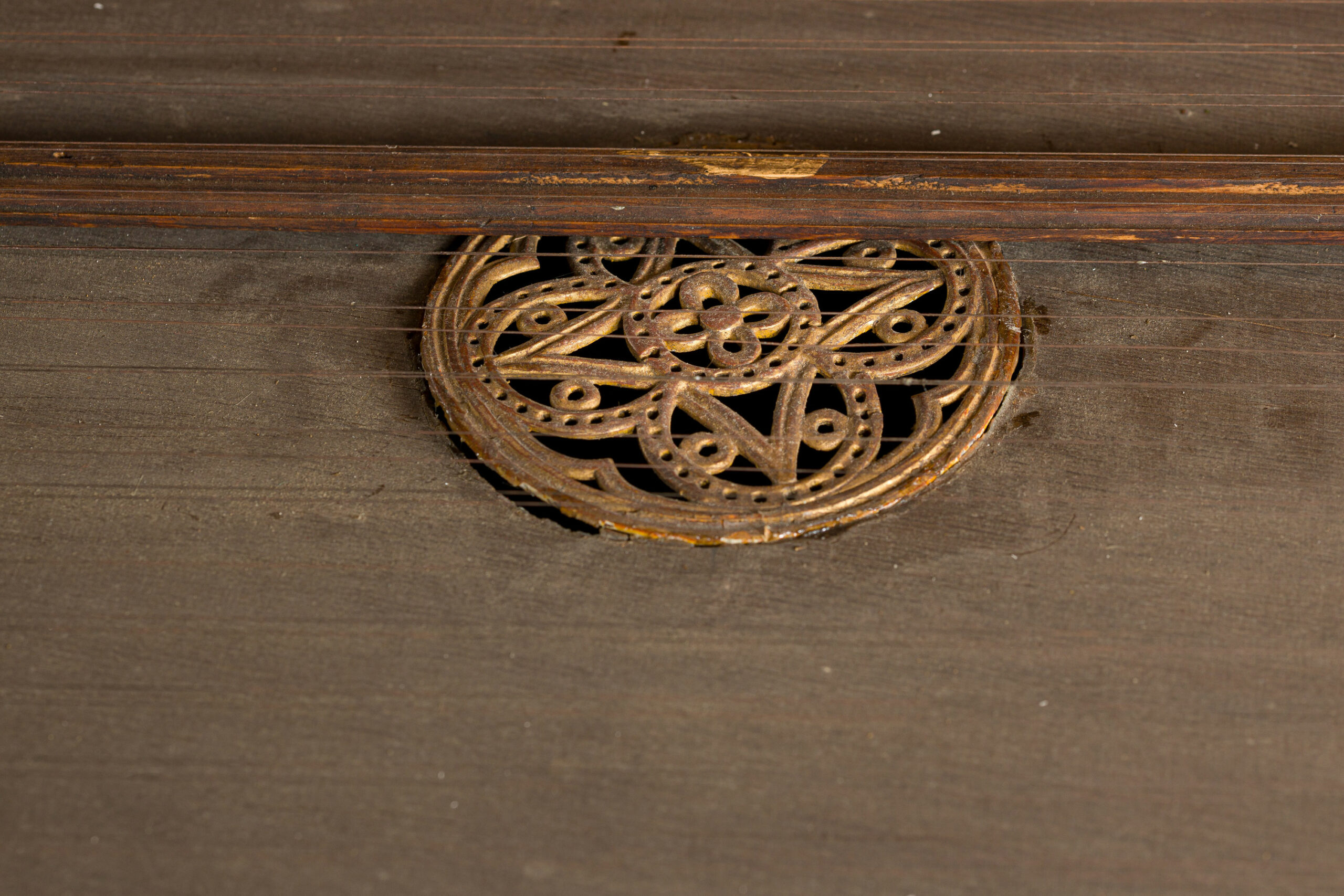
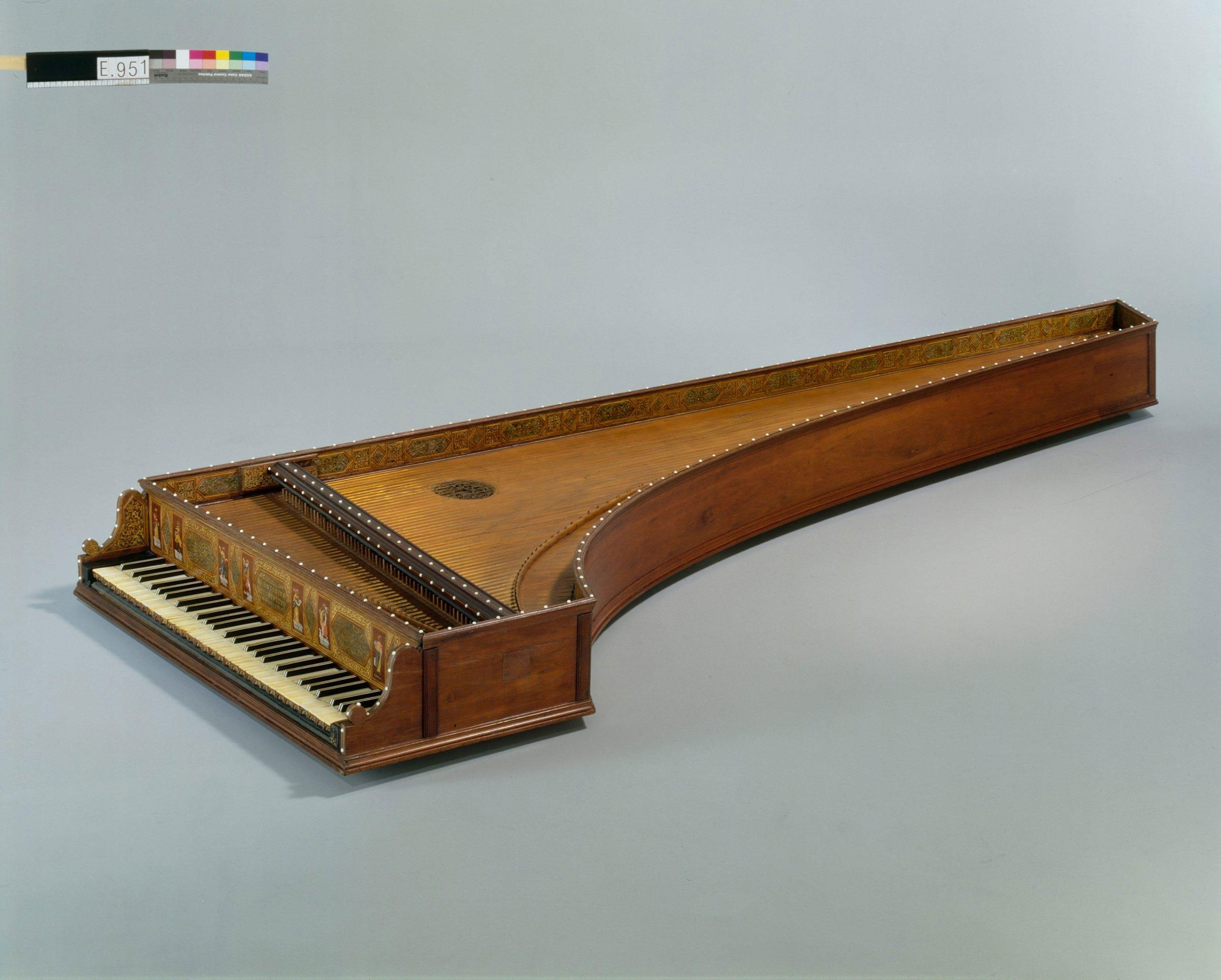
La vente du 2 mai 2026 en présente un bel exemple. Bien qu’anonyme, Christopher Clarke indique qu’il a été réalisé probablement à Venise vers 1590. Doté d’un seul clavier et de deux registres, 2×8’ ou bien 1×8’ 1×4’, il possédait vraisemblablement une grande étendue de 50 notes Do-fa4 avec octave courte (Do/Mi grave). Ce type d’instrument illustre la facture italienne par sa structure interne simple mais efficace, caractérisée par des éclisses collées perpendiculairement au fond et un barrage minimaliste, ou encore un usage de matériaux locaux.
Les cordes tendues étaient relativement courtes et le diapason souvent plus haut qu’au nord de l’Europe. En contrepartie, la légèreté de la caisse obligeait à utiliser des caisses externes de protection.
[1] Claude Mercier-Ythier, Les Clavecins, Expodif Editions, 1996
D’abord utilitaires, ces caisses externes sont vite devenues de véritables écrins richement décorés[2], comme c’est le cas de la caisse de ce clavecin qui a fait l’objet de modification. Cette évolution témoigne de la porosité entre l’instrument de musique et l’objet décoratif.
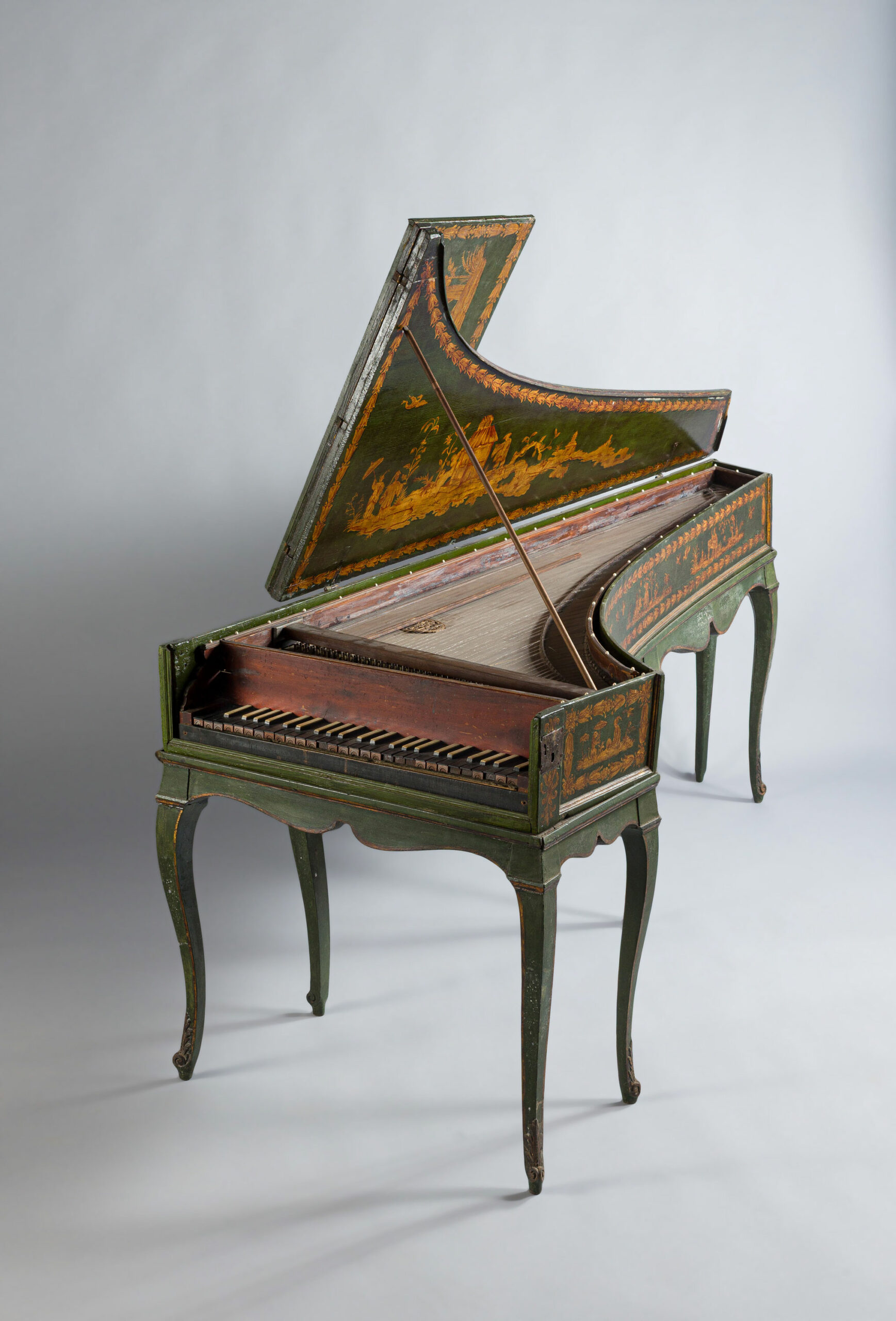
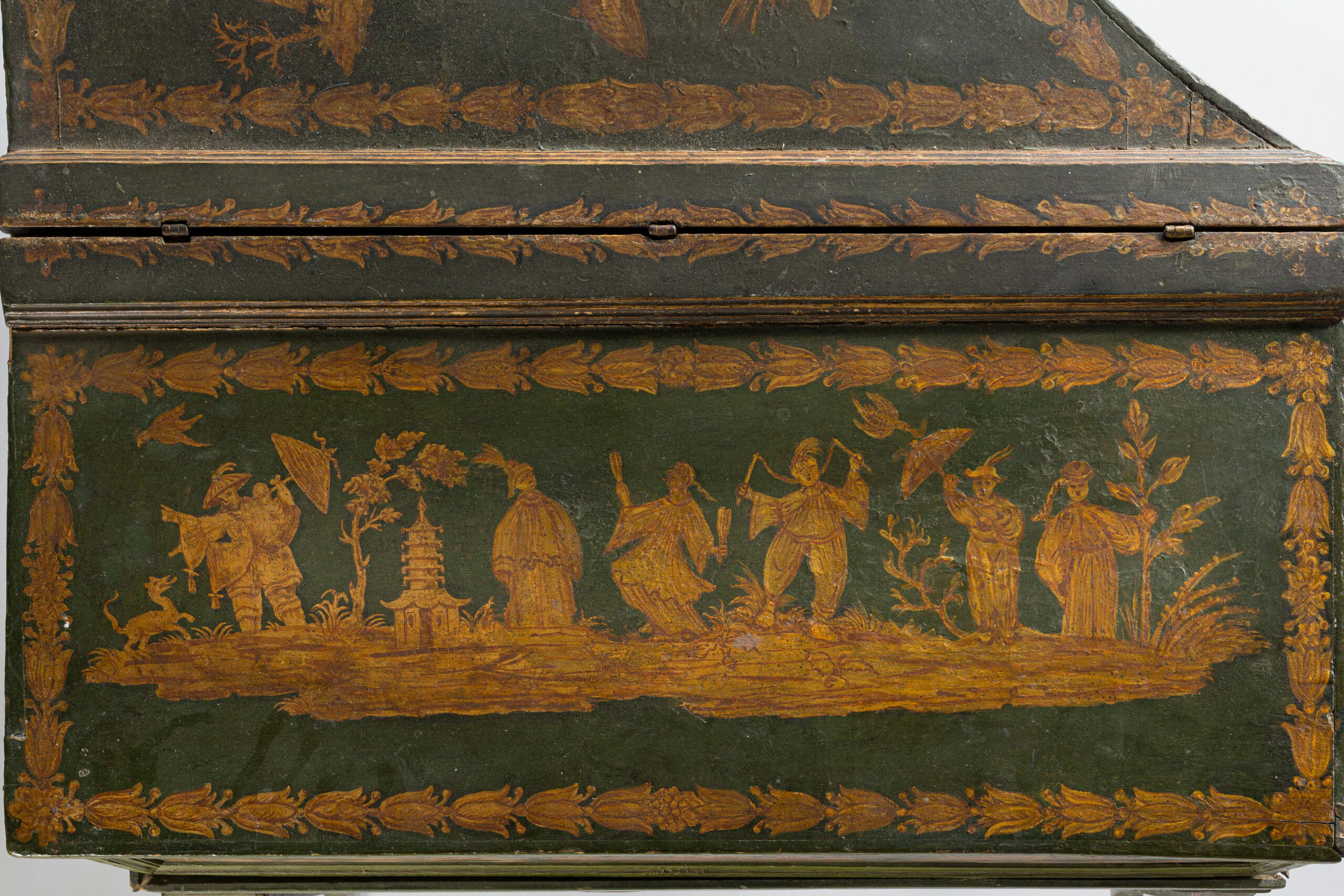
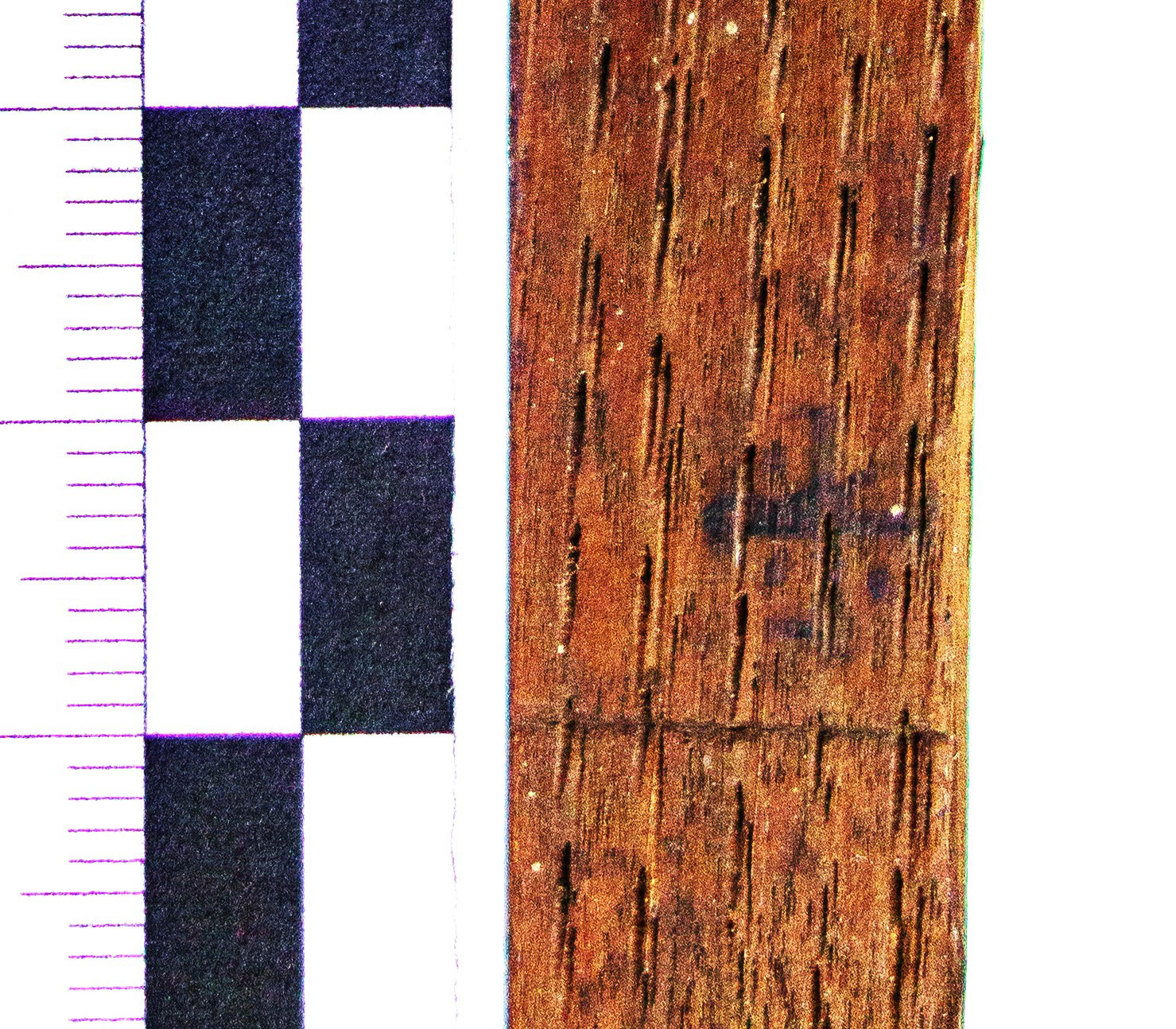
Ce modèle offre un cas d’étude des transformations subies par nombre de clavecins anciens au fil du temps. En effet, vers la fin du XVIIIème siècle, l’instrument a été remanié pour répondre aux goûts du temps. Une nouvelle caisse extérieure a été fabriquée, en peuplier, élégamment peinte de chinoiseries dorées sur fond vert et montée sur un piètement à sept pieds galbés. Christopher Clarke explique notamment, dans son rapport d’expertise (voir PDF joint), qu’un nouveau clavier a également probablement été installé à cette époque, en châtaignier, avec plaquettes de touches en ébène et feintes de bois noirci plaquées d’os. Son étendue, toujours de 50 notes, a été modifiée pour donner une octave grave chromatique de Do à ré4 (sans Do# grave), conformément aux tessitures en usage. De telles modifications étaient fréquentes pour maintenir les clavecins anciens baroques “au goût du jour”.
[2] Claude Mercier-Ythier, Les Clavecins, Expodif Editions, 1996
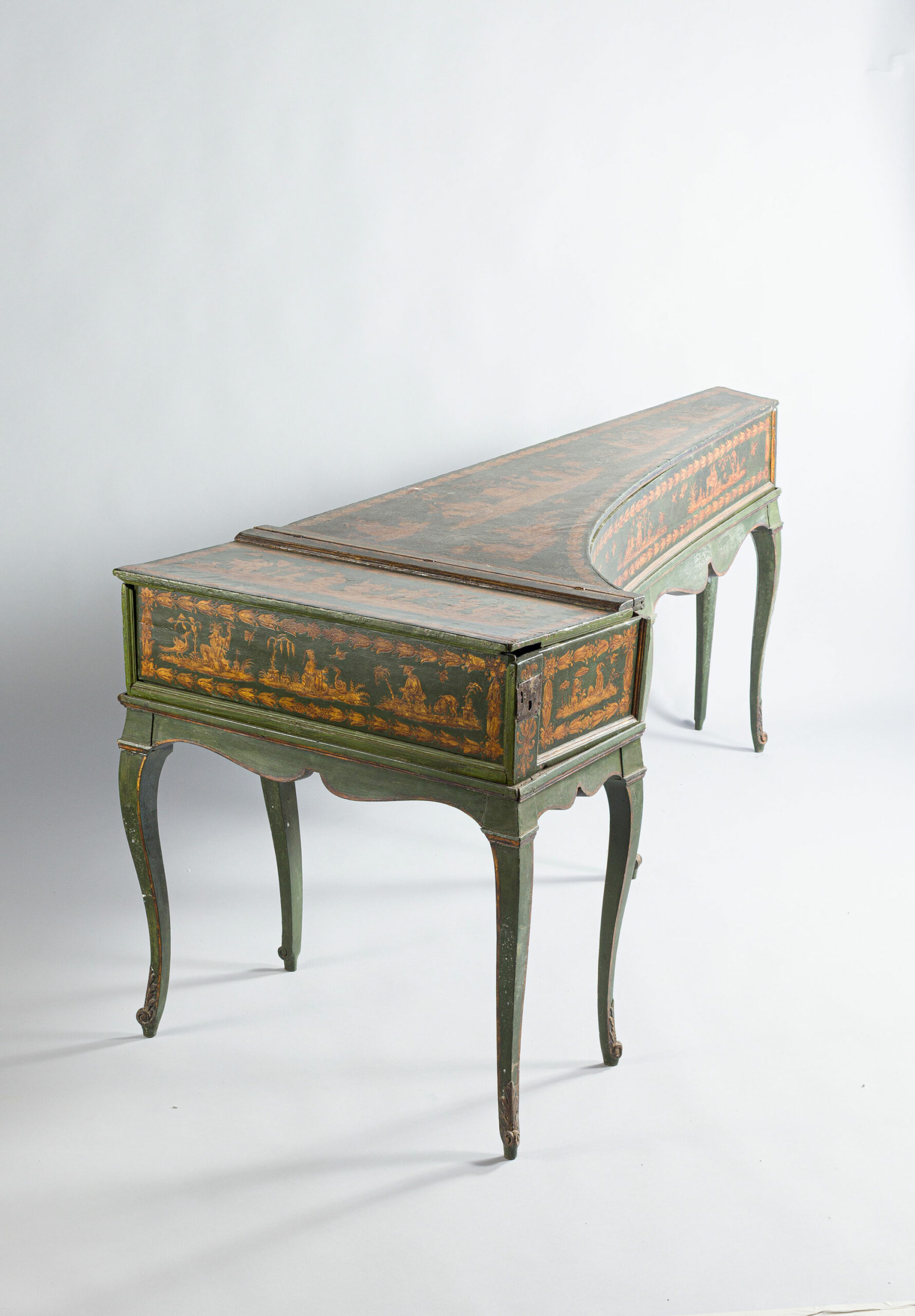
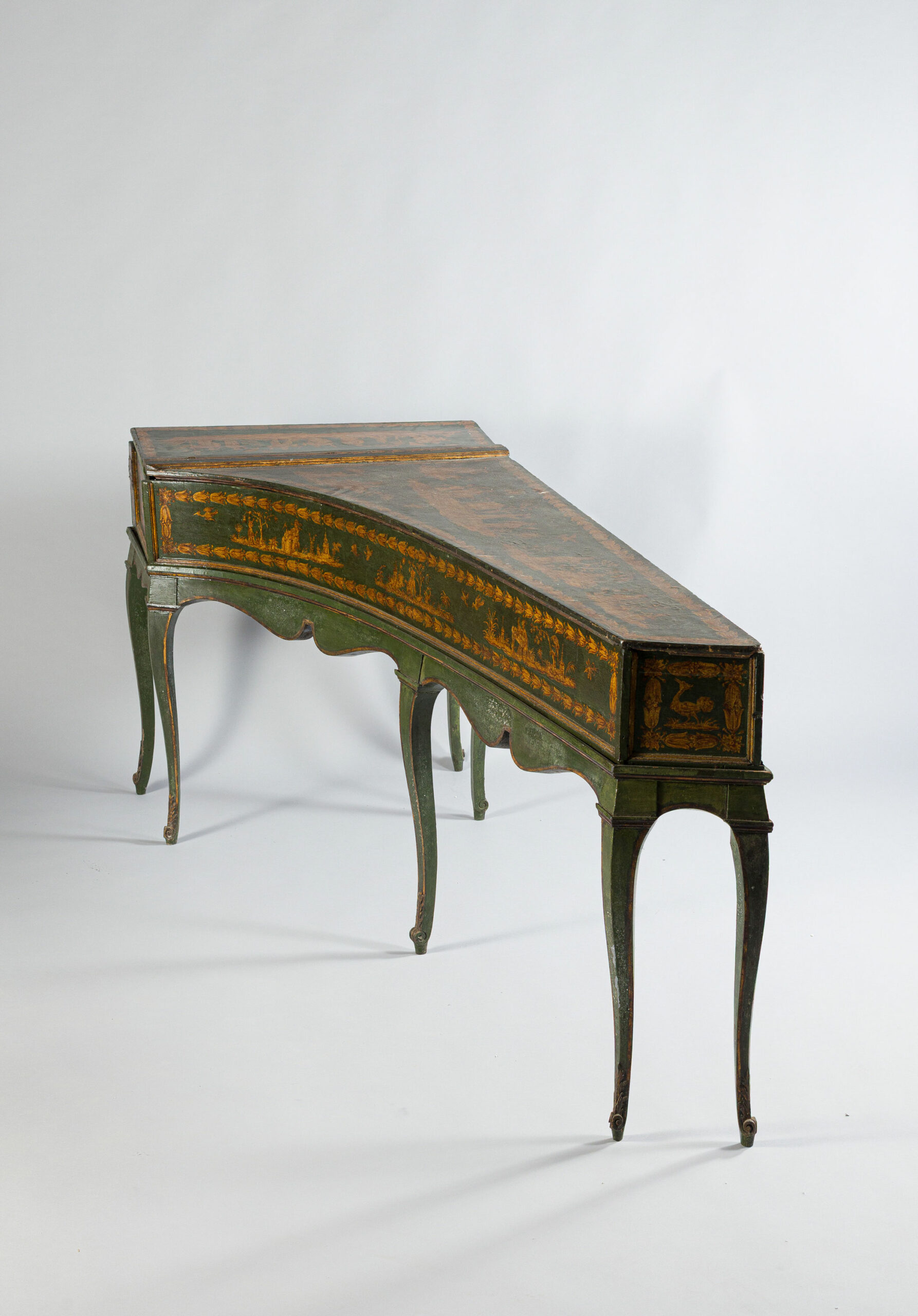
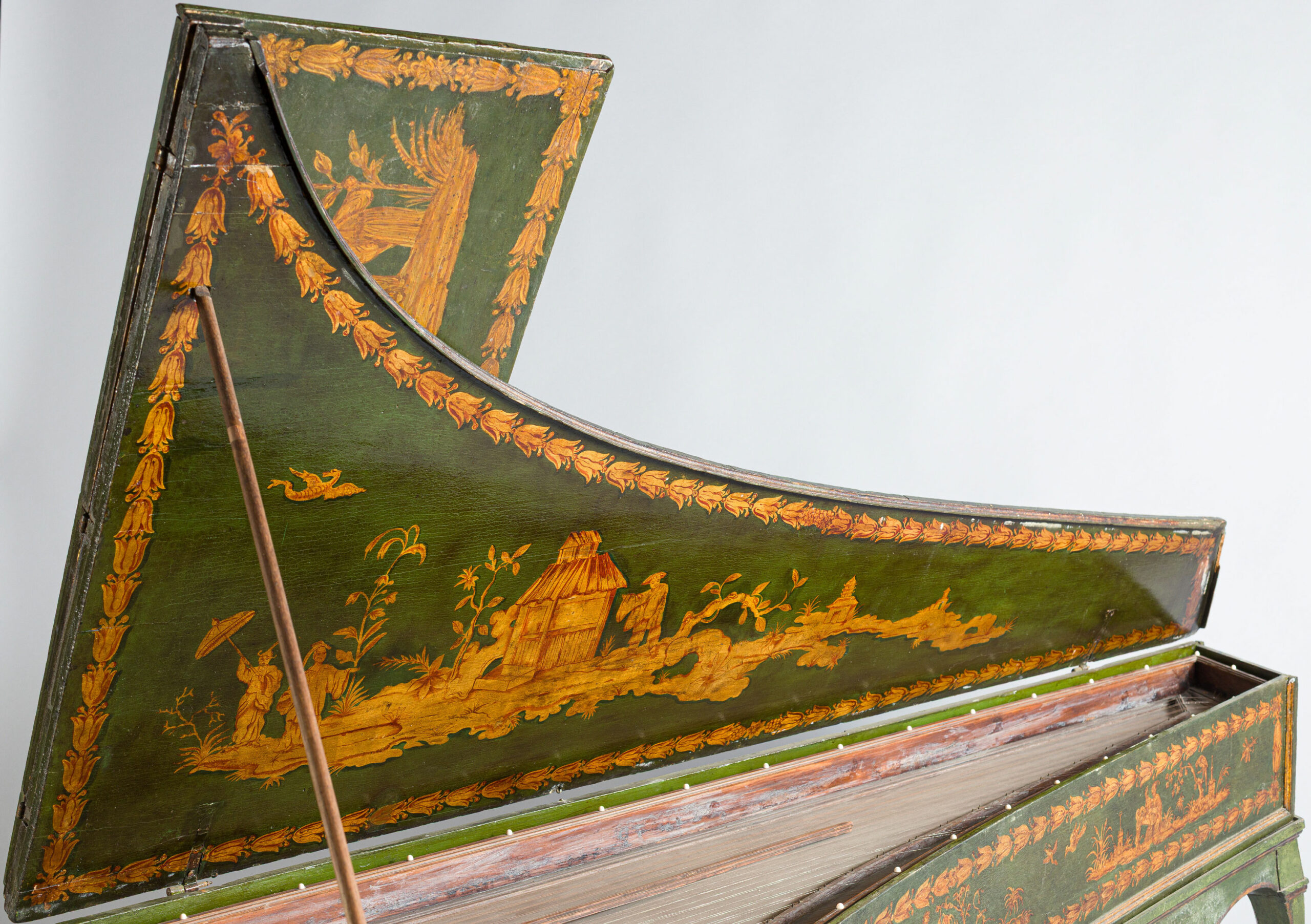
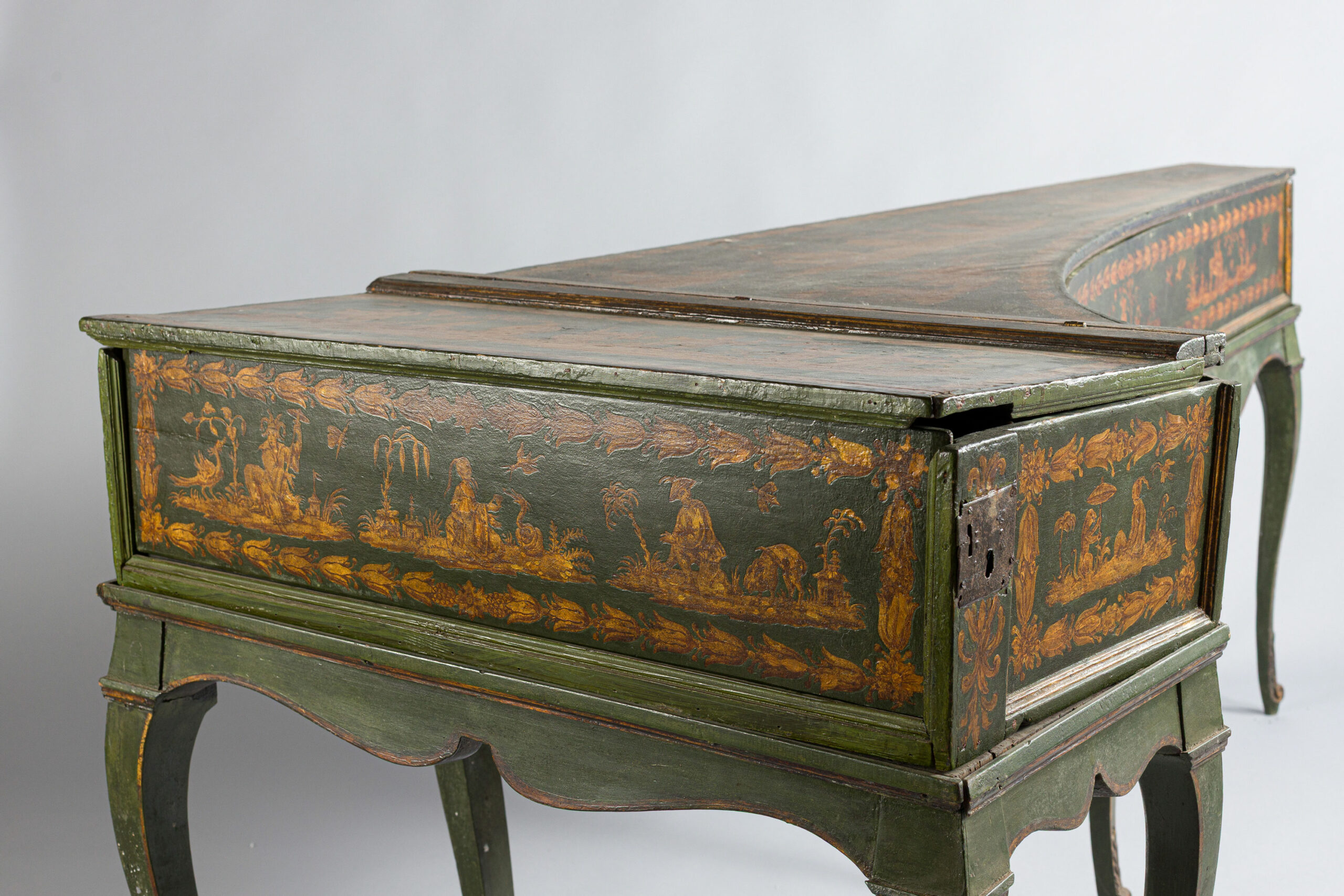
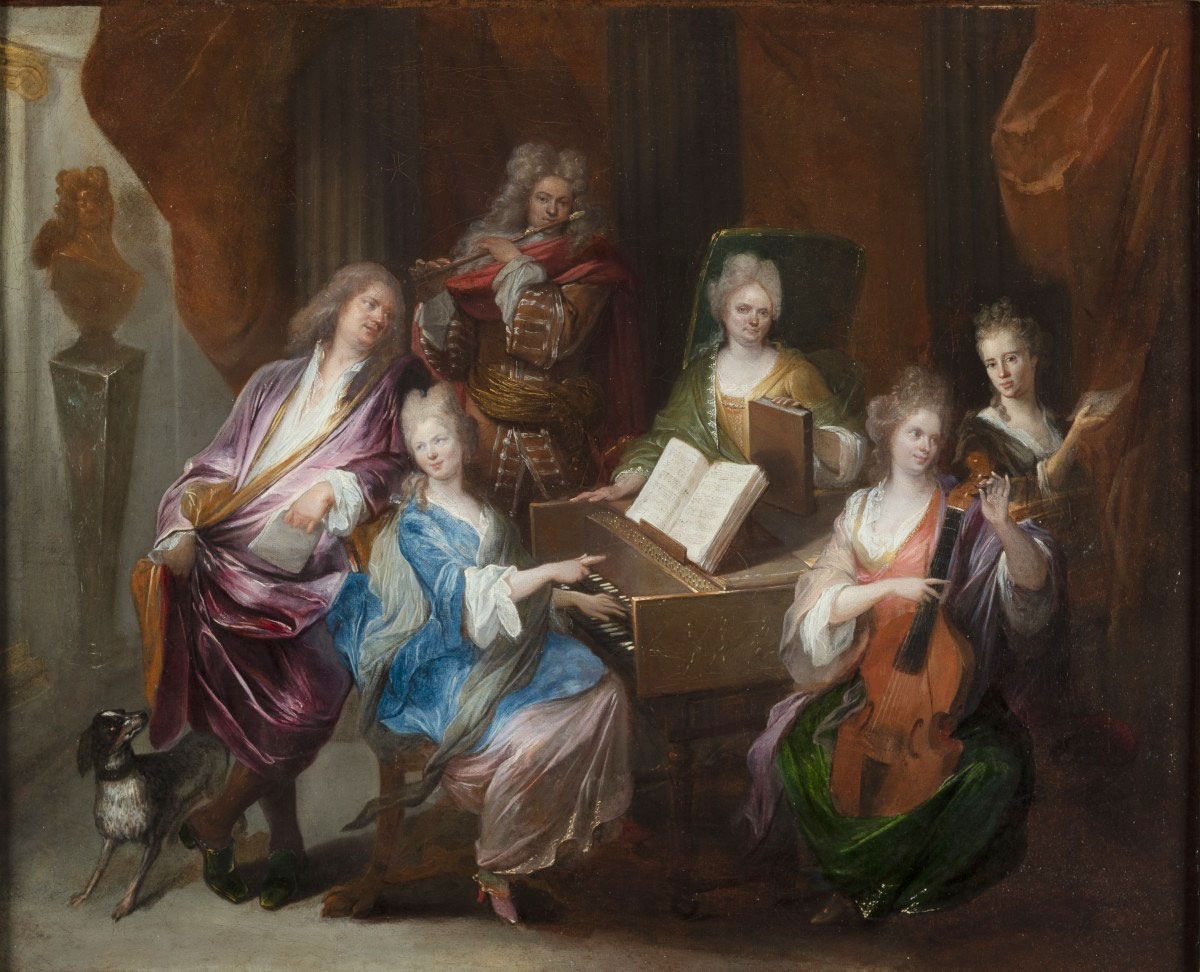
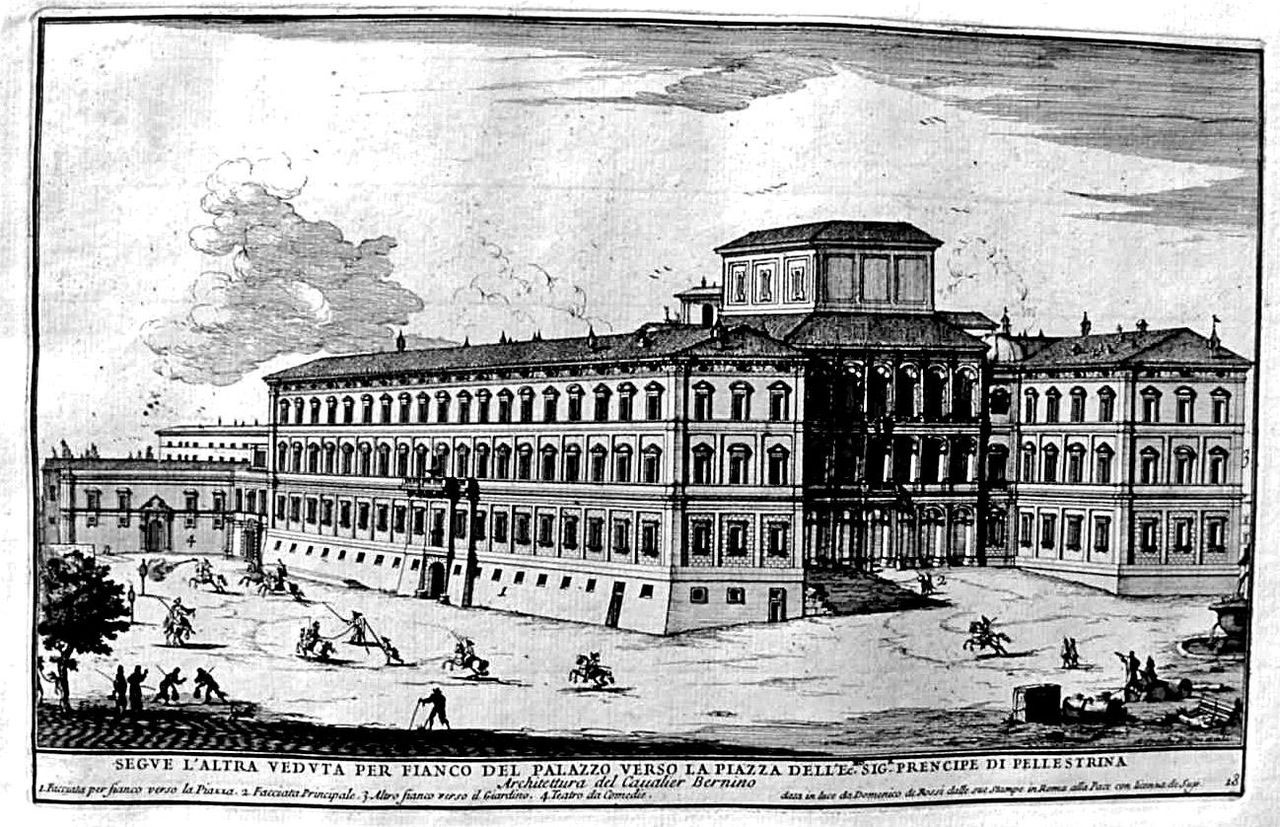
Ces pratiques de facture et de remaniement prennent tout leur sens replacées dans la tradition romaine du XVIIème siècle. À Rome, le clavecin occupe une place centrale dans la vie musicale des milieux aristocratiques et humanistes. Les grandes familles nobles – Barberini, Rospigliosi, Pamphilj, Pallavicini, etc. – sont d’importants mécènes qui intègrent la musique à leur sphère culturelle. La collection instrumentale des Pallavicini-Rospigliosi en offre un bel exemple[1]. Giulio Rospigliosi, futur pape Clément IX, évoluait dans le cercle des Barberini sous le pontificat d’Urbain VIII, famille qui apporta une contribution décisive au développement de la musique et du théâtre baroques à Rome – en témoignent le célèbre clavecin Barberini et la harpe Barberini conservés aujourd’hui[2]. Posséder un clavecin relevait autant de la pratique musicale que de la représentation sociale.
[1] D. Di Castro, “Music in a Roman Palazzo: The Pallavicini and Rospigliosi Instruments,” in Marvels of Sound and Beauty: Italian Baroque Musical Instruments, éd. G. Guazzotti, Florence: Giunti, 2007, p. 128–135
[2] D. Di Castro, “Music in a Roman Palazzo: The Pallavicini and Rospigliosi Instruments,” in Marvels of Sound and Beauty: Italian Baroque Musical Instruments, éd. G. Guazzotti, Florence: Giunti, 2007, p. 128–135
L’instrument, disposé dans les salles d’apparat ou les gabinetti de musique des palais, servait aux académies musicales privées, à l’accompagnement des chanteurs et à l’éducation des membres de la famille, tout en affirmant le statut cultivé de ses propriétaires. Le clavecin était donc à la fois un instrument de musique, un objet de curiosité artistique et un symbole de culture. Les archives patrimoniales romaines confirment cet usage social, puisque les inventaires des palais détaillent les clavecins au même titre que les tableaux ou bibliothèques, insistant sur leur richesse décorative et leur intégration au décor des pièces. Par exemple, un inventaire de 1708 du palais Pallavicini mentionne un “clavecin noir décoré d’or” dans la grande galerie, sur pieds tournés dorés[1]. De même, en 1719, le palais de Zagarolo comportait une “chambre des clavecins”, témoignant de la diffusion du clavecin dans la haute société romaine de l’époque[2].
[1] D. Di Castro, “Music in a Roman Palazzo: The Pallavicini and Rospigliosi Instruments,” in Marvels of Sound and Beauty: Italian Baroque Musical Instruments, éd. G. Guazzotti, Florence: Giunti, 2007, p. 128–135
[2] D. Di Castro, “Music in a Roman Palazzo: The Pallavicini and Rospigliosi Instruments,” in Marvels of Sound and Beauty: Italian Baroque Musical Instruments, éd. G. Guazzotti, Florence: Giunti, 2007, p. 128–135
Les deux clavecins présentés lors de la vente Vichy Enchères du 2 mai 2026 offrent ainsi un aperçu particulièrement révélateur de la tradition italienne de la facture instrumentale entre la fin du XVIème et le premier tiers du XVIIème siècle. Le premier, probablement construit à Venise vers 1590, témoigne de la structure originelle des clavecins italiens de la Renaissance et de leur adaptation aux goûts musicaux des siècles suivants, comme l’illustrent les transformations réalisées au XVIIIème siècle. Le second, attribuable à Francesco Fabbri, appartient quant à lui à une catégorie beaucoup plus rare d’instruments où la facture, la culture et la représentation sociale se rejoignent. Nous vous donnons rendez-vous à Vichy Enchères le 2 mai 2026 pour la vente de ces deux remarquables clavecins.
The Vichy Enchères sales of wind and plucked string instruments on 30 April and 2 May 2026 will include two Italian harpsichords that are particularly representative of the history of instrument making between the late Renaissance and the early Baroque periods. The first, anonymous, was probably made in Venice around 1590. Although it underwent alterations in the 18th century, it remains a valuable example of the evolution of Italian harpsichords, which were altered over time to keep up with the changes in tastes and musical practices. The second instrument, made around 1630, is notable for its historical significance and the exceptional richness of its original decoration. It is signed “FF,” and all points to it being the work of Francesco Fabbri. The instrument immediately stands out amongst the small number of extant 17th-century Italian harpsichords due to its craftsmanship, its decoration and its condition. Indeed, very few instruments from this period still preserve so many original elements and feature such elaborate decoration. This instrument is therefore a rare testament to Fabbri’s work, but also to its cultured patron, immersed in the literary culture of the Seicento.
Francesco Fabbri was a harpsichord maker who was born around 1591 and died on 19 July 1675. He was originally from Ripa, in the diocese of Senigallia in the Marche region, which can be ascertained from historical documents and instruments where it is expressly mentioned, alongside his name which appears in the Latinized form “Franciscus Faber” or “Faber Senigallia”. His activity is also well documented in Rome from 1629 onwards, illustrating a common practice among 17th-century Italian craftsmen who included their city of origin on their labels while developing their businesses in more prosperous urban centres. In Rome, Fabbri appears regularly in the registers alongside his nephews Carlo and Filippo, who were also instrument makers.
The proximity of their workshops and the frequency of these mentions suggest that they worked within the same family network, perhaps even in a shared workshop, which was common practice at the time. The inventory taken after his death on 19 July 1675[1] and fortunately preserved, lists, in particular, tastature, misure da cimbalo da fondo and various specialized tools, attesting to the existence of an organised workshop. Through his work, Fabbri was therefore fully immersed in the circle of Roman instrument makers, which also included Boni, Albana, Ridolfi, Giusti and Zenti.
[1] Barbieri, Patrizio. «Cembalaro, organaro, chitarraro et fabricant de cordes armoniche chez Polyanthea technica di Pinaroli (1718–32)». Recercare , Vol.1, 1989, 123-210.
The number of instruments attributed to Francesco Fabbri is particularly small, which gives each of the surviving examples exceptional value in understanding his work. The reference work by Boalch identifies only five instruments that can be attributed to the maker. Remarkably, these instruments were made within a very short period – between 1629 and 1631 – which coincides precisely with Fabbri’s years in Rome.
This group of instruments attests to excellent craftsmanship and ingenious research. Let us mention, for instance, a harpsichord dated 1631, now in the Germanisches Nationalmuseum in Nuremberg, which Christopher Stembridge[1] identified as having originally been a cimbalo cromatico with 19 notes per octave. This instrument can therefore be understood in the context of the research on enharmonics of the early Baroque, suggesting that Fabbri worked for erudite musicians and particularly sophisticated musical circles.
The other known extant instruments by this maker are scattered around the world, attesting to his appreciation among experts. One example dated 1629 is in the Jean-Pierre Decavele collection in Toulouse; another, from 1631, is in New York, in the collection of the Barbetta restaurant – which, according to the establishment, was approached by the Metropolitan Museum asking for it to be donated. Another example is located in its country of origin, in Imola, Italy, in the collections of the Fondazione Accademia Incontri col Maestro. Finally, the last instrument recorded by Boalch is indeed the harpsichord presented here, currently located in Paris, and which will be auctioned by Vichy Enchères on 2 May 2026. Fabbri’s output was therefore quite limited, suggesting that he made instruments to order, primarily for a high-ranking clientele, as suggested by the sophistication of certain examples, such as the one for sale. Everything points to his instruments having been designed to satisfy the expectations of particularly cultured musicians and patrons, who were attuned to the acoustic and theoretical experiments of the early 17th century.
[1] Stembridge, Christopher. « Le Cimbalo Cromatico et autres instruments à clavier italiens à dix-neuf divisions ou plus par octave (spécimens survivants et preuves documentaires) ». Performance Practice Review , vol. 6, n° 1, 1993, p. 33-59. L’auteur soutient que cet instrument était à l’origine un cimbalo cromatico, disposant de 19 notes par octave entre do et do, pour un total de 65 notes.
This harpsichord is in good condition for a 17th-century instrument. Unlike the majority of Italian harpsichords of this period, it has not been extensively restored or altered, allowing us to study an instrument whose condition is close to original. The presence of a cypress soundboard, an internal case of the same wood, and a fir back corresponds to practices documented in Italian and Roman harpsichord making during the Seicento.
As Christopher Clarke – expert and maker of early keyboard instruments – points out, the keyboard, made of beech veneered with boxwood, retains its original numbering and much of its original material, with bog oak sharps and a C/E–c³ range – typical of Italian instruments made before 1650.
A large number of the original jacks are also still present, which is rare for an instrument of this period. As the expert concludes, the condition of the instrument as a whole indicates it has been maintained regularly and has not been subject to major alterations.
Another thing that is rare and interesting for its time is that the instrument bears two signatures attributable to Francesco Fabbri, one on the first key and one on the last. The first key is inscribed “+(I)HS FF”, and the last “+ FF”. The inscription “+ IHS”, associated with a cross inserted into the letter “H” and a heart pierced by three nails, refers to Jesuit iconography. Finally, we should note that the instrument’s dimensions and lightness are typical of extant 17th-century Italian harpsichords. The absence of any major alteration makes it a particularly valuable example of Italian harpsichord making during Francesco Fabbri’s time.
The decoration on the keyboard cover, composed of two putti holding a shield depicting a tower with a radiant sun above it, provides a valuable clue as to the instrument’s provenance. While the painting of these arms reflects the freedom and imagination typical of 17th-century Italian artists, the combination of charges composing this coat of arms – namely, azure, a silver tower set upon a green terrace, accompanied by a golden sun above it – may refer to the arms of the Marcelli family, documented in Rome during the same period. As discussed previously, Fabbri seems to have worked primarily on prestigious commissions, and it is therefore not surprising to find the arms of a prominent Roman family featured on this example. It is worth remembering that musical practice and the ownership of instruments were, in particular at that time, a means of asserting one’s high social status. The presence of these arms therefore confirms that the maker worked for a privileged clientele and provides an indication of provenance, namely the Marcelli family. Furthermore, during the first third of the 17th century, there was an important member of the Marcelli family active in the world of music: “Placido Marcelli, a famous singer from Rome, who served for a long time in the Alphonsine Chapel”.
This theory is reinforced by the fact that Placido Marcelli and Francesco Fabbri were in the same place at the same time.
As discussed previously, the surviving instruments of Francesco Fabbri are dated between 1629 and 1631, the period when his activity is clearly documented in Rome. Furthermore, the sources show that Placido Marcelli was also present in the Papal States in the 1630s, as evidenced in particular by a letter dated August 1638, signed “Placido Marcelli” from Oricola[1].
[1] Bollettino della Deputazione Abruzzese di Storia Patria / Bollettino storico della Marsica, transcription de documents d’archives d’Oricola (XVIIᵉ siècle), mention d’une lettre signée Placido Marcelli, août 1638
The Roman musical world at the time was a small circle connecting chapels, academies, patrons and instrument makers, making it entirely plausible that the two men met. This connection makes even more sense when considering Marcelli’s musical practice. As a professional singer, he clearly relied on instrumental accompaniment, particularly from the harpsichord or organ, which were the preferred instruments for basso continuo to accompany singing in early 17th-century music. A singer of his standing would have been expected to own or commission a harpsichord to perform his repertoire, whether in a domestic, academic or aristocratic setting.
Historical sources allow us to trace the remarkable career of Placido Marcelli, a well-documented figure on the Italian musical scene of the late 16th and early 17th centuries.
The name Placido Marcelli appeared for the first time in the edition of Intermedii et concerti published in Venice in 1591 by Cristofano Malvezzi, which recounts the Florentine festivities organized in 1589 on the occasion of the marriage of Ferdinando de Medici and Christine of Lorraine. Among the singers mentioned is Placido Marcelli, in relation to the monumental madrigal O fortunato giorno.
Between 1590 and 1598, Marcelli is found in historical documents as cantore of the ducal chapel in Ferrara. At that time, the Este court was one of the most innovative musical centres in Italy, visited notably by Carlo Gesualdo, a celebrated composer and – incidentally – harpsichordist.
Placido Marcelli’s renown seems to have been sufficiently established by the beginning of the 17th century for the Roman painter Ottavio Leoni to paint his portrait around 1605 – 1608[1].
As the ultimate form of gratitude, in 1610, the composer Alessandro Grandi dedicated to him his Primo libro de motteti a 2, 3, 4, published in Venice by Vincenti. Indeed, it appears Marcelli was behind Grandi’s appointment as choirmaster at the Accademia dello Spirito Santo. . The connection between Placido Marcelli and the practice of accompanied singing is clearly evidenced by Grandi’s dedication, since the title specifies that these works are intended to be sung “nell’organo, clavecimbalo, chitarone […] con il basso per sonare”. In this context, it is not surprising that a singer of Marcelli’s standing would have owned or commissioned a harpsichord from Fabbri.
Finally, in 1614, his name appears again in the Ferrara edition of the Motetti a cinque voci, presented as “raccolti da Placido Marcelli”[2], meaning compiled or prepared by him. The collection is dedicated to Margherita Gonzaga d’Este, Duchess of Ferrara and major patron of the arts at the Este court. This role consisting of compiling musical pieces, organizing their publication and ensuring they were dedicated to a great patron of the arts required not only to be recognized as an authority on the musical scene, but also to have a solid understanding of literature and rhetorical culture, as illustrated by the painted decoration of the harpsichord by Francesco Fabbri in the sale of 2 May 2026.
[1] Primarosa, Yuri, « Plautilla Bricci disegnatrice, pittrice, architettrice. Verso un catalogo ragionato », Ricerche di storia dell’arte, n° 141, Rome, Carocci editore, 2019
The painted decoration on this harpsichord is one of the most sophisticated still present on a 17th-century Italian instrument. Far from being merely anecdotal ornamentation, it is a truly thought-after series of pictures, where each panel – featuring coats of arms, putti or literary references – provides information about the patron and their social environment.
Therefore, the entire decoration should be understood not as a series of independent paintings, but rather as the expression of a way of thinking in which family prestige, moral imagery and literature converge. It is in the context of a Rome still steeped in the legacy of the Renaissance, where academies, private libraries and scholarly circles devoted a significant portion of their discussions to classical literature and its modern reinterpretations, that such a series of pictures can be best understood.
Inside the lid is painted one of the most surprising scenes of the all the decorative elements, which is inspired by Aristophanes’ Thesmophoriazusae. The composition does not depict a single episode, but rather several moments in the comedy. In the centre and on the right, the scene refers to the episode in which Mnesilochus, sent by his stepson Euripides to spy on women who have sworn his death because of the poet’s attacks against them, is finally unmasked after delivering a diatribe against their fickle behaviour.
The central scene likely corresponds to the moment when Mnesilochus, disguised as a man, is examined by a woman holding a distaff. The presence of the distaff – explicitly mentioned in the Thesmophoriazusae – reinforces this theory.
On the right, a man – or rather a child – is running. He can be identified as Cleisthenes, the effeminate figure sent to warn the magistrate.
The left side of the composition depicts an attempt to rescue Mnesilochus. After his capture, Mnesilochus calls upon Euripides for help. Euripides intervenes by reenacting scenes from his own tragedies. He appears here as Perseus mounted on Pegasus, in a parody of the rescue of Andromeda from the sea monster.
The painting therefore combines several successive episodes – the discovery of Mnesilochus, Cleisthenes’ intervention and Euripides’ rescue attempts – using a narrative condensation technique common in 17th-century painting.
The choice of such a subject, extremely rare in the decoration of musical instruments, suggests a patron familiar with humanist culture and the rediscovery of Greek authors – which is consistent with what we know of the learned musician Placido Marcelli.
The pastoral scene painted on the exterior of the lid depicts a musician playing the zampogna – the quintessential pastoral instrument – before a group of figures gathered in the countryside, clearly distracted or reluctant to participate. This scene represents the end of the seventh day of Boccaccio’s Decameron, and resonates with the scene from the Thesmophoriazusae depicted on the inside of the lid.
“The theme chosen by Dioneo, king of this day, was the deception of women towards their husbands. After the ten tales and a delicious meal, the servant Tindaro accompanies their dances and songs on the bagpipes; the last song, very sensual, is that of Filomena. The queen of the eighth day, Lauretta, has just been chosen; she carries laurel leaves, the symbol of her name, and announces a pause for the following two days, Friday and Saturday, in honour of Christ. Night falls; the peaceful evening comes to an end.”
Interview with Christopher Clarke, maker and expert in early keyboard instruments, March 2026
It is important to emphasize that the Decameron, in the 17th century, retained its status of seminal work, and was frequently discussed in scholarly circles. Its association with a musical instrument is therefore not accidental, since the work was a true source of inspiration for artists.
The scene’s imagery is part of a well-established tradition spanning several centuries. An example can be found in the illuminated incipit of the manuscript “Italian 63” in the Bibliothèque nationale de France, produced in Florence around 1430-1440, where young Florentines are depicted gathered in the countryside to listen to the day’s story. The composition relies in particular on the division of space into horizontal zones that structure the landscape and on the figure of the narrator, shown with his arm outstretched to emphasize the gesture of the discourse.
Finally, the harpsichord’s ribs feature a series of 14 putti engaged in various activities. Some pull invisible strings, others construct a building, yet others fill pots or busy themselves around nondescript objects. This Mannerist repertoire draws on a long Italian tradition where putti simultaneously embody the ambivalence between labour and the vanity of certain endeavours, which are often compromised by the precariousness of the world or the fallibility of actions. The series could be inspired by pictures produced by 16th-century Roman workshops, or by illustrations of moral allegories such as Cesare Ripa’s Iconologia, known to have circulated widely in literary circles. By requesting the inclusion of these pictures onto a musical instrument, the patron seems to have wanted to emphasize the importance of the creative effort and the musician’s work. It is worth noting that this putti motif, placed on the ribs, is found on other exceptional pieces. Several prestigious examples featuring the same motif can be found in the Pallavicini-Rospigliosi collections, including a monumental harpsichord belonging to Duchess Maria Camilla Pallavicini, entirely gilded and decorated by Ludovico Gimignani, with ribs featuring similar putti on a gold background. This instrument, which is over three meters long, also bore the Rospigliosi-Pallavicini coat of arms, confirming its status as a ceremonial piece[1].
[1] D. Di Castro, “Music in a Roman Palazzo: The Pallavicini and Rospigliosi Instruments,” in Marvels of Sound and Beauty: Italian Baroque Musical Instruments, éd. G. Guazzotti, Florence: Giunti, 2007, p. 128–135
As discussed above, in 17th-century Italy, decorated harpsichords were very often commissioned by aristocratic families, the most famous of which were the Este, Medici and Farnese families. However, prominent professional musicians in Italy, such as Placido Marcelli, also enjoyed a high standing allowing them to commission luxurious instruments. The unique decoration on this harpsichord attributed to Francesco Fabbri, clearly indicates that it was designed as a prestigious objects intended for the cultural elite. The integrity of its condition and decoration makes it an exceptional example of Italian harpsichord making during the Seicento.
At the turn of the 16th and 17th centuries, Italy established itself as the cradle of the harpsichord, with a very distinctive school of making. Italian instruments of the Renaissance and early Baroque periods are generally light in design, constructed from cypress wood (or sometimes cedar), with very thin walls, and a soundboard also made of conifer (often cypress or spruce) [1].
The sale of 2 May 2026 includes a fine example of these. Although anonymous, Christopher Clarke indicates that it was probably made in Venice around 1590. It features a single keyboard and two registers, either 2×8’ or 1×8’ and 1×4’, and likely had a wide range of 50 notes from C to F4 with a short octave (low C/E). This type of instrument is typical of Italian making, with its simple yet effective internal structure, featuring ribs glued perpendicular to the back and a minimalist bracing system, as well as the use of local materials.
The taut strings were relatively short and the pitch often higher than in Northern Europe. As a result, the lightness of the case necessitated the use of protective outer cases.
[1] Claude Mercier-Ythier, Les Clavecins, Expodif Editions, 1996
These outer cases, which were initially utilitarian, quickly became richly decorated luxury items [2], as with the case of this harpsichord, which has been modified. This evolution demonstrates the blurring of lines between musical instrument and decorative object.
This instrument is a good example of the sorts of alterations many antique harpsichords went through over time. Indeed, towards the end of the 18th century, the instrument was redesigned to suit contemporary tastes. A new outer case of poplar was made, elegantly painted with gilt chinoiserie on a green background, and mounted on a seven-legged cabriole stand. Christopher Clarke explains in his expert report (see attached PDF) that a new keyboard, made of chestnut wood, with ebony key plates and blackened wood key faces inlaid with bone, was also likely fitted at that time. Its range, still composed of 50 notes, was modified to provide a chromatic low octave from C to D4 (without low C#), in accordance with the ranges in use at the time. Such alterations were common to keep antique Baroque harpsichords “up to date”.
[2] Claude Mercier-Ythier, Les Clavecins, Expodif Editions, 1996
These practices of construction and alteration can be fully understood when considered in the context of 17th-century Roman tradition. In Rome, the harpsichord occupied a central place in the musical life of aristocratic and educated circles. The great noble families – Barberini, Rospigliosi, Pamphilj, Pallavicini, etc. – were important patrons who integrated music into their cultural life. The Pallavicini-Rospigliosi instrument collection provides a fine example of this[1]. During the pontificate of Urban VIII, Giulio Rospigliosi, the future Pope Clement IX, entered the circle of the Barberini, a family that made a decisive contribution to the development of Baroque music and theatre in Rome – as evidenced by the famous Barberini harpsichord and harp preserved today[2]. Owning a harpsichord was as much about musical practice as it was about social status.
[1] D. Di Castro, “Music in a Roman Palazzo: The Pallavicini and Rospigliosi Instruments,” in Marvels of Sound and Beauty: Italian Baroque Musical Instruments, éd. G. Guazzotti, Florence: Giunti, 2007, p. 128–135
[2] D. Di Castro, “Music in a Roman Palazzo: The Pallavicini and Rospigliosi Instruments,” in Marvels of Sound and Beauty: Italian Baroque Musical Instruments, éd. G. Guazzotti, Florence: Giunti, 2007, p. 128–135
The instrument, which was placed in the ceremonial rooms or music gabinetti of palaces, was used in private music academies, to accompany singers and to educate family members, while also acting as a status symbol for its owners. The harpsichord was therefore simultaneously a musical instrument, an object of artistic curiosity and a symbol of culture. Roman historical documents confirm this social use, as palace inventories list harpsichords alongside paintings and libraries, noting their decorative qualities and integration into the rooms’ decor. For example, a 1708 inventory of the Palazzo Pallavicini mentions a “black harpsichord decorated with gold” in the grand gallery, on turned and gilded legs[1]. Similarly, in 1719, the Palazzo Zagarolo included a “harpsichord room”, attesting to the harpsichord’s widespread use among Roman high society at the time [2].
[1] D. Di Castro, “Music in a Roman Palazzo: The Pallavicini and Rospigliosi Instruments,” in Marvels of Sound and Beauty: Italian Baroque Musical Instruments, éd. G. Guazzotti, Florence: Giunti, 2007, p. 128–135
[2] D. Di Castro, “Music in a Roman Palazzo: The Pallavicini and Rospigliosi Instruments,” in Marvels of Sound and Beauty: Italian Baroque Musical Instruments, éd. G. Guazzotti, Florence: Giunti, 2007, p. 128–135
The two harpsichords presented at the Vichy Enchères sale on 2 May 2026, therefore provide a particularly revealing glimpse into the Italian tradition of instrument making between the late 16th and the first third of the 17th century. The first, probably built in Venice around 1590, attests to the way Italian Renaissance harpsichords were originally constructed, and how they were subsequently modified to suit the evolving musical tastes, as illustrated by the alterations carried out in the 18th century. The second, attributed to Francesco Fabbri, belongs to a much more select group of instruments in which craftsmanship, culture and social status converge. We invite you to join us at Vichy Enchères on 2 May 2026 for the sale of these two remarkable harpsichords.