Le cor de chasse ancien occupe une place singulière dans l’histoire des cuivres naturels. Instrument d’appel avant d’être instrument de musique, il accompagne pendant plusieurs siècles les pratiques cynégétiques aristocratiques et royales, avant de donner naissance à la trompe de chasse française, puis d’ouvrir la voie au cor d’orchestre moderne. Dans cette évolution de l’instrument, la famille Crétien, active d’abord à Vernon puis à Paris, joue un rôle majeur. Les cors qui lui sont attribués comptent parmi les témoins majeurs, bien que rares, de l’histoire. Nous sommes donc particulièrement heureux de vous présenter un nouveau modèle, un grand cor en demi-lune, découvert à l’occasion de nos ventes de vents et de cordes pincées des 30 avril et 2 mai 2026.
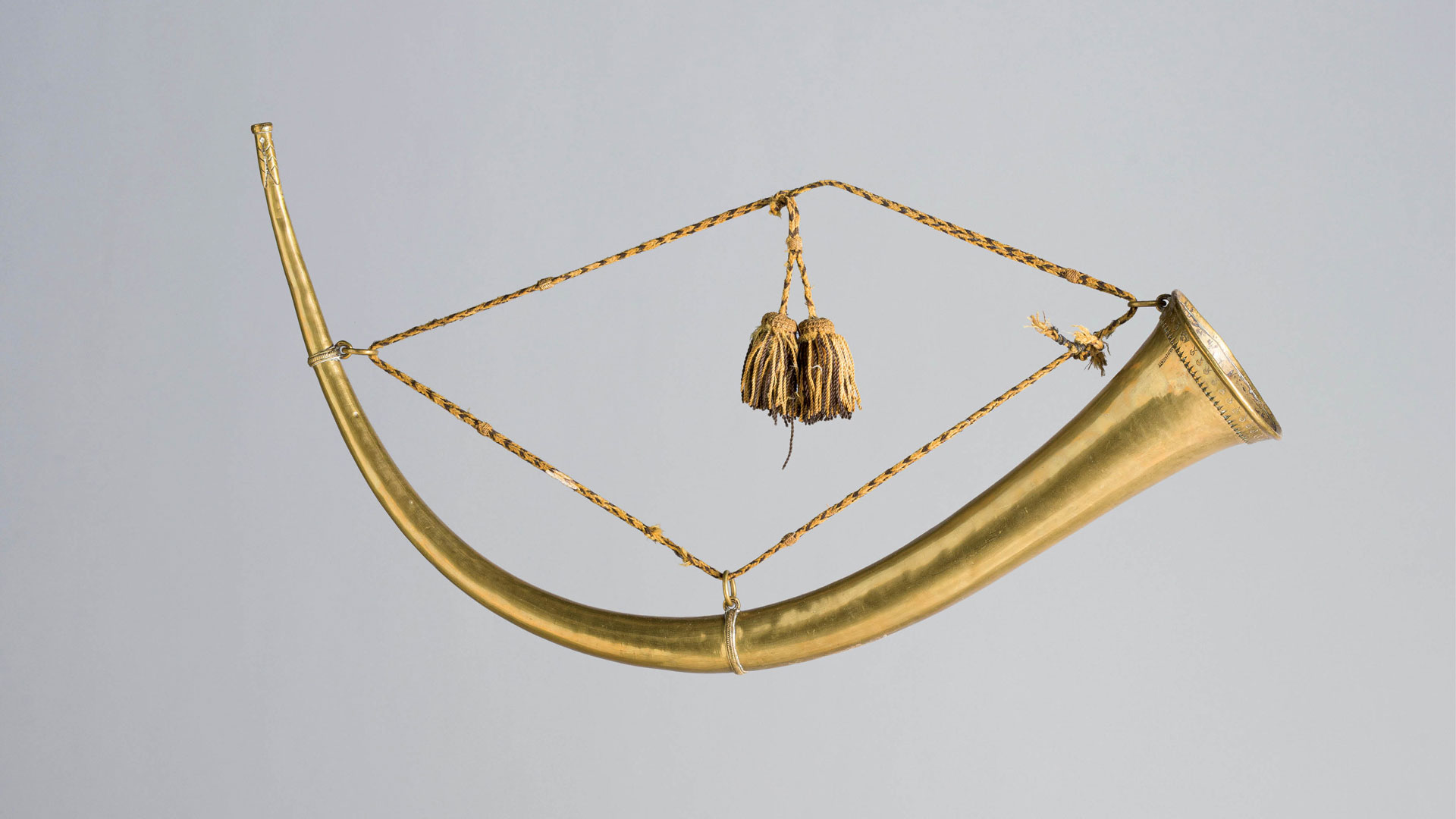
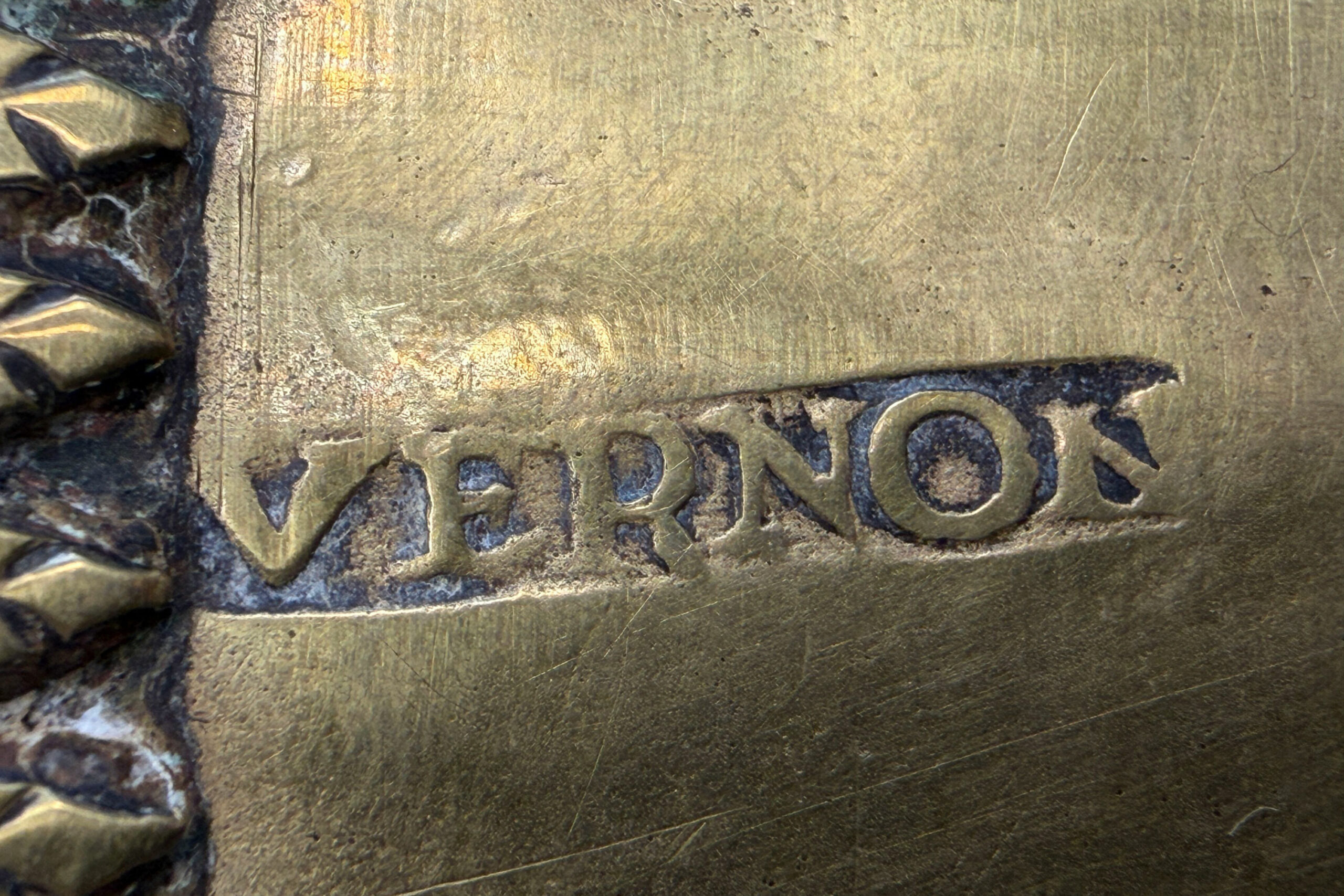
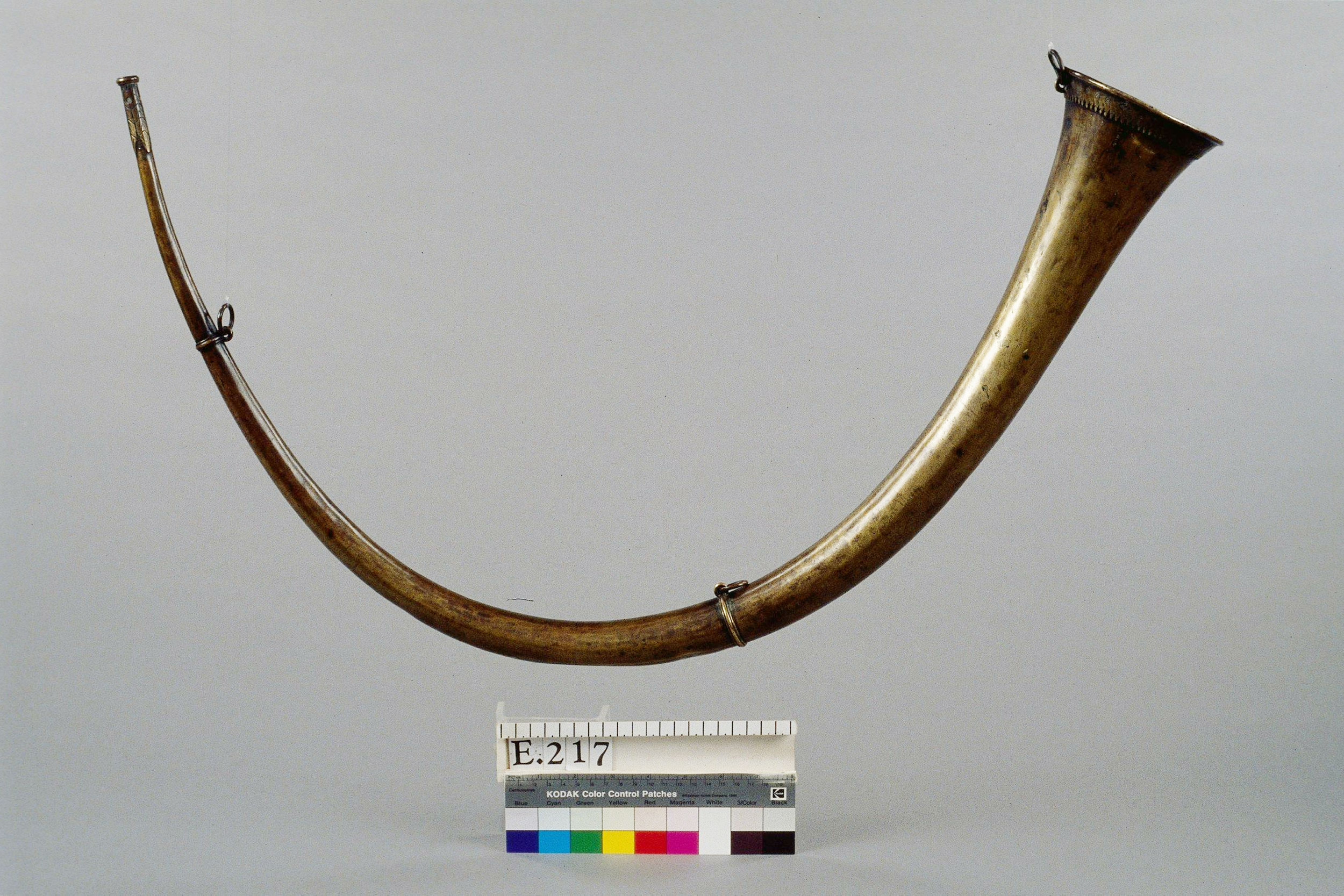
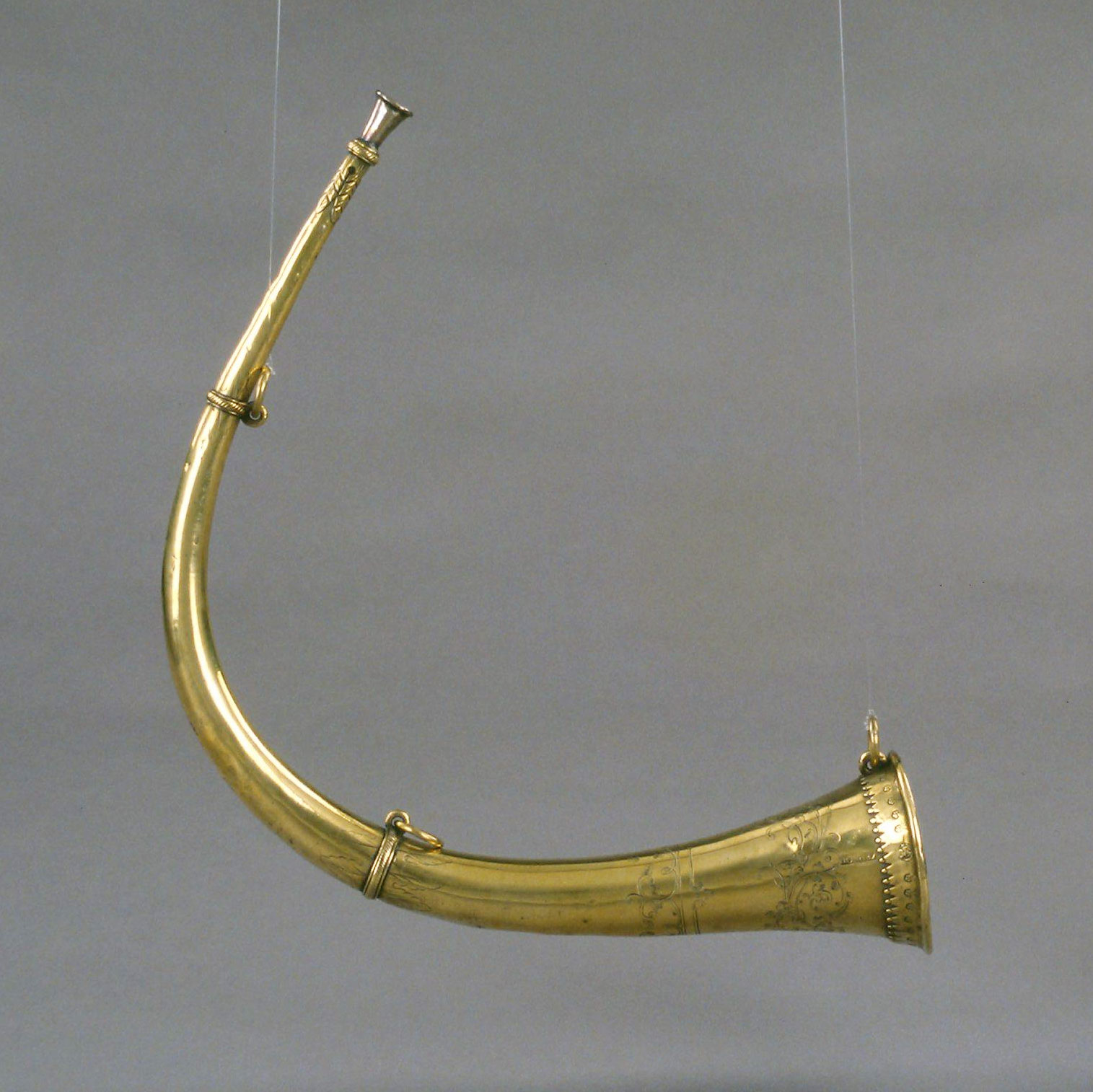
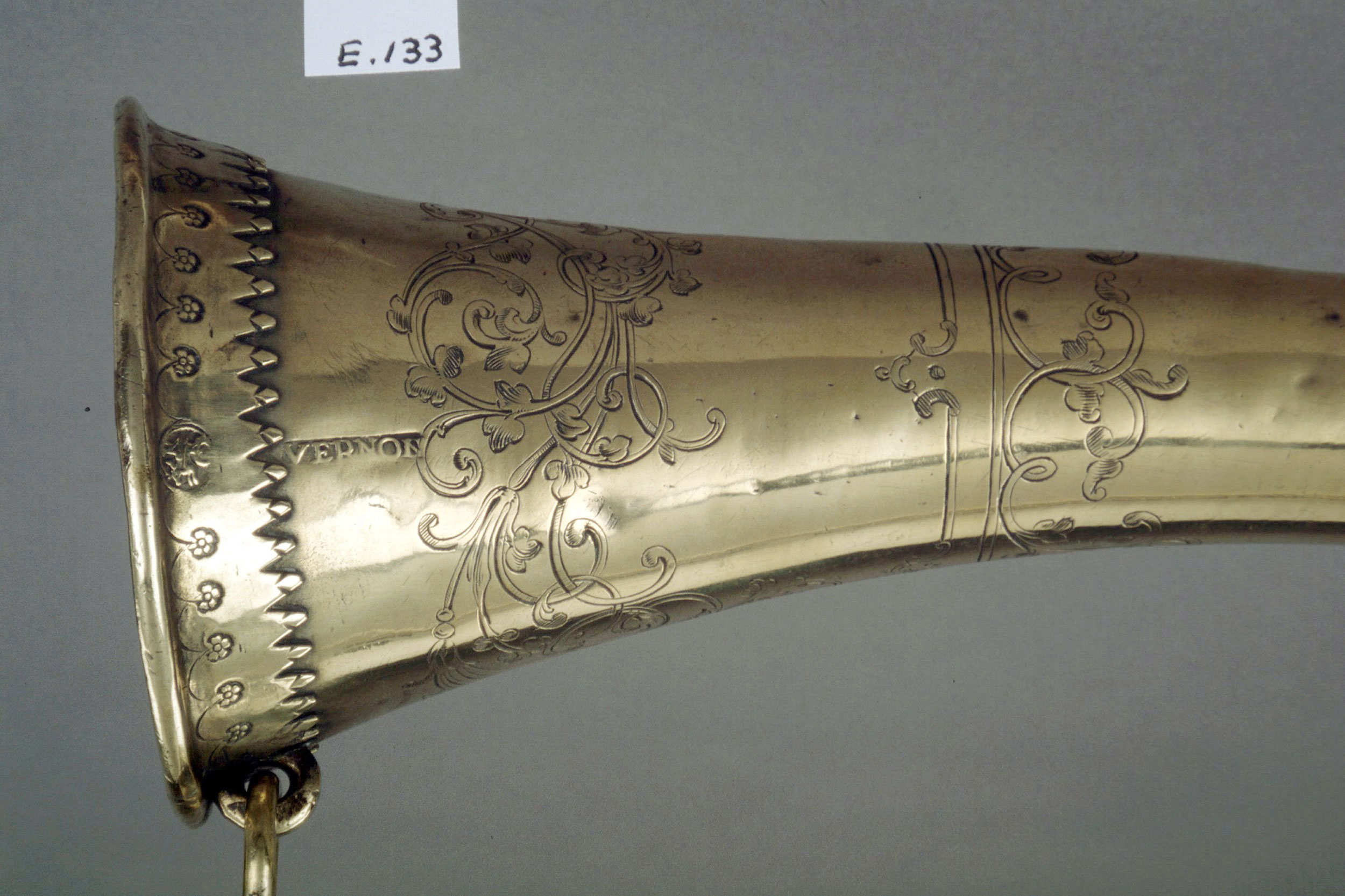
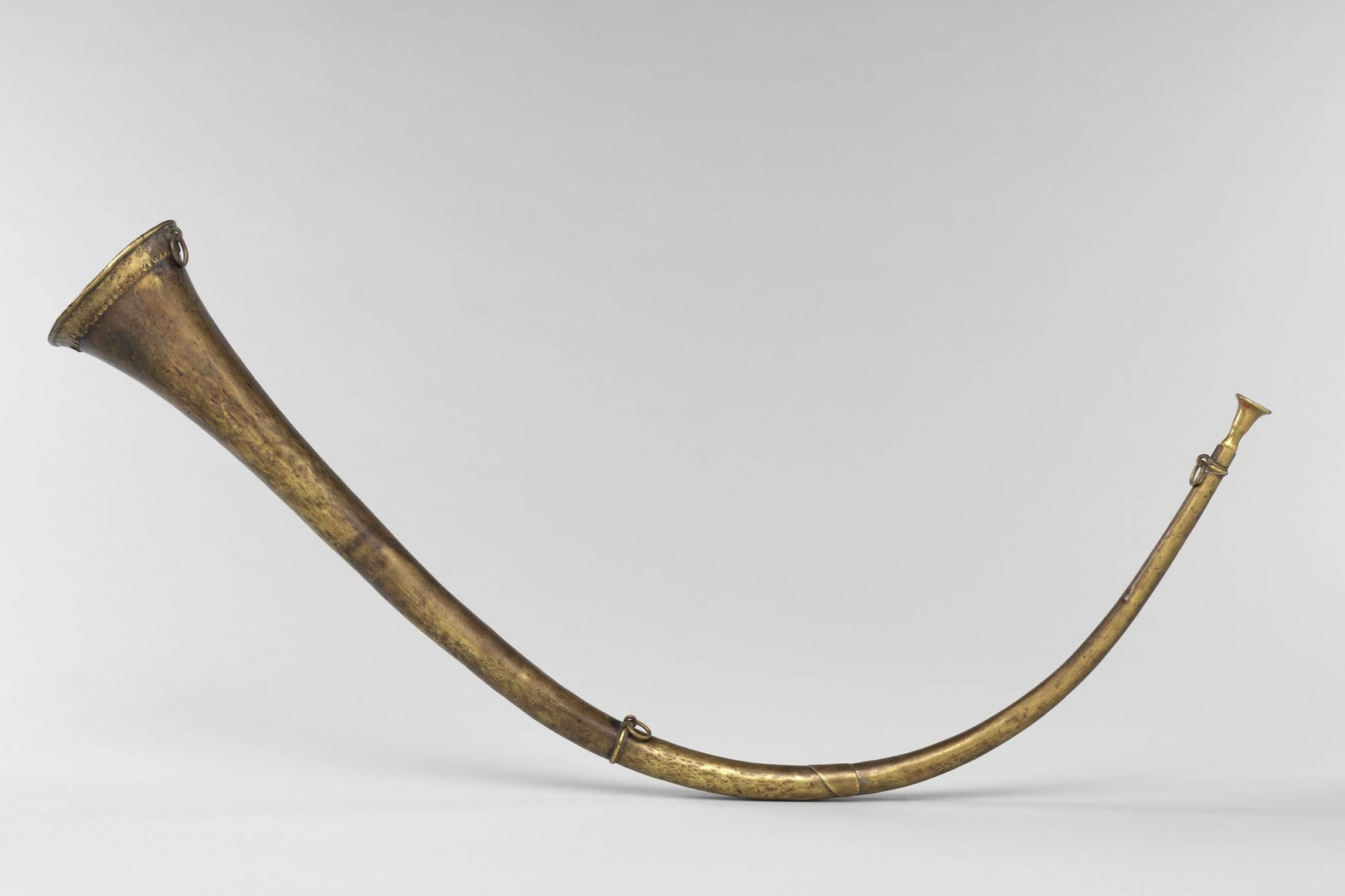
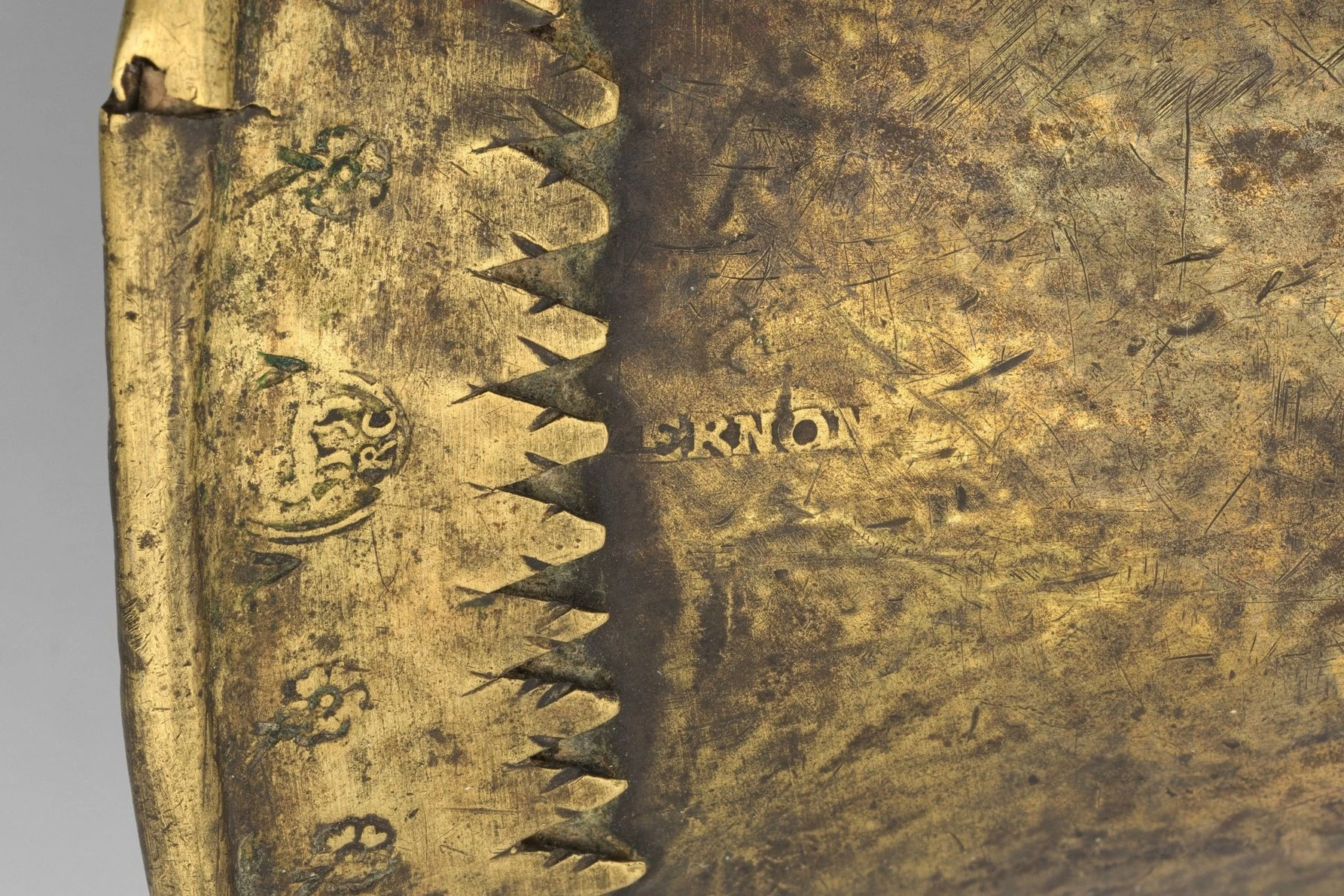
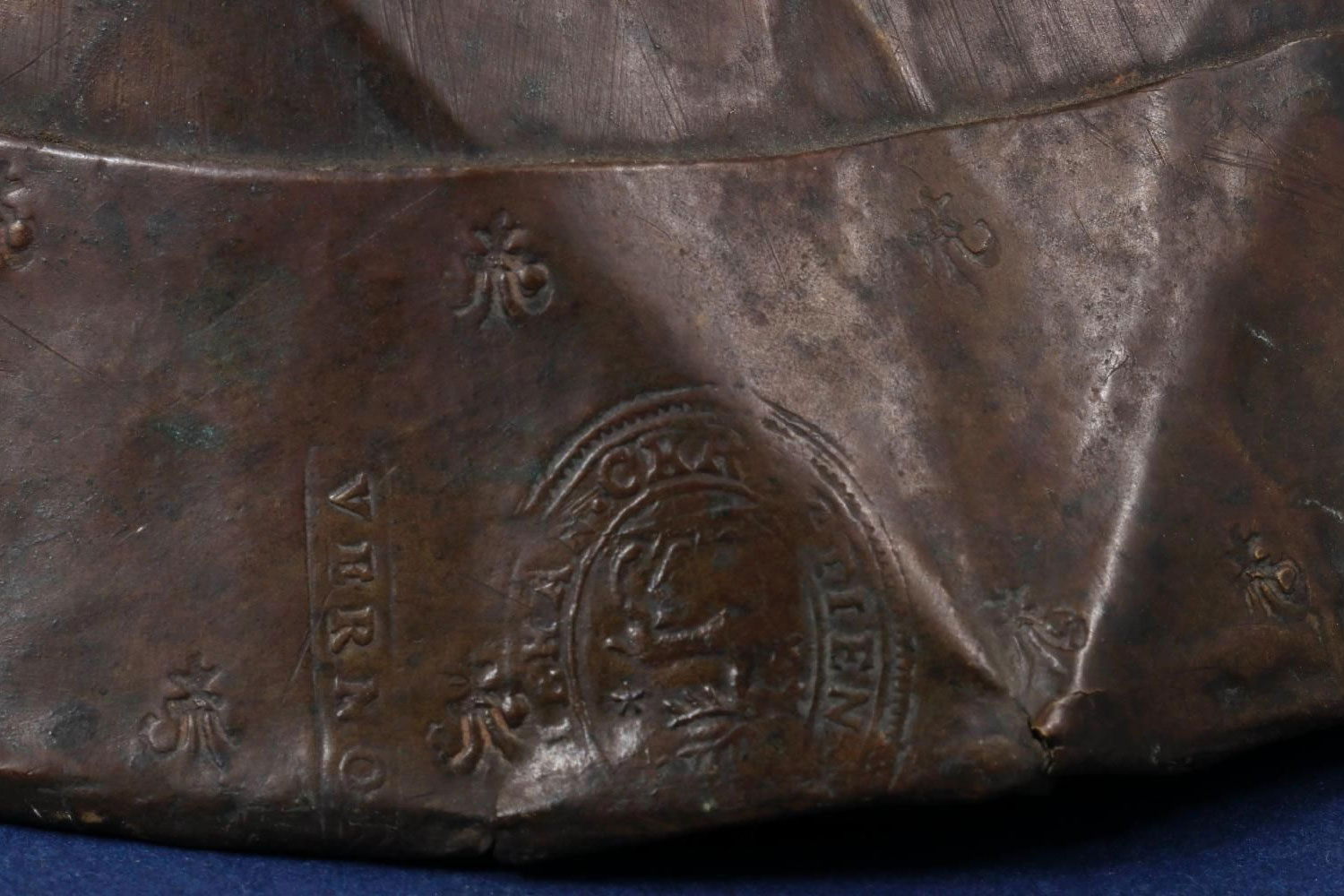
L’instrument découvert à l’occasion des ventes de Vichy Enchères est un cor de chasse en laiton de forme demi-lune, dit “grand cor”. Il porte l’estampille « R » / [cerf fuyant] / « C » / « VERNON », que l’on retrouve également sur trois cors conservés au Musée de la Musique à Paris et attribués à Crétien Père, c’est-à-dire Raulin I Crétien. Cette estampille invite donc à penser que le cor de la vente serait de la main de Crétien Père, et qu’il aurait été réalisé durant la première moitié du XVIIème siècle.
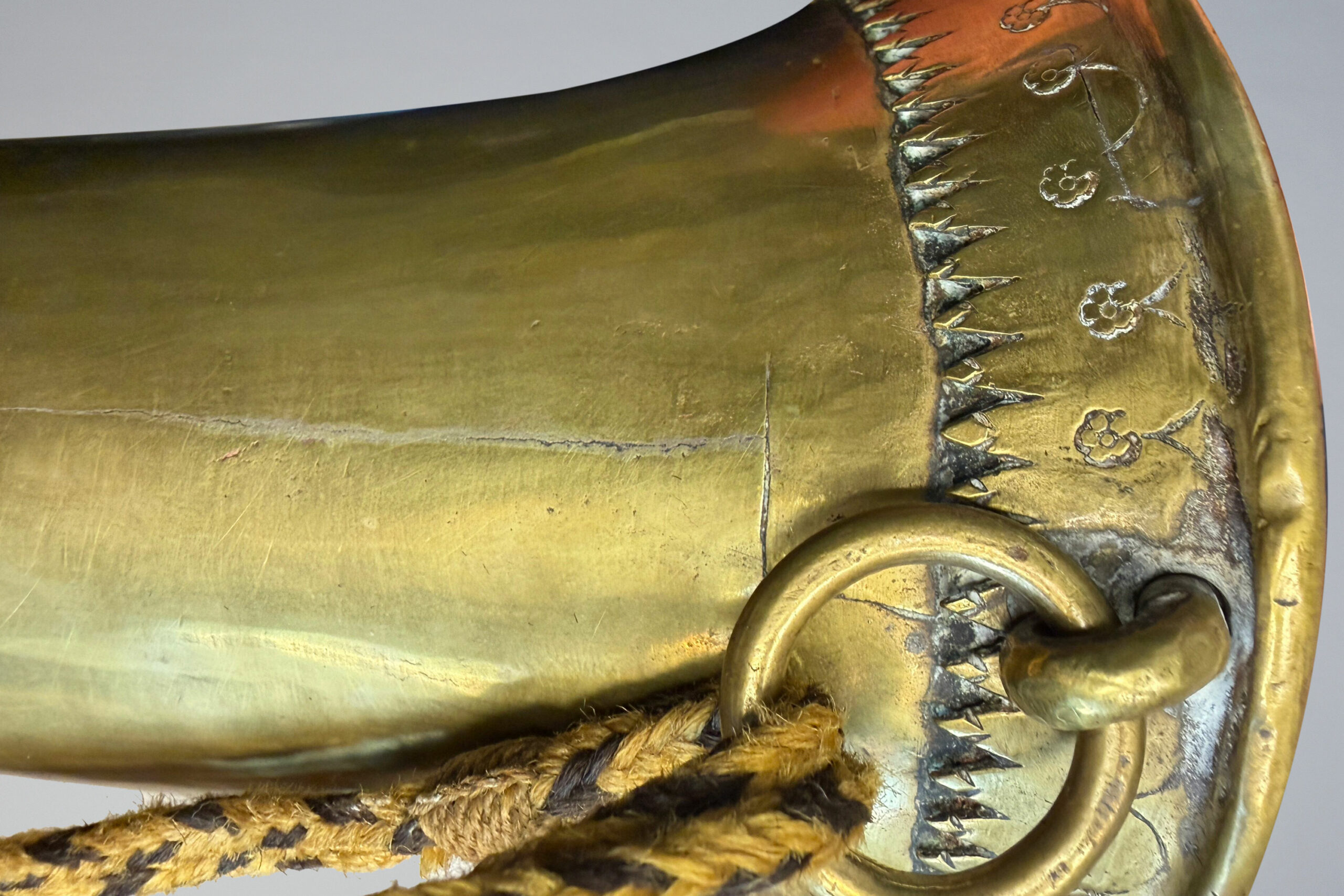
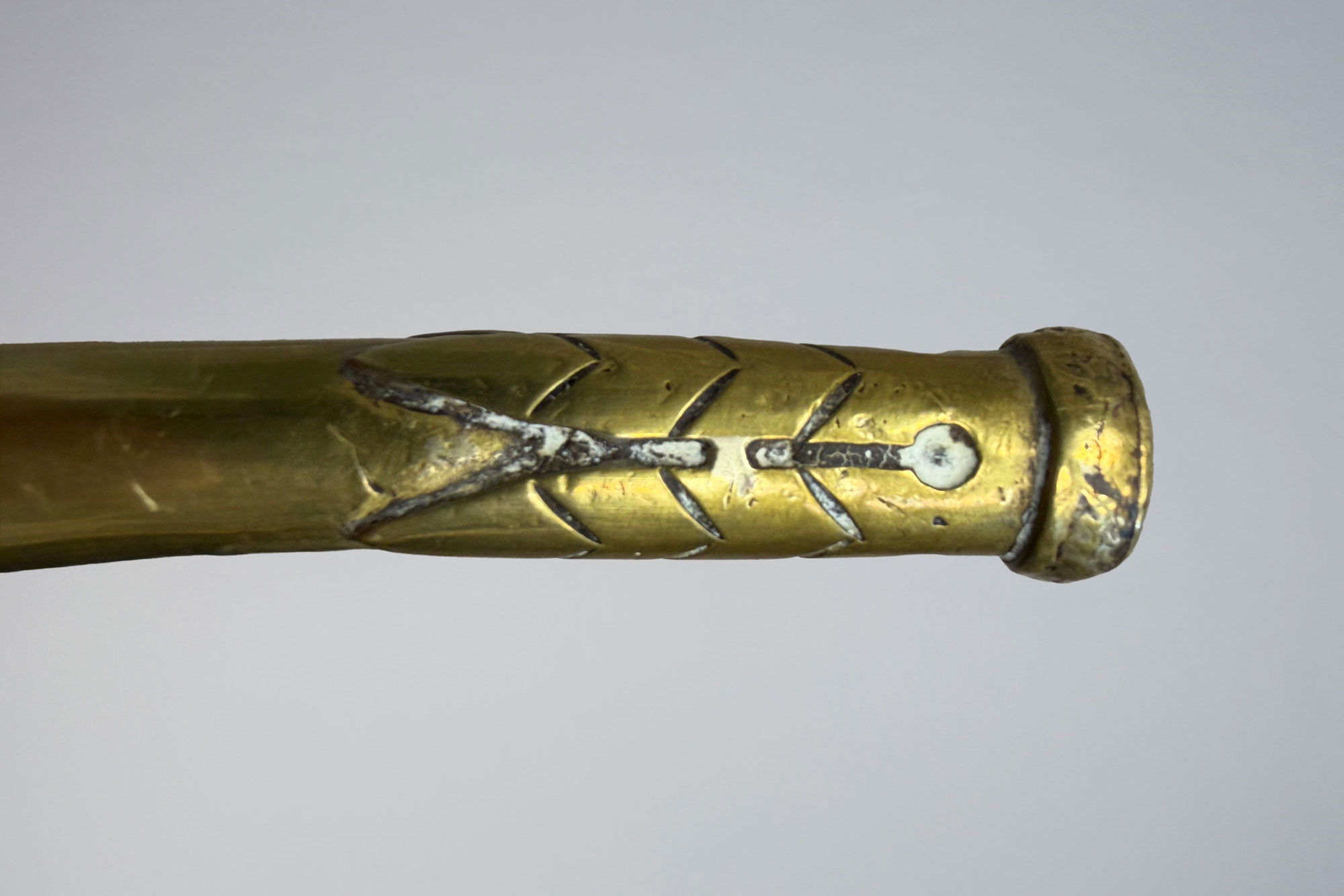
Son ornementation, particulièrement soignée, et sa facture, présentent les caractéristiques propres aux instruments connus de la famille Crétien. Il en est ainsi du pavillon bordé d’une guirlande dentelée gravée, décorée de fleurs à cinq pétales, et de l’embouchure à motifs de feuillages finement gravés.
Par sa forme en demi-lune, ses dimensions et proportions, cet instrument appartient à la catégorie des grands cors de chasse de la première moitié du XVIIème siècle.
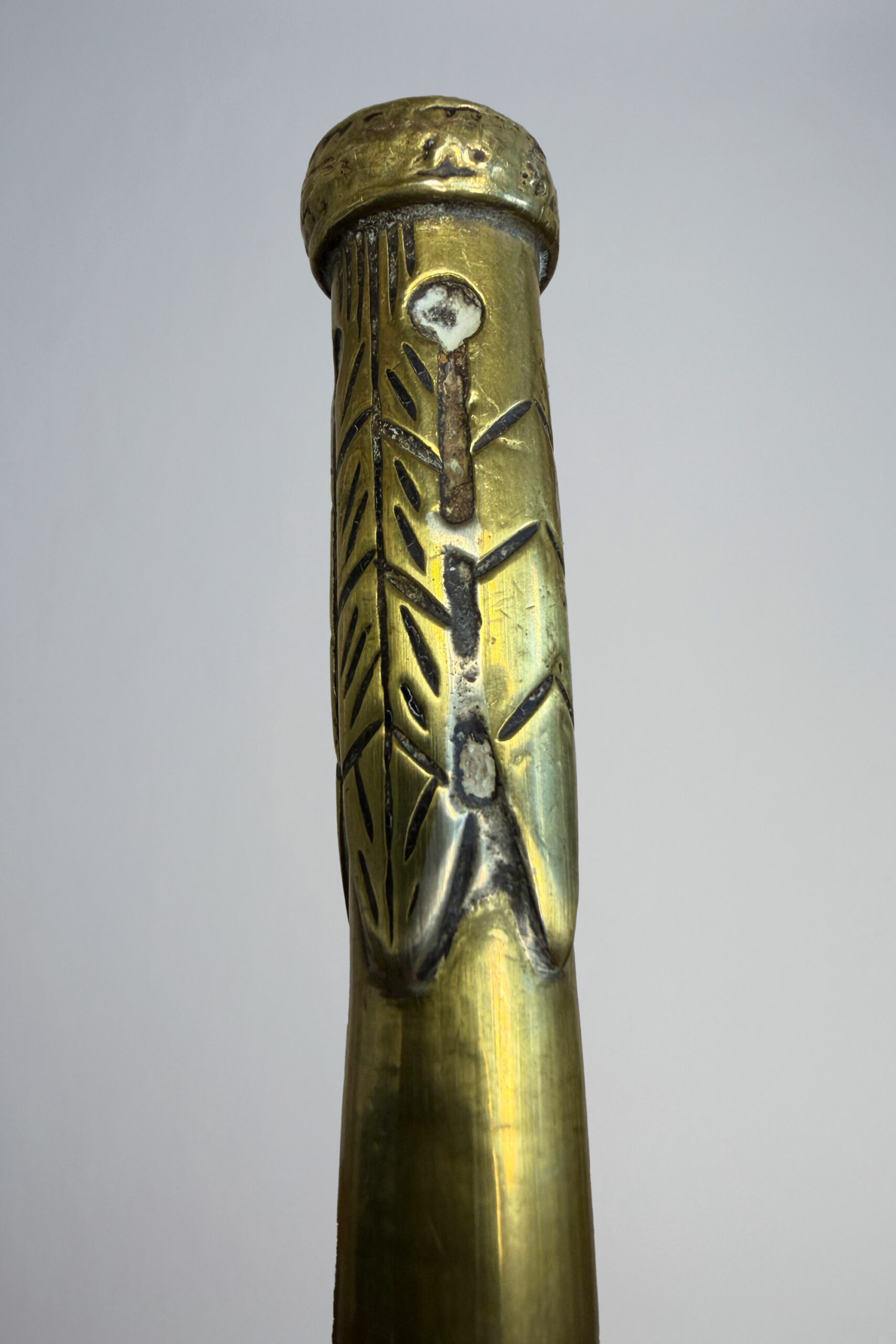
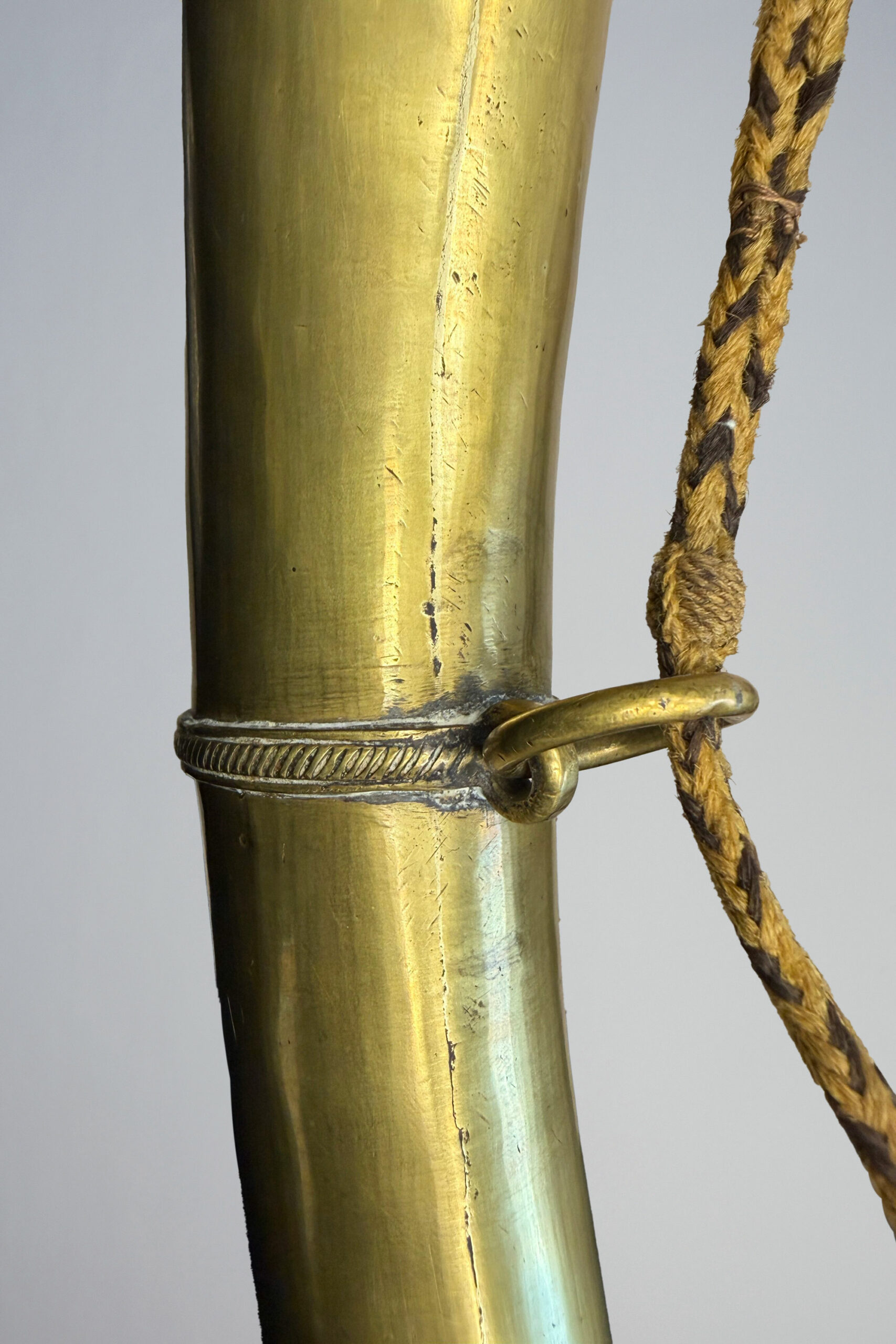
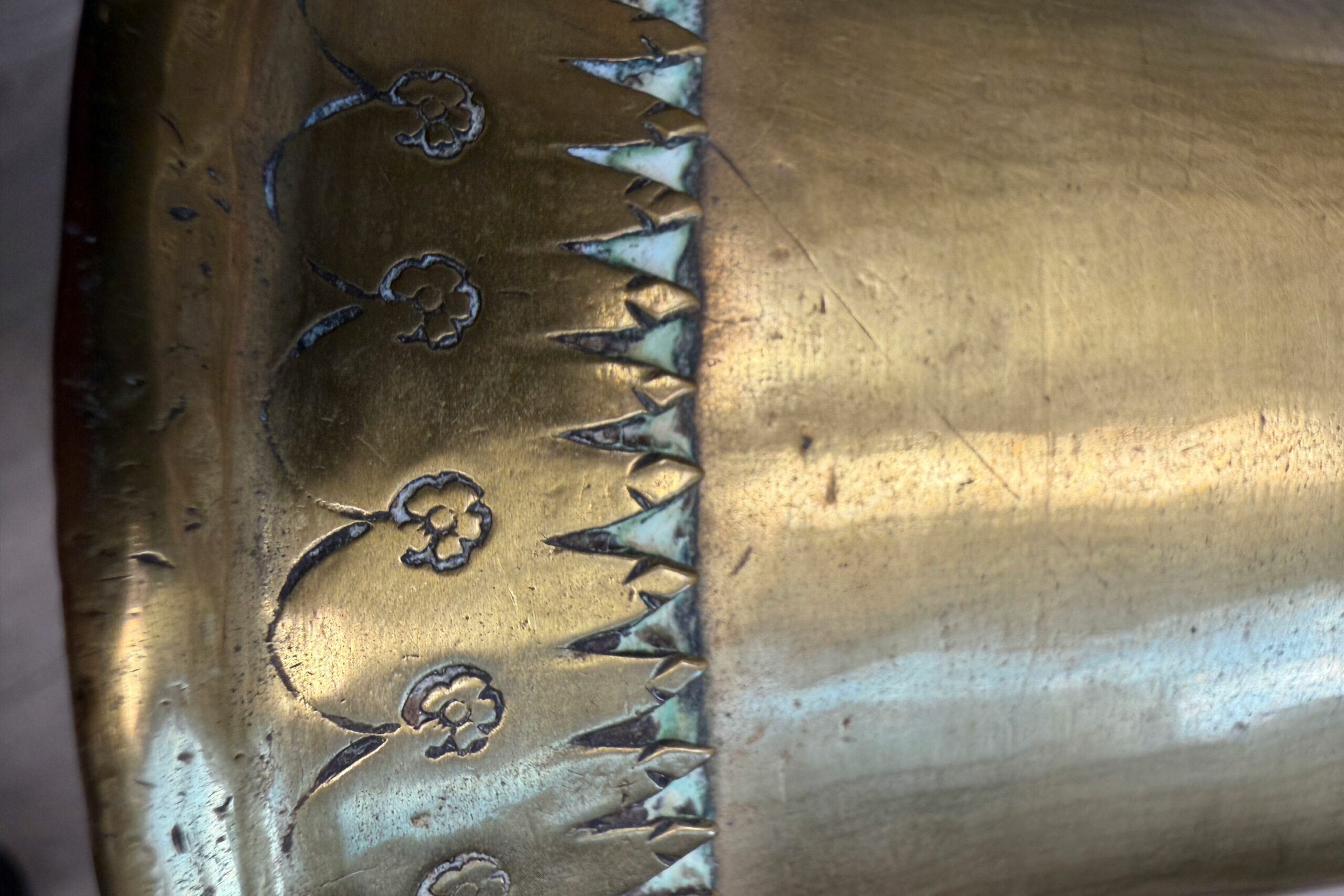
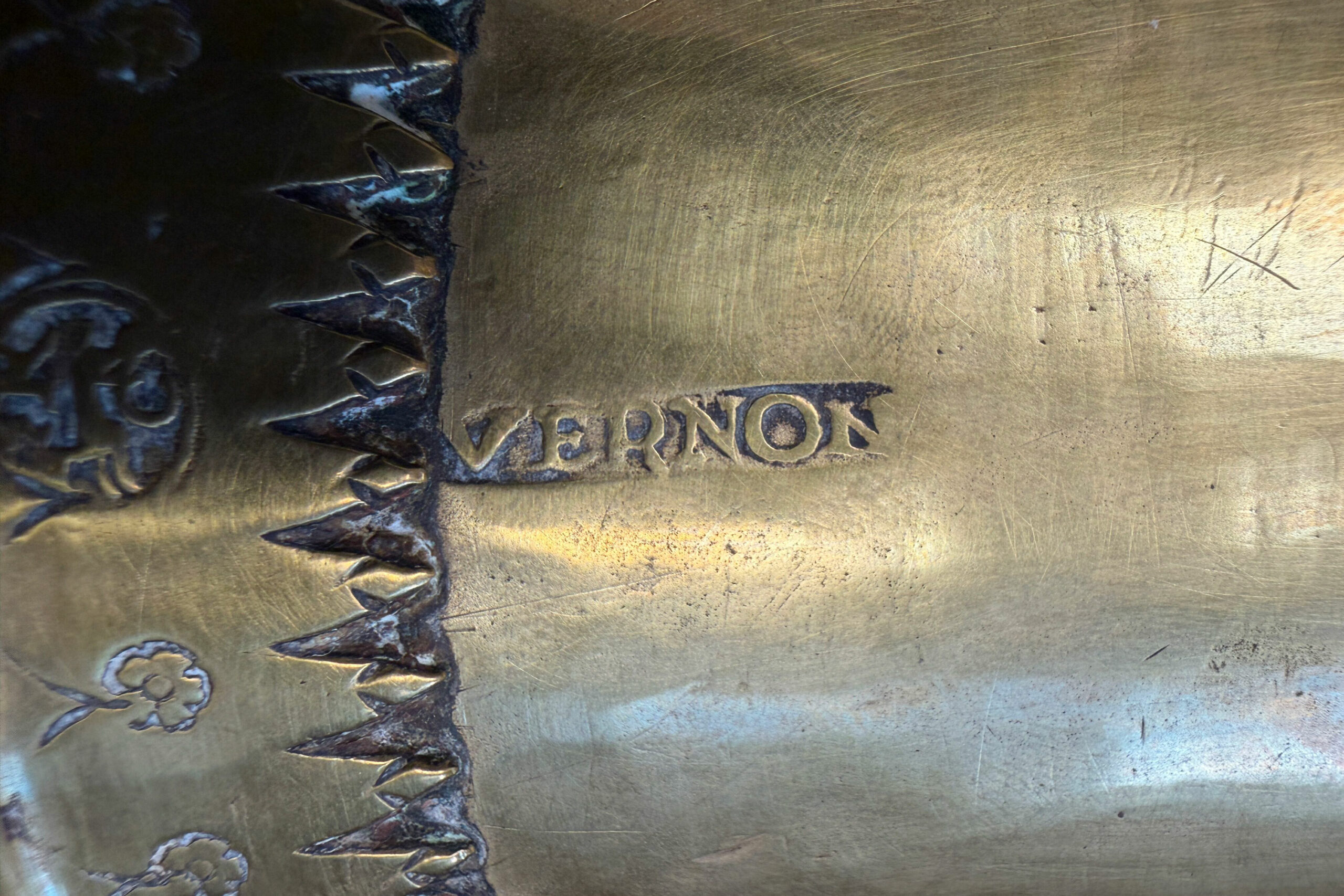
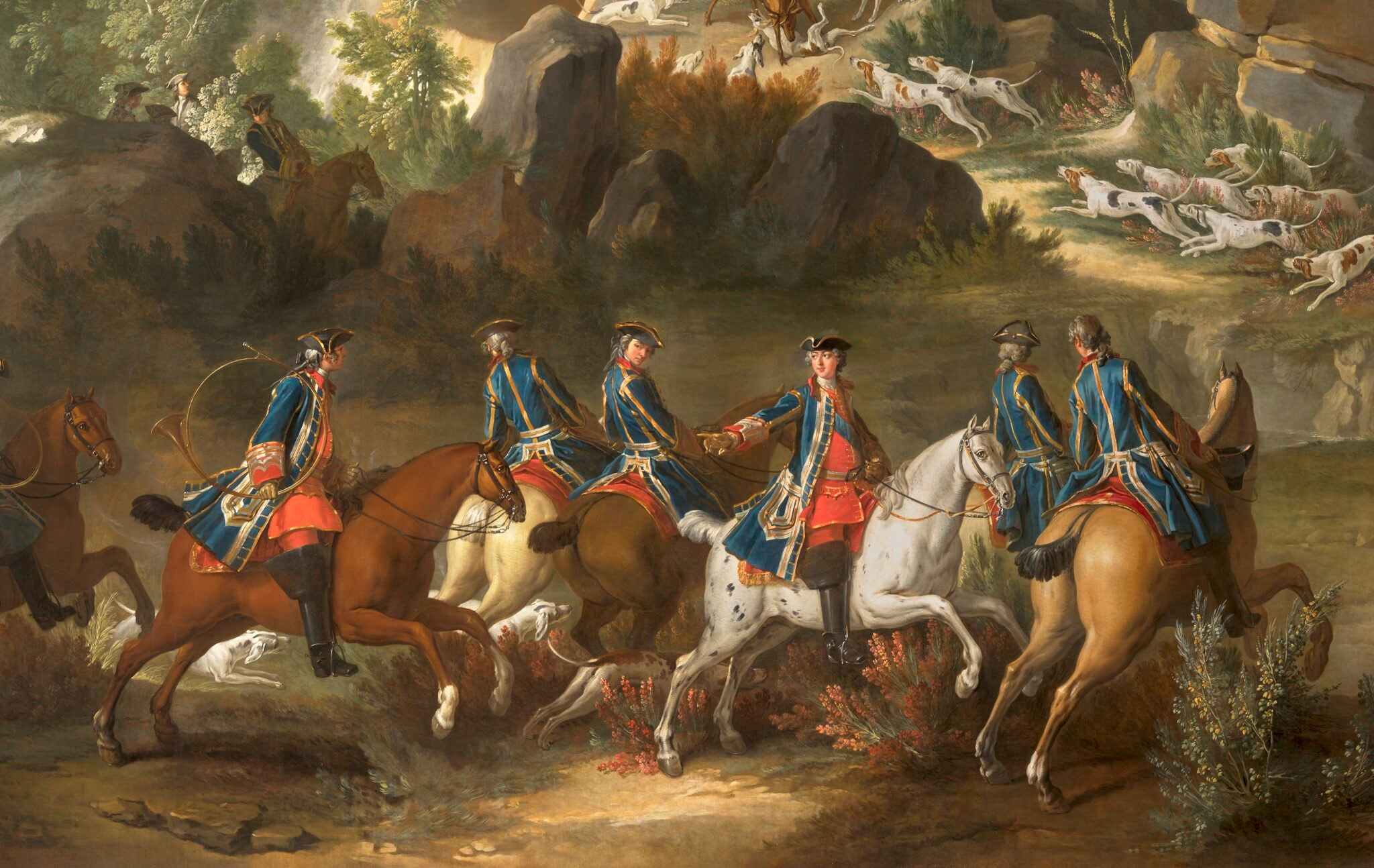
Avant de devenir un instrument à part entière, capable d’intégrer l’orchestre ou de soutenir un répertoire spécialisé, le cor de chasse est d’abord un instrument de signalisation. Son histoire remonte aux cors naturels, aux olifants et aux huchets qui, du Moyen Âge à la Renaissance, servent à transmettre des signaux dans l’espace de la chasse, de la guerre ou de la cérémonie. Le huchet du veneur, de petite taille, produit un nombre limité de sons et conserve longtemps une fonction essentiellement utilitaire – celle d’alerter ou de signaler une étape dans la poursuite – sans remplir la fonction réelle d’un instrument de musique.
“La trompe de chasse est avant tout un simple accessoire du veneur et surtout du piqueur ; elle lui sert à se faire entendre à grande distance par ses chiens et les personnes qui suivent la chasse, et ensuite à la curée. Celui-ci sonne pour ceux qui sont à plus d’un kilomètre et le musicien joue pour des auditeurs à quelques mètres.”
Joël Bouëssée, La trompe de chasse et Gaston de Marolles, fédération internationale des trompes de France, 1979
C’est pour accroître la portée sonore et les ressources acoustiques du cor, que l’instrument fut modifié. En effet, plus le tube est long, plus la série harmonique s’élargit, et plus l’instrument peut produire autre chose que de simples appels. Pour cela, des premières tentatives de cors recourbés ou partiellement enroulés virent le jour dès la Renaissance, mais elles ne semblent pas avoir immédiatement débouché sur un type pleinement stabilisé. Ce n’est qu’au XVIIème siècle qu’apparaît vraiment le grand cor en demi-lune, un modèle de moyenne ampleur, intermédiaire entre le huchet ancien et la trompe à plusieurs tours, qui figure dans la typologie des cors présentés par Marin Mersenne en 1636[1].
[1] Marin Mersenne, Harmonie universelle, 1636
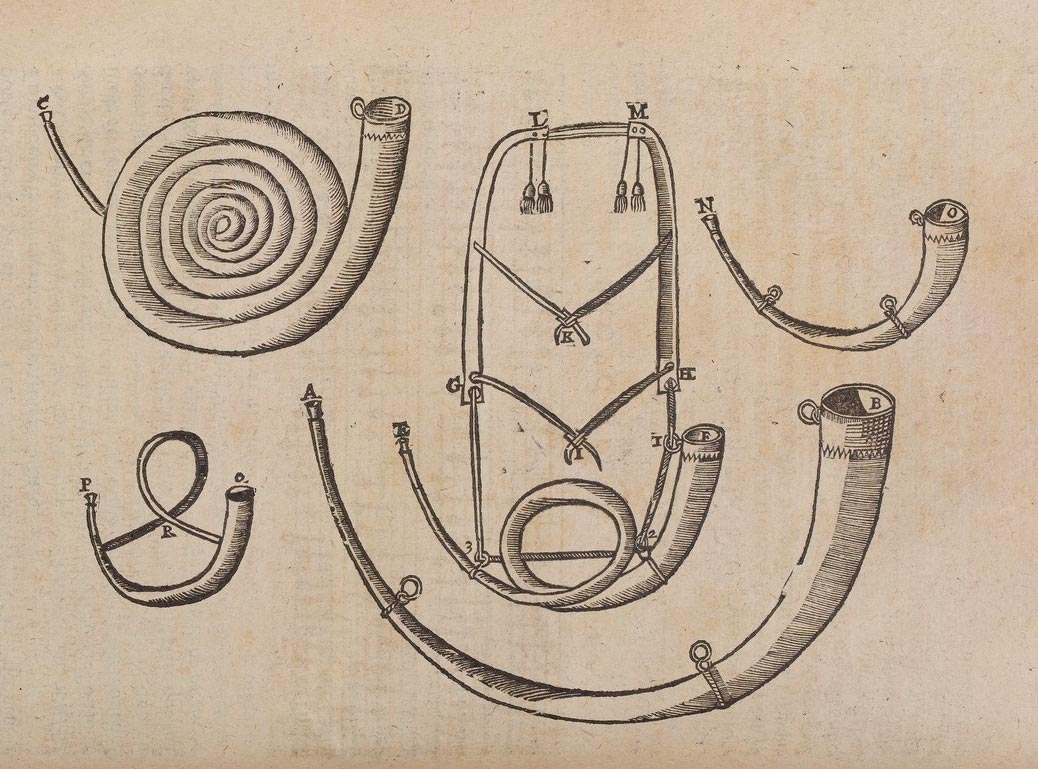
L’abandon progressif des matériaux naturels au profit du métal permit aussi de recourber davantage le tube et d’en augmenter la longueur, ouvrant ainsi la voie à des instruments de plus grande taille et aux possibilités acoustiques élargies.
La forme en demi-lune avait l’avantage d’augmenter la longueur du tube sans rendre l’instrument impossible d’utilisation dans le cadre de la chasse, car celui-ci restait portatif. Il devint ainsi, dans la première moitié du XVIIème siècle, l’un des instruments emblématiques des chasses aristocratiques. C’est précisément dans cette histoire que s’inscrit le modèle Crétien de la vente Vichy, qui illustre une phase de transition fondamentale entre le cor de signal et la trompe sous Louis XIV.
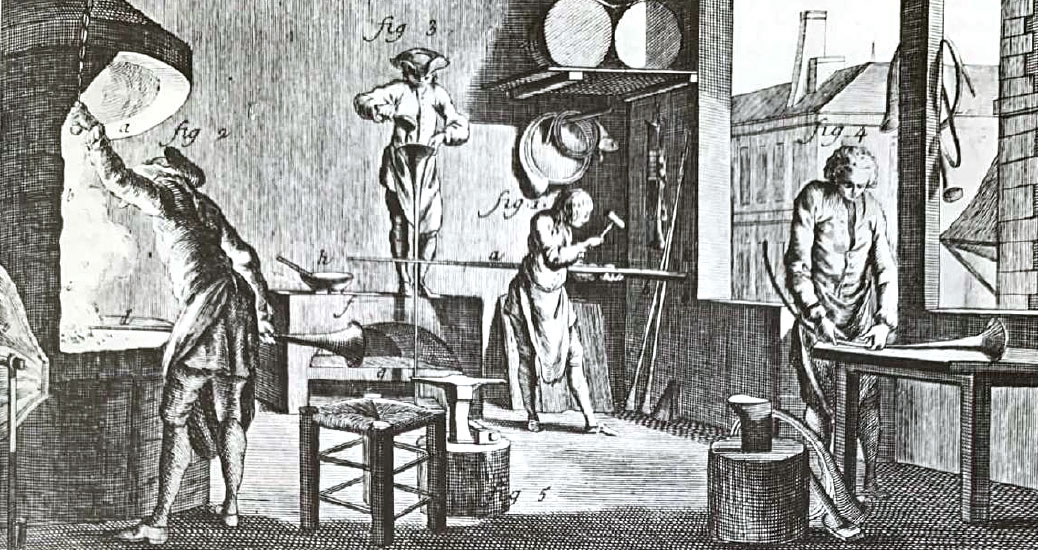
La famille Crétien – orthographiée parfois Chrétien – est originaire de Vernon en Normandie. Raulin Crétien I est considéré comme le fondateur de cette dynastie de faiseurs d’instruments actifs dès le début du XVIIème siècle[1]. On ignore ses dates exactes de naissance et de mort, mais on sait qu’il travaillait sous le règne d’Henri IV. Vernon, ville de bord de Seine entre Paris et Rouen, était le berceau de son activité artisanale. Raulin I y exerçait le métier de chaudronnier – artisan du cuivre – spécialisé dans la fabrication de cors de chasse, métier alors souvent lié au travail du métal. Il est possible qu’il ait collaboré avec d’autres centres métallurgiques régionaux. Certaines techniques de fabrication de cors pouvaient, en effet, provenir de fonderies renommées comme celle de Villedieu-les-Poêles en Normandie[2], dont témoigne probablement le cor demi-lune estampillé “VILEDIEV”, passé en vente à Vichy Enchères en mai 2021.
[1] Renato Meucci & Gabriele Rocchetti, The Horn, Yale University Press, 2021
[2] Renato Meucci & Gabriele Rocchetti, The Horn, Yale University Press, 2021
Dès cette époque, les cors fabriqués à Vernon par Raulin Crétien I portent l’estampille « R » / [cerf fuyant] / « C » / « VERNON ». Son poinçon, le cerf, est un symbole de la chasse.
Raulin Crétien I est à l’origine d’une véritable dynastie de facteurs de cuivres normands, destinée à s’illustrer durant plus d’un siècle, environ de 1611 à 1737. Parmi ses enfants, on compte au moins deux fils facteurs. L’un prénommé Raulin comme lui et dénommé Raulin II ; l’autre prénommé Jacques. Un troisième, Jean, est également évoqué par les recherches récentes, bien que sa biographie soit mal documentée[1].
[1] Renato Meucci & Gabriele Rocchetti, The Horn, Yale University Press, 2021
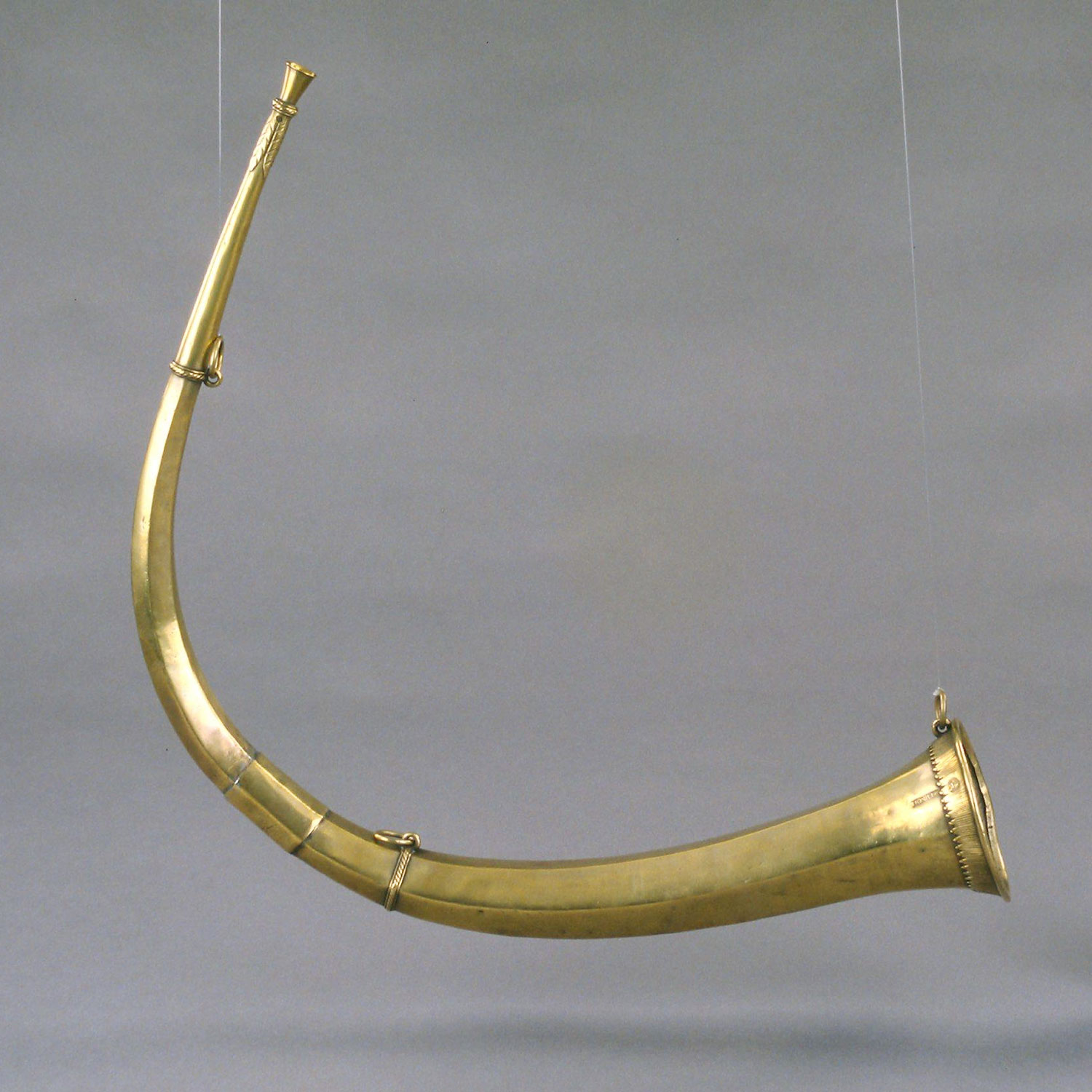
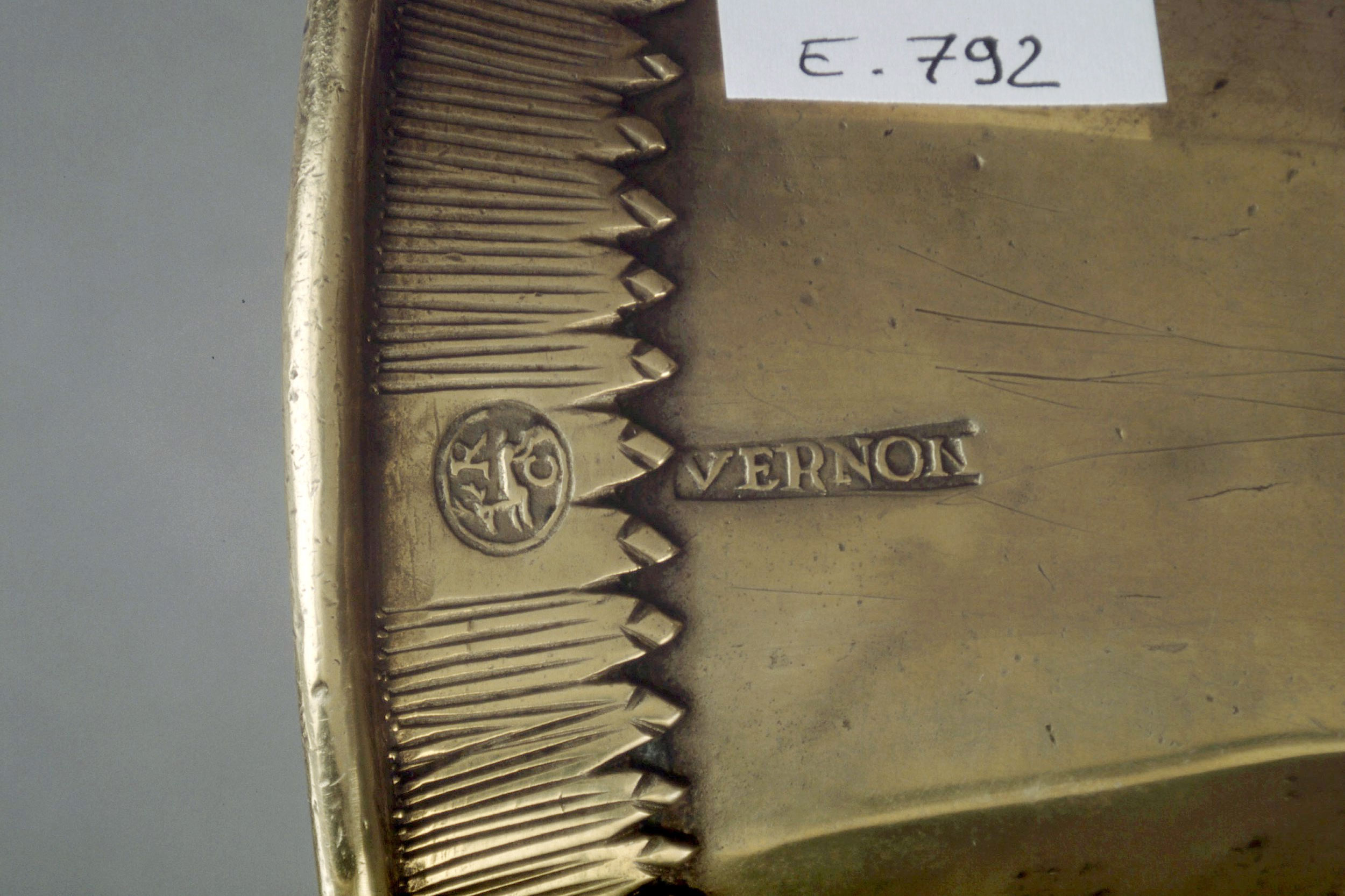
Raulin Crétien II est le représentant de la deuxième génération. On ne connaît pas sa date de naissance, mais on sait qu’il meurt en 1670. Il a très vraisemblablement travaillé aux côtés de son père dans la première moitié du XVIIème siècle, apprenant le métier dans l’atelier familial à Vernon. Il est possible que Raulin II ait contribué à élargir la production et la clientèle de la maison Crétien. En effet, sous les règnes de Louis XIII puis de Louis XIV, la pratique de la chasse à courre prend une importance considérable dans la haute société française, créant une demande accrue en instruments de chasse de qualité. Les Crétien, en tant que spécialistes du cor, en profitent pour se faire connaître.
Les cors estampillés “R C” et “VERNON” trouvés sur des instruments datés du milieu du XVIIème siècle peuvent être attribués soit à Raulin I soit à Raulin II, tant leurs initiales sont identiques.
Sous l’égide de Crétien II, l’atelier continue d’innover et d’adapter ses instruments aux besoins des veneurs, allongeant progressivement la longueur des cors et leur tessiture.
Raulin II est vraisemblablement resté principalement actif à Vernon durant sa carrière. Toutefois, la fin de sa vie coïncide avec une transition géographique importante pour la famille, à savoir l’installation à Paris d’un atelier Crétien. En effet, Jacques Crétien I, son frère – ou son cousin – s’établit à Paris dans la seconde moitié du XVIIème siècle. Crétien II disparaît en 1670, à une époque charnière où la production commence à se déplacer vers la capitale, centre névralgique des commandes royales.
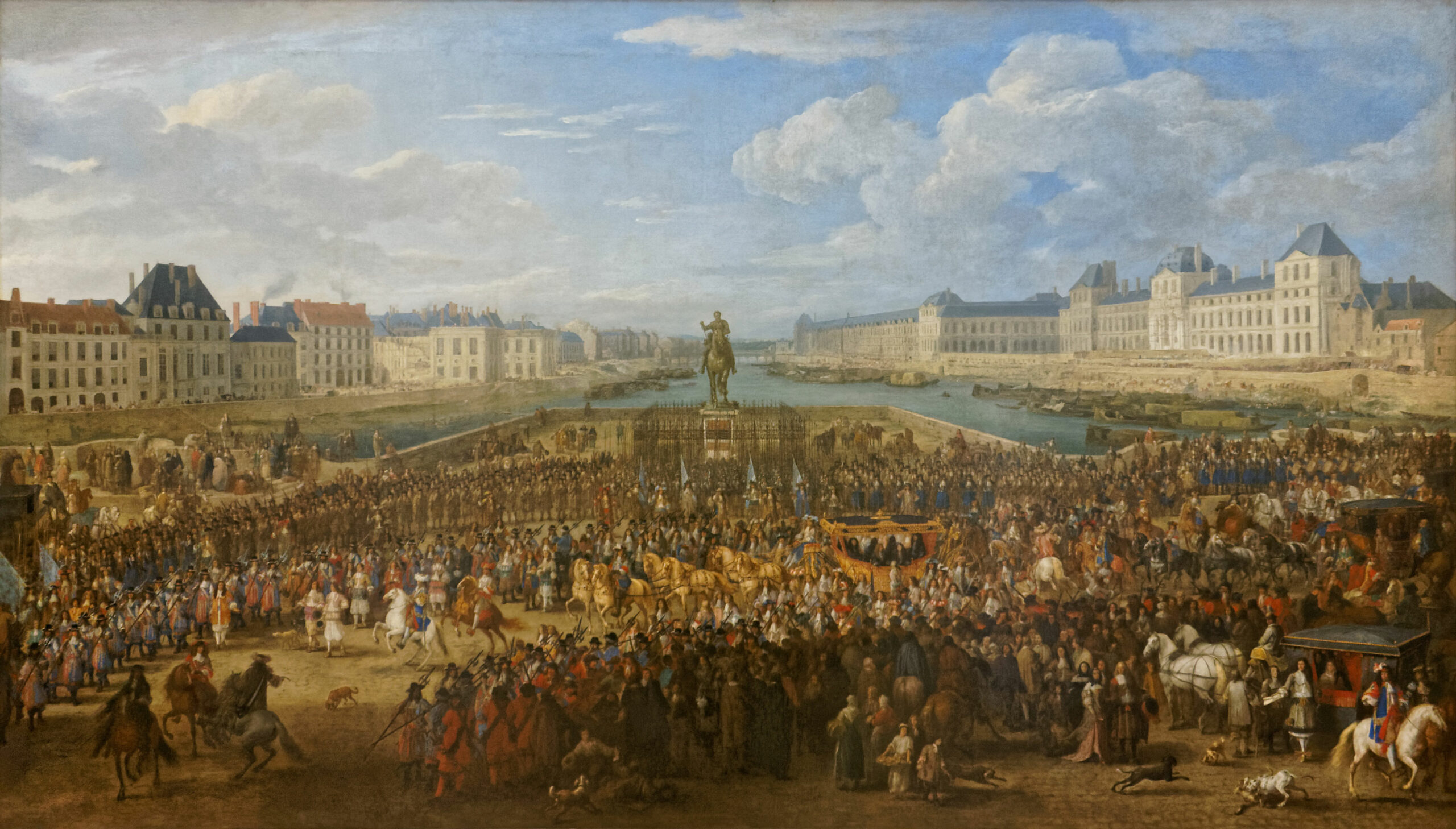
Jacques Crétien I est l’autre figure majeure de la deuxième génération Crétien. Probablement fils de Raulin I, c’est lui qui opère le transfert de la dynastie vers Paris. Son activité est documentée à Paris à partir des années 1660-1670. Il s’installe rue de la Ferronnerie, au cœur de la ville, non loin des Halles – un quartier rassemblant des artisans du métal et de la facture instrumentale. Jacques y est qualifié de “maître et marchand chaudronnier, faiseur de trompes”[1], témoignant de son double statut d’artisan d’art et de commerçant. Son implantation parisienne permet à la famille Crétien de se rapprocher de la clientèle royale et noble, Versailles n’étant qu’à une journée de cheval. Jacques I prend la relève après la mort de Raulin II en 1670, et c’est lui qui va donner toutes ses lettres de noblesse à l’atelier familial. En 1670, il est sans doute déjà actif à Paris. À sa mort en 1691, un inventaire après décès de son atelier est dressé[2]. On y recense 124 cors à un tour, 31 grands cors à deux tours, 15 petits cors à un tour et 60 cors en divers états (un, deux ou trois tours)[3].
[1] Voir Contrat de mariage entre Charles Chretien et Geneviève Chrestien
[2] Renato Meucci & Gabriele Rocchetti, The Horn, Yale University Press, 2021
[3] Renato Meucci & Gabriele Rocchetti, The Horn, Yale University Press, 2021
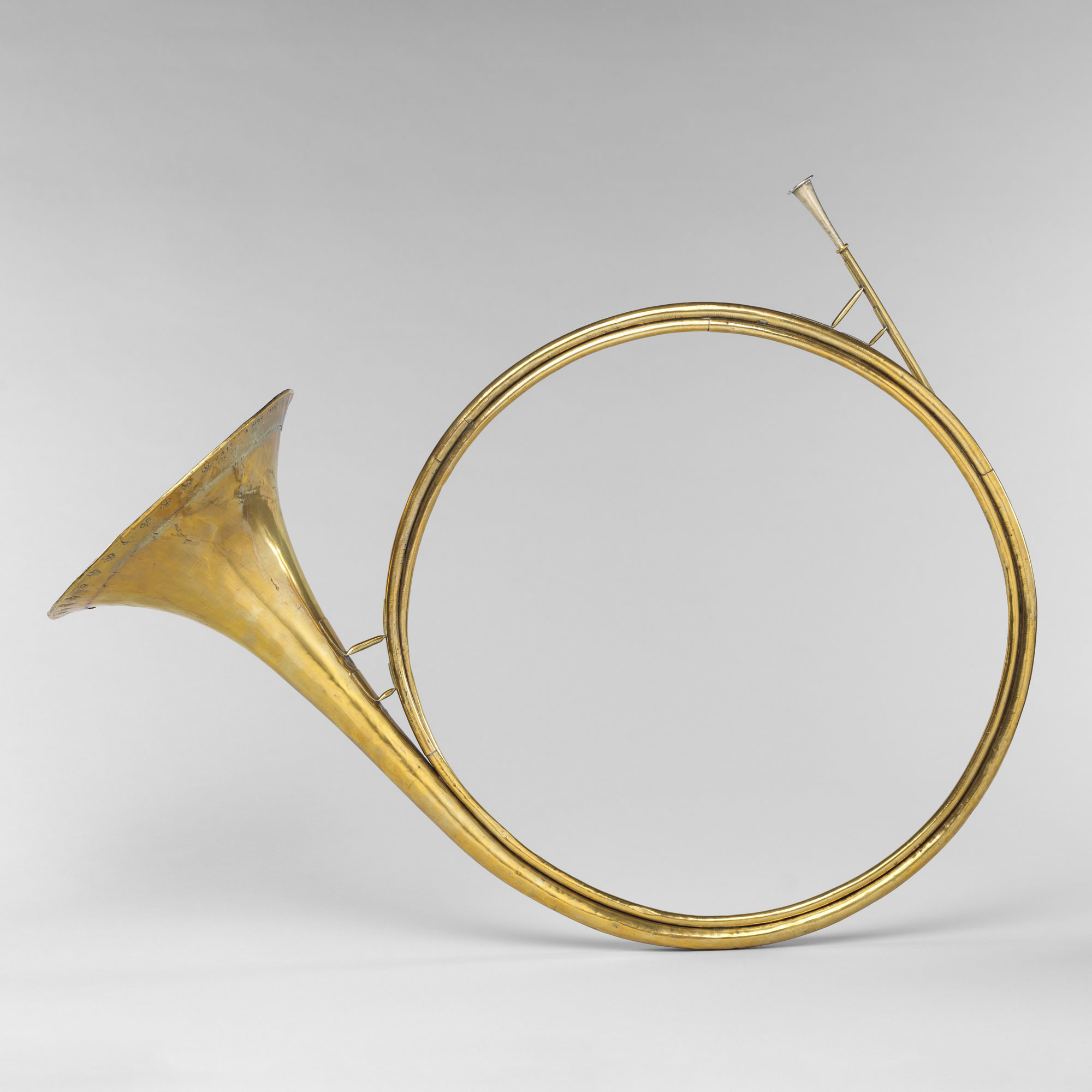
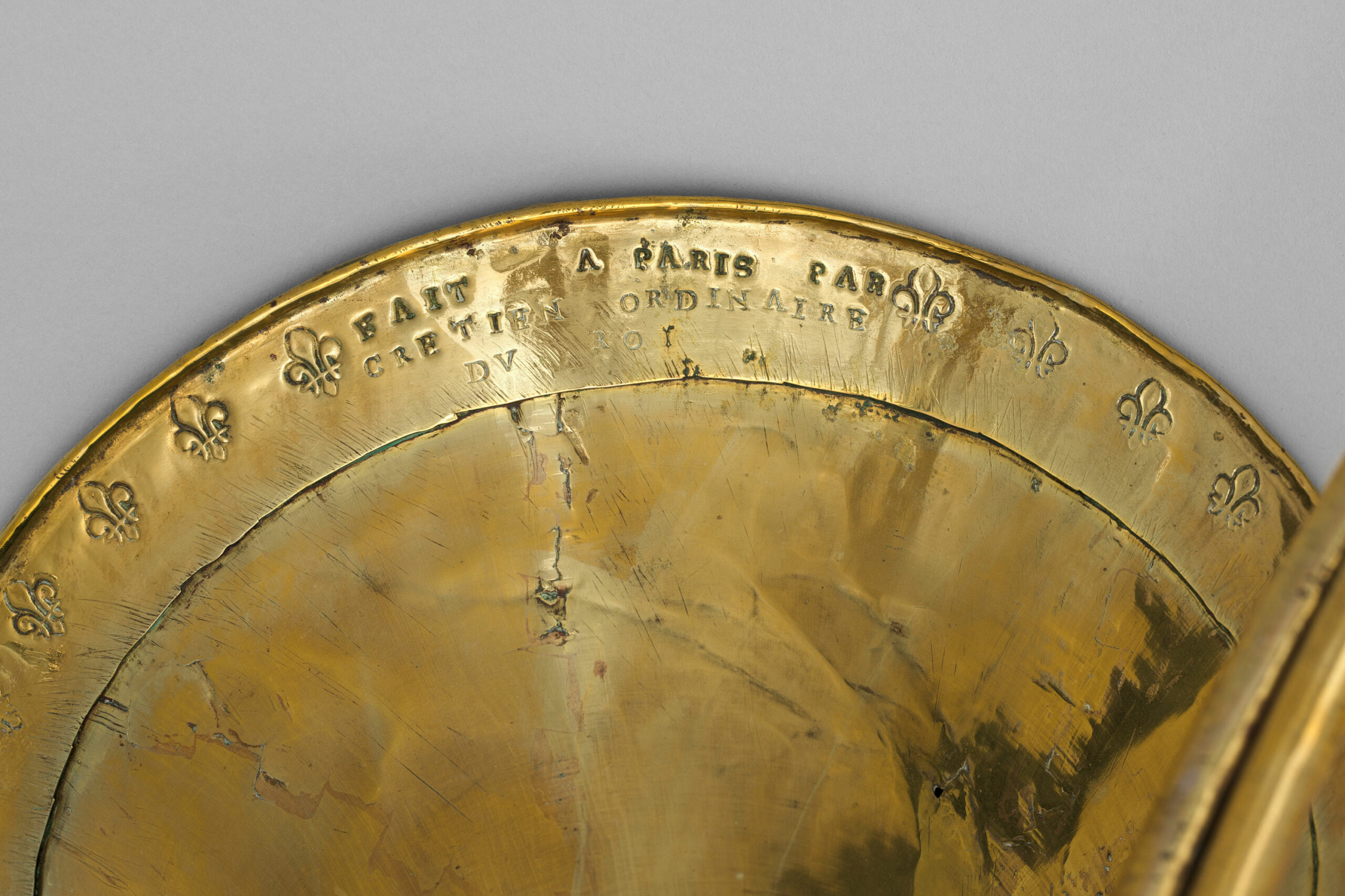
Ces chiffres impressionnants témoignent du volume de fabrication et de stock qu’un atelier parisien de facture de cuivres pouvait atteindre à l’époque. Jacques I avait donc considérablement développé l’entreprise familiale, sans doute grâce à des commandes régulières de la Cour – équipant les maîtres de chasse royaux, les fanfares militaires ou d’autres nobles chasseurs. Le rôle exact de Jacques I auprès du roi est suggéré par certaines inscriptions portées sur les instruments de l’époque. Ainsi, un grand cor circulaire réalisé vers 1700 porte gravé sur sa garniture : “FAIT A PARIS PAR CRÉTIEN ORDINAIRE DU ROI”. Ce titre d’”ordinaire du roi” indique que la famille Crétien – très probablement Jacques I dans les dernières années de sa vie, ou son successeur immédiat – avait obtenu le statut de facteur attitré de la Maison du Roi. Être “ordinaire du roi” signifiait bénéficier d’un privilège et d’un titre officiel, gages de prestige et de revenus assurés (comme le sera plus tard Joseph Raoux.
Charles Crétien est la figure de la troisième génération, le petits-fils du fondateur Raulin I. Il est présenté dans les archives comme “fils de défunt Jacques Crétien” lors de son contrat de mariage à Paris, ce qui établit clairement sa filiation avec Jacques I[1]. Né probablement autour des années 1670, il prend la tête de l’atelier familial après la mort de son père. Charles poursuit et développe l’œuvre de ses aînés. Sous son égide, la maison Crétien devient le fournisseur privilégié des chasses royales de Louis XIV puis de la Régence. Il hérite certainement du titre d’ordinaire du roi et l’associe étroitement à son nom.
En 1714, un inventaire de son atelier est effectué et révèle pas moins de 170 trompes neuves ou cors de chasse en cuivre jaune et rouge, avec leurs embouchures en argent prêtes à être livrées[2]. Ce chiffre considérable montre la capacité de production atteinte sous Charles, ainsi que la diversité des finitions (cuivres de teintes variées, embouchures de luxe en argent). Charles Crétien a su tirer parti de l’essor de la trompe de chasse dans les années 1700. C’est en effet vers 1702-1715 que les cors de chasse, d’abord utilitaires, commencent à intégrer également le domaine de la musique[3]. Charles, en perfectionnant le modèle et en répondant à la forte demande, contribue directement à cette évolution. Charles Crétien semble avoir été le dernier représentant direct de la lignée active dans la facture d’instruments. Son nom apparaît encore dans des documents des années 1720-1730. La dynastie s’éteint vers 1737, sans doute avec sa disparition ou le retrait de l’atelier. Il n’y a pas trace qu’un fils ait repris l’affaire. Néanmoins, l’héritage perdure indirectement avec des facteurs comme les Raoux au XVIIIème siècle, qui deviendront à leur tour célèbres dans la fabrication des cors.
[1] Voir contrat de mariage MC/ET/CXVII/144
[2] Renato Meucci & Gabriele Rocchetti, The Horn, Yale University Press, 2021
[3] Joël Bouëssée, La trompe de chasse et Gaston de Marolles, fédération internationale des trompes de France, 1979
Notons enfin que d’autres membres moins bien documentés de la famille Crétien ont pu être actifs. Les archives mentionnent par exemple un Jean Crétien (neveu ou cousin de Charles), ainsi qu’un certain Nicolas Crétien qui aurait vendu un grand cor en 1713 au célèbre veneur Marquis de Dampierre qui a donné son nom à la trompe de chasse en ré[1].
En 2018, une trompe de chasse à deux tours et demi, estampillée “JEHAN CHRESTIEN À VERNON” et provenant de la collection Samoyault avait été vendue à Vichy Enchères.Réalisée vraisemblablement vers 1700, elle portait également le poinçon du cerf de la famille Crétien et une fleur-de-lys sur la guirlande, suggérant qu’il s’agissait d’une commande royale ou seigneuriale, ou que le facteur était ordinaire du roi. Ce grand cor enroulé est l’un des rares instruments attribués à Jean Crétien, fils de Raulin I. D’après les recherches généalogiques, deux membres de la famille portaient le prénom Jean. Le premier Jean, fils du fondateur Raulin I ; et le second Jean, probablement de la génération suivante, actif à Paris début XVIIIème siècle.[2]
Ces personnages, mal documentés, témoignent ainsi de l’importance de la dynastie dont plusieurs membres opèrent simultanément vers 1700, sans qu’il soit toujours aisé de les distinguer. La famille Crétien forme donc une dynastie de facteurs de trompes issue de Vernon, qui aura traversé trois générations et servi trois rois, de Henri IV à Louis XIV. Leur nom reste attaché aux débuts glorieux de la trompe de chasse française.
[1] Renato Meucci & Gabriele Rocchetti, The Horn, Yale University Press, 2021
[2] Renato Meucci & Gabriele Rocchetti, The Horn, Yale University Press, 2021
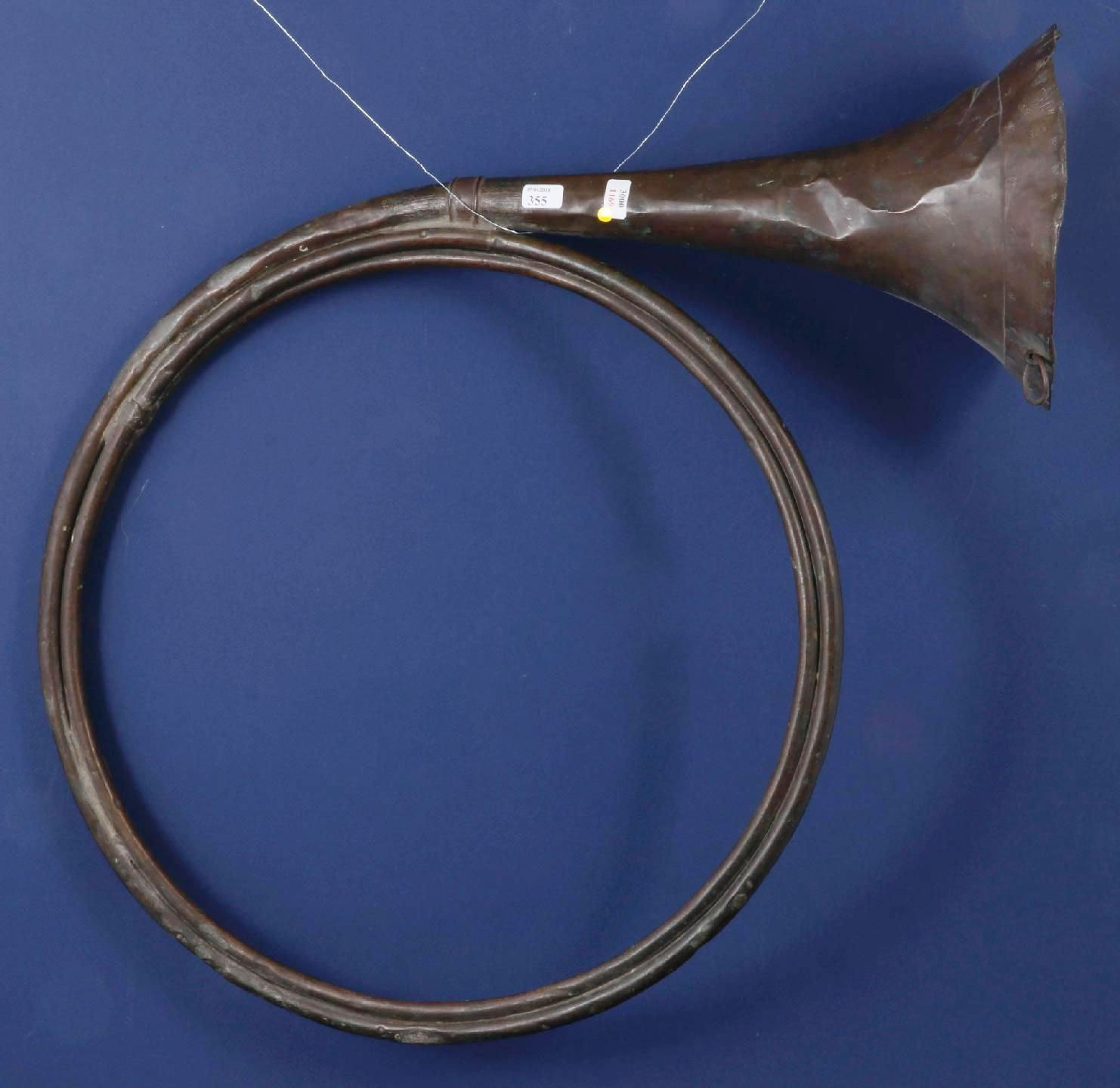
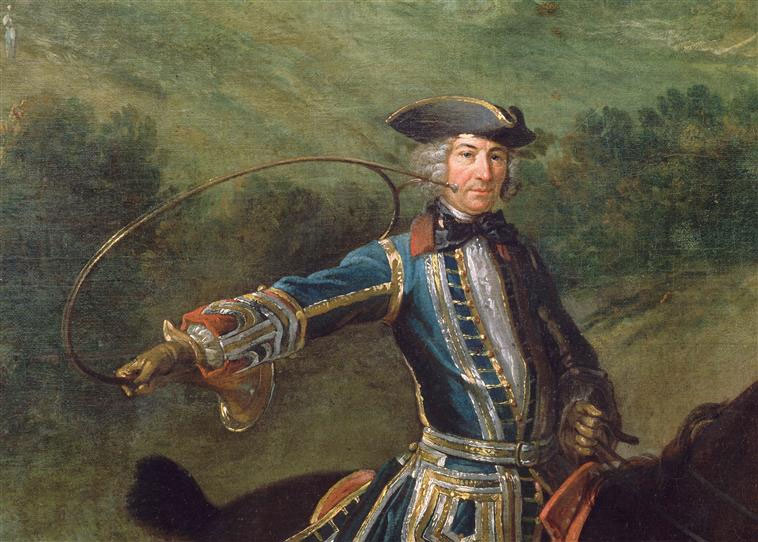
À l’échelle de l’histoire de la facture des vents en France, les Crétien occupent une place singulière. Dans un contexte encore marqué par les traditions germaniques ou flamandes pour d’autres familles de cuivres, ils semblent avoir contribué de manière décisive à la définition d’un modèle français du cor de chasse. Leur importance tient à la fois à leur longévité, à la qualité de leur production et à leur capacité à accompagner les grandes transformations de l’instrument entre le début du XVIIème siècle et les premières décennies du XVIIIème siècle. Leur apport n’est pas seulement technique, il est aussi esthétique et symbolique. Les guirlandes ciselées, les feuillages gravés, les fleurs de lys ou l’emblème du cerf font de leurs instruments des objets de prestige autant que des instruments utiles. Leur usage s’inscrit d’abord dans la vénerie aristocratique, mais l’allongement des tubes et l’élargissement des ressources harmoniques rendent possible une codification croissante des sonneries.
Sous Louis XIV, Philidor l’aîné note les premières fanfares ; sous Louis XV, le marquis de Dampierre complète et systématise ce répertoire[1]. Le développement de la trompe de chasse comme instrument musical est donc inséparable des perfectionnements apportés par des ateliers comme celui des Crétien.
Les conséquences de cette évolution dépassent d’ailleurs le seul cadre cynégétique. Dès les premières décennies du XVIIIème siècle, le cor de chasse fait son apparition dans la musique savante, en France puis plus rapidement encore en Italie et dans l’espace germanique. Vivaldi, Bach, Telemann et d’autres utilisent les corni da caccia ou leurs dérivés. Ainsi, les instruments issus de la tradition Crétien ont contribué, indirectement mais de façon décisive, à faire passer le cor de la forêt à la scène.
[1] Joël Bouëssée, La trompe de chasse et Gaston de Marolles, fédération internationale des trompes de France, 1979
L’un des grands intérêts du cor en demi-lune proposé à Vichy tient enfin à la perspective qu’il ouvre vers les développements ultérieurs de la facture française du cor. En effet, la dynastie Crétien s’éteint, semble-t-il, vers 1737, mais les modèles qu’elle a mis en place et les savoir-faire qu’elle a transmis continuent de vivre. Parmi les familles qui s’inscrivent dans cette filiation, les Raoux occupe une place majeure. Aux XVIIIème et XIXème siècles, Raoux devient l’un des grands noms de la facture des cors et trompes en France. Leur production s’inscrit dans une continuité manifeste avec celle des Crétien[1].
La présence, dans la même vente du 2 mai 2026, d’une trompe de chasse en ré estampillée “Raoux seul ordinaire du Roi, rue Serpente à Paris”, datée du début du XIXème siècle, permet de rendre cette filiation particulièrement sensible. Bien sûr, les formes ont évolué, mais il existe entre le grand cor demi-lune de Crétien et la trompe Raoux une parenté de fond. En évoquant Raoux à la suite des Crétien, on retrace une même histoire, celle de la transformation d’un instrument de chasse en cor moderne.
[1] Jeremy Montagu, French Horn, Shire Album 254, 1990
“Il reste donc à savoir à qui revient l’honneur d’avoir inventé cet instrument.
Crétien, ordinaire du roi, a allongé les tubes de cuivre vers 1680 et fait la trompe de Louis XIV […] Elles furent employées tout de suite à la vénerie de Louis XIV […] D’autre part, la maison Raoux, qui existait depuis 1685, remplaça celle de Crétien au début de 1696 ; c’est Raoux qui a fourni en 1723 les trompes de chasse en ré du marquis de Dampierre […] La conclusion se dégageant de tout ceci est dès lors fort nette ; Crétien et Raoux doivent partager l’honneur d’avoir créé la trompe en ré que le marquis de Dampierre sortit en 1722 des diverses trompes d’église pour la faire adopter à la vénerie du roi en août 1723 et la voir ensuite, grâce à Lebrun, autre fournisseur du roi, devenir en 1729, la Dauphine, nom qui disparut avec le Dauphin et ne fut remplacé qu’en 1818 par l’expression d’atelier “trompe Dampierre”
Joël Bouëssée, La trompe de chasse et Gaston de Marolles, fédération internationale des trompes de France, 1979
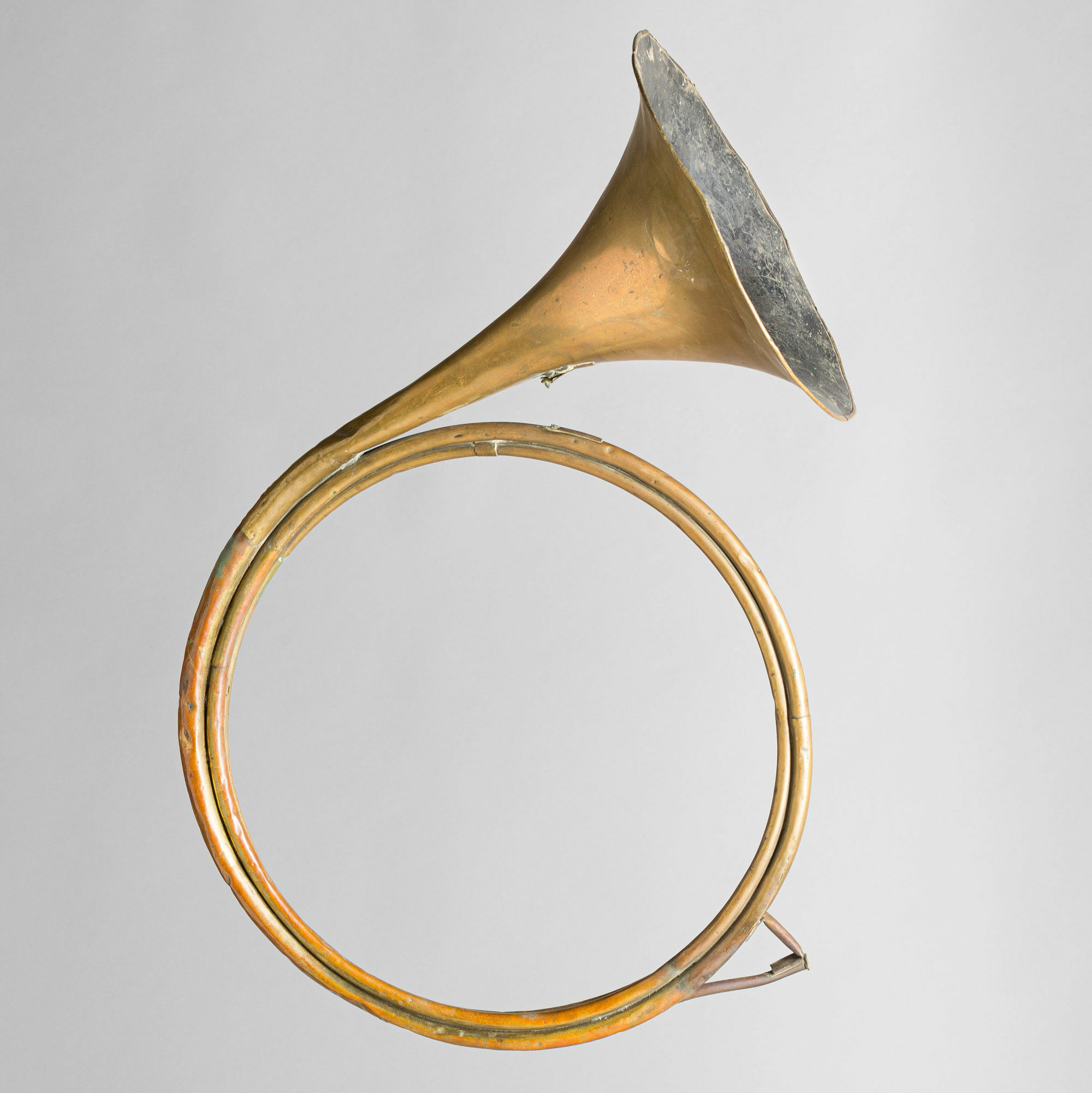
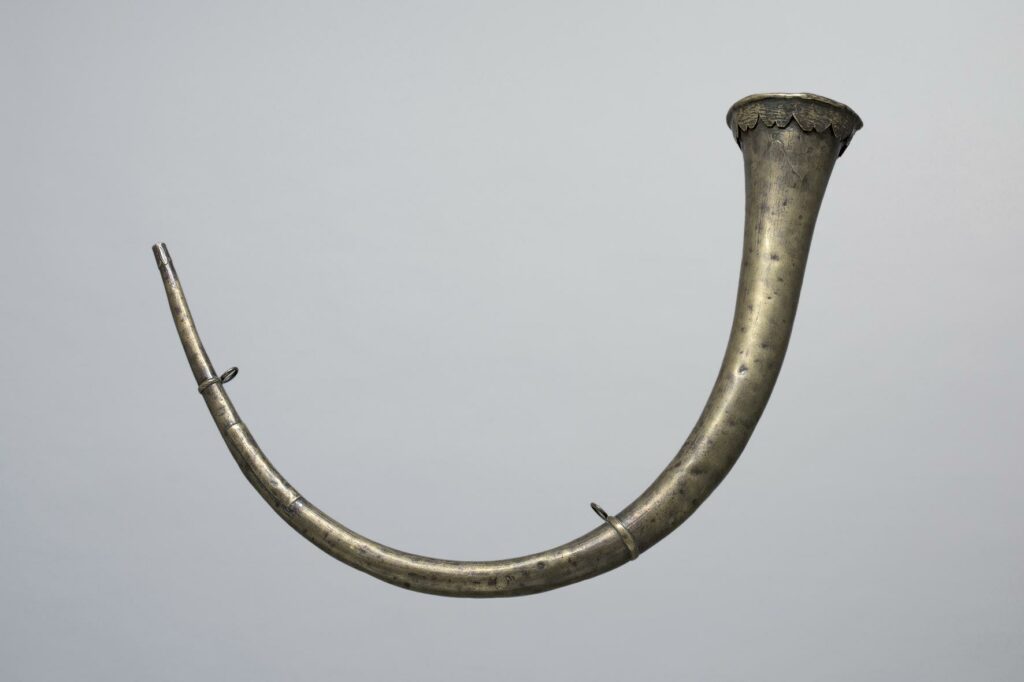
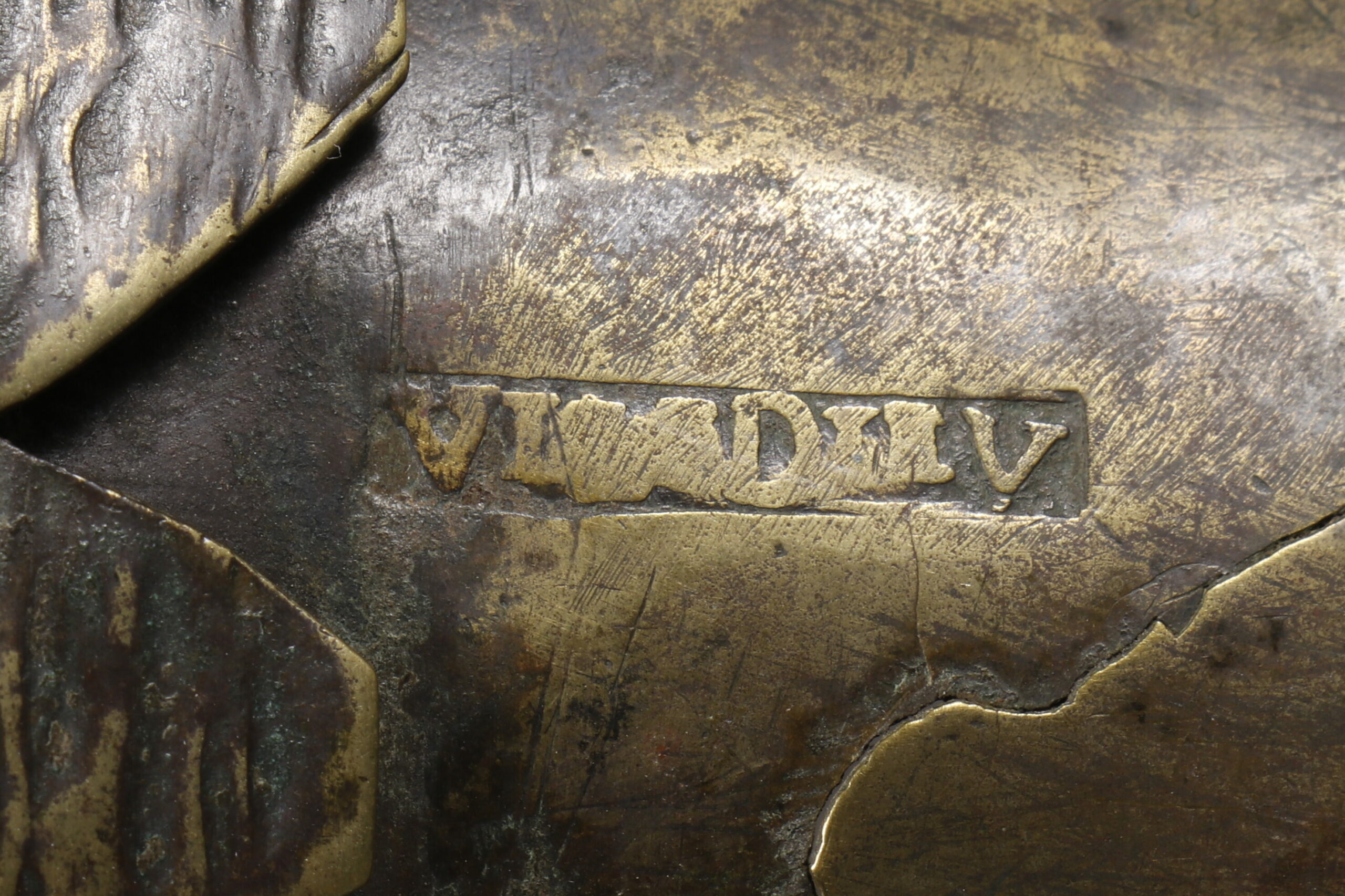
Le grand cor de chasse en demi-lune proposé à Vichy Enchères le 2 mai 2026 est un témoin exceptionnel de la première grande phase de la facture française du cor de chasse. Par ses caractéristiques formelles, il peut être rattaché avec une forte probabilité à la première génération de l’atelier Crétien de Vernon.
À travers lui se lit l’histoire d’une dynastie de chaudronniers devenue dynastie de facteurs, le passage d’un savoir-faire normand vers Paris et l’évolution d’un instrument de signal, à la mise en place d’un modèle français du cor de chasse.
The old hunting horn occupies a unique place in the history of natural brass instruments. It was a signalling instrument before becoming a musical instrument, and it accompanied aristocratic and royal hunting practices for several centuries, before giving rise to the French hunting horn, and then paving the way for the modern orchestral horn. The Crétien family, who was first active in Vernon and later in Paris, played a major part in this evolution of the instrument. Despite their rarity, the horns attributed to them are among the most important witnesses to this history. We are therefore particularly delighted to present a new example, a large crescent-shaped horn, discovered in connection with the sales of wind and plucked string instruments on 1 & 2 May 2026.
The instrument discovered in connection with the Vichy Enchères sales is a crescent-shaped brass hunting horn, known as a “great horn”. It bears the stamp “R” / [fleeing stag] / “C” / “VERNON”, which is also found on three horns held at the Musée de la Musique in Paris and attributed to Crétien Père, i.e., Raulin I Crétien. This stamp suggests that the horn in the sale is by the hand of Crétien Père and that it was made during the first half of the 17th century.
Its particularly refined ornamentation and craftsmanship contain features typical of known instruments by the Crétien family. This applies to the bell, featuring at its edge an engraved scalloped garland decorated with five petal flowers, and the mouthpiece with its finely engraved foliage motifs.
From its crescent shape, dimensions and proportions, we can deduce that this instrument is a great hunting horn from the first half of the 17th century.
Before becoming a fully-fledged musical instrument, capable of integrating into the orchestra or interpreting a particular repertoire, the hunting horn was first and foremost a signalling instrument. Its history dates back to natural horns, oliphants and hooting horns which, from the Middle Ages to the Renaissance, were used to send signals in the realm of hunting, warfare or ceremonial occasions. The huntsman’s horn, small in size, produces a limited number of sounds and for a long time retained an essentially utilitarian function – that of alerting or signalling a stage in the chase – without fulfilling the true function of a musical instrument.
“The hunting horn is first and foremost a simple tool for the huntsman and especially the beater; it allows him to make himself heard over long distances by his hounds and those following the hunt, and later at the reaping. The beater sounds the horn for those more than a kilometre away, whereas the musician plays for an audience just a few meters away.”
Joël Bouëssée, La trompe de chasse et Gaston de Marolles, fédération internationale des trompes de France, 1979
It was to increase the horn’s sound projection and acoustic range that the instrument was modified. Indeed, the longer the tube, the wider the harmonic range, and the more complex the sounds the instrument can produce. Early attempts at curved or partially coiled horns appeared as early as the Renaissance, but they do not seem to have immediately led to a fully established new type of instrument. It was only in the 17th century that the great crescent-shaped horn truly emerged, in the form of a model of medium size, whose proportions were between the old hunting horn and the multi-coiled horn. This instrument appeared in the classification of horns presented by Marin Mersenne in 1636[1].
[1] Marin Mersenne, Harmonie universelle, 1636
The gradual replacement of natural materials with metal also allowed for a greater curvature and increased length of the tube, thus paving the way for larger instruments with expanded acoustic abilities.
The crescent shape had the advantage of increasing the length of the tube while still allowing the instrument to be used for hunting, as it remained portable. Therefore, in the first half of the 17th century, it became one of the iconic instruments of aristocratic hunts. It is precisely within this period that the Crétien example in the Vichy sale finds its place, illustrating the fundamental transition between the signalling horn and the hunting horn under Louis XIV.
The Crétien family – sometimes spelled Chrétien – originated in Vernon, Normandy (France). Raulin Crétien I is considered the founder of this dynasty of instrument makers, and was active from the beginning of the 17th century[1]. ]. His precise dates of birth and death are unknown, but what is certain is that he worked during the reign of Henry IV. Vernon, a town on the banks of the Seine between Paris and Rouen, was the cradle of his craft. Raulin I practiced the trade of coppersmith, specializing in the manufacture of hunting horns, which was a craft often associated with metalworkers at the time. It is possible that he collaborated with other regional metallurgical centres. Indeed, some horn-making techniques could have originated from renowned foundries such as that of Villedieu-les-Poêles in Normandy[2], as evidenced by the crescent-shaped horn stamped “VILEDIEV,” which was sold at auction at Vichy Enchères in May 2021.
[1] Renato Meucci & Gabriele Rocchetti, The Horn, Yale University Press, 2021
[2] Renato Meucci & Gabriele Rocchetti, The Horn, Yale University Press, 2021
Already at that time, horns made in Vernon by Raulin Crétien I bore the stamp “R” / [fleeing stag] / “C” / “VERNON”. His hallmark, the stag, is a hunting symbol.
Raulin Crétien I founded a true dynasty of brass instrument makers from Normandy, which distinguished itself for over a century, from approximately 1611 to 1737. Among his children, at least two of his sons were also horn makers. One was named Raulin, like his father, and was known as Raulin II; the other was named Jacques. A third, Jean, is also mentioned in recent research, although details of his life and work are not well known[1].
[1] Renato Meucci & Gabriele Rocchetti, The Horn, Yale University Press, 2021
Raulin Crétien II is part of the second generation. His date of birth is unknown, but he is known to have died in 1670. He most likely worked alongside his father in the first half of the 17th century, learning the trade in the family workshop in Vernon. It is possible that Raulin II was responsible for expanding the production and clientele of the Crétien workshop. Indeed, during the reigns of Louis XIII and then Louis XIV, the practice of hunting with hounds became very prominent in French high society, creating an increased demand for hunting instruments of good quality. The Crétien family, as hunting horn specialists, took advantage of this to make a name for themselves.
The stamps “RC” and “VERNON” found on horns dating from the mid-17th century can be attributed to either Raulin I or Raulin II, as their initials are the same.
Under the direction of Raulin II, the workshop continued to innovate and adapt its instruments to the needs of hunters, gradually lengthening the horns and increasing their range.
Raulin II likely remained primarily active in Vernon throughout his career. However, the end of his life coincided with a significant geographical shift for the family: the establishment of a Crétien workshop in Paris. Indeed, Jacques Crétien I, his brother – or cousin – settled in Paris in the second half of the 17th century. Raulin II died in 1670, at a pivotal time when production began to move to the capital, the epicentre of royal commissions.
Jacques Crétien I is the other major figure of the second generation of the Crétien family. Probably the son of Raulin I, he is the one who brought the dynasty to Paris. His activity in Paris is documented from the 1660s – 1670s. He settled on rue de la Ferronnerie, in the heart of the city, not far from Les Halles: a district bringing together metalworkers and instrument makers. Jacques is described there as a “master and merchant coppersmith, maker of horns”[1], which denotes his dual status as craftsman and merchant. The move to Paris allowed the Crétien family to be closer to the royal and noble clientele, Versailles being only a day’s ride away. Jacques I took over after the death of Raulin II in 1670, and he is the one who brought prestige to the family workshop. By 1670, he was undoubtedly already active in Paris. Upon his death in 1691, a post-mortem inventory of his workshop was drawn up [2]. It listed 124 single-reach horns, 31 double-reach great horns, 15 single-reach small horns, and 60 horns in various stages of production (one, two or three turns) [3].
[1] Voir Contrat de mariage entre Charles Chretien et Geneviève Chrestien
[2] Renato Meucci & Gabriele Rocchetti, The Horn, Yale University Press, 2021
[3] Renato Meucci & Gabriele Rocchetti, The Horn, Yale University Press, 2021
This impressive list attests to the high volume of production and stock of a Parisian brass instrument-making workshop at the time. Jacques I had therefore considerably expanded the family business, undoubtedly thanks to regular orders from the Court – in order to fulfil the needs from the royal hunting masters, military bands and other noble hunters. Jacques I’s exact role with regards to the king can be ascertained from certain inscriptions found on instruments from that period. For example, a circular great horn made around 1700 bears the inscription on its accessories: “FAIT A PARIS PAR CRÉTIEN ORDINAIRE DU ROI”. This title of “ordinary to the king” indicates that the Crétien family – most likely Jacques I in the last years of his life, or his immediate successor – had obtained the status of official maker to the King’s Household. Being “ordinary to the king” meant enjoying privilege and an official title, guaranteeing prestige and a secure income (as was also the case for Joseph Raoux later).
Charles Crétien, the grandson of Raulin I, is part of the dynasty’s third generation. He is described as “son of the deceased Jacques Crétien” in his prenuptial agreement in Paris, which clearly establishes his lineage with Jacques I[1]. He was probably born around 1670, and took over the family workshop after his father’s death. Charles continued and expanded the work of his forefathers. Under his direction, the Crétien house became the preferred supplier for the royal hunts of Louis XIV and later the Regency. He most likely inherited the title of « ordinary to the king », which he closely associated with his name.
In 1714, an inventory of his workshop was drawn and revealed no fewer than 170 new hunting horns in yellow and red copper, with their silver mouthpieces, ready for delivery [2]. This inventory demonstrates the impressive production capacity achieved under Charles, as well as the variety of finishes produced (copper in various shades, luxury mouthpieces in silver). Charles Crétien capitalized on the rise of the hunting horn in the 1700s. Indeed, it was around 1702 – 1715 that hunting horns, which were originally utilitarian in nature, began to be used in music as well [3]. Charles, by perfecting the design and responding to the strong demand, contributed directly to this development. Charles Crétien appears to have been the last family member active in instrument making. His name still appears in documents from the 1720s and 1730s. The dynasty came to an end around 1737, probably with his death or the closure of the workshop. There is no record of a son taking over the business. Nevertheless, their legacy lived on through makers like those from the Raoux family in the 18th century, who would in turn become famous for horn making.
[1] Voir contrat de mariage MC/ET/CXVII/144
[2] Renato Meucci & Gabriele Rocchetti, The Horn, Yale University Press, 2021
[3] Joël Bouëssée, La trompe de chasse et Gaston de Marolles, fédération internationale des trompes de France, 1979
Finally, it should be noted that other, more obscure, members of the Crétien family may also have been active. There are mentions in historical documents, for instance, of a Jean Crétien (nephew or cousin of Charles), as well as a certain Nicolas Crétien, who is said to have sold a great horn in 1713 to the famous huntsman Marquis de Dampierre, after which the hunting horn in D was named[1].
In 2018, a hunting horn with two and a half turns, stamped “JEHAN CHRESTIEN À VERNON” and originating from the Samoyault collection, was sold at Vichy Enchères. It was likely made around 1700, and also bore the Crétien family’s stag hallmark and a fleur-de-lis on the garland, suggesting it was a royal or noble commission, or that the maker was ordinary to the king. This great horn is one of the few instruments attributed to Jean Crétien, son of Raulin I. According to research into the family tree, two members of the family bore the first name Jean. The first, son of the founder Raulin I; and the second, probably from the next generation, active in Paris at the beginning of the 18th century[2]
These lesser-known family members demonstrate the reach of the dynasty, with several of its members operating simultaneously around 1700, even though it is not always easy to set them apart. The Crétien family therefore formed a dynasty of horn makers originating from Vernon, which spanned three generations and served three kings, from Henry IV to Louis XIV. Their name remains closely associated with the glorious beginnings of the French hunting horn.
[1] Renato Meucci & Gabriele Rocchetti, The Horn, Yale University Press, 2021
[2] Renato Meucci & Gabriele Rocchetti, The Horn, Yale University Press, 2021
In the history of horn making in France, the Crétiens occupy a unique place. At a time when other families of brass instruments were still marked by Germanic or Flemish traditions, they seem to have made a decisive contribution to the creation of a French model of hunting horn. The importance of their contribution stems from their longevity, the quality of their production, and their ability to adapt to the major transformations of the instrument between the early 17th century and the first decades of the 18th century. Their contribution is not only technical, but also aesthetic and symbolic. The chiselled garlands, engraved foliage, fleur-de-lis and stag symbol make their instruments objects of prestige as much as practical tools. Their use was initially confined to aristocratic hunting, but the lengthening of the tubes and the expansion of the harmonic range allowed for an increasing complexity of hunting calls.
Under Louis XIV, Philidor the Elder notated the first fanfares; under Louis XV, the Marquis de Dampierre completed and systematized this repertoire [1]. The development of the hunting horn as a musical instrument is therefore inseparable from the improvements made by workshops such as that of the Crétien family.
Moreover, the consequences of this evolution extended beyond the realm of hunting alone. From the early decades of the 18th century, the hunting horn made its appearance in classical music, first in France and then at an even greater pace in Italy and the German-speaking world. Vivaldi, Bach, Telemann and others used the corni da caccia or their derivatives. Therefore, instruments stemming from the Crétien tradition contributed, indirectly but decisively, to the horn’s move from the hunting grounds to the stage.
[1] Joël Bouëssée, La trompe de chasse et Gaston de Marolles, fédération internationale des trompes de France, 1979
One of the very interesting things about the crescent-shaped horn presented in Vichy lies in the perspective it provides into the subsequent developments of French horn making. Indeed, it appears the Crétien dynasty came to an end around 1737, but the models it created and the craftsmanship it passed on continued to live on. Among the families that benefited from this legacy, the Raoux occupied a major place. In the 18th and 19th centuries, Raoux became one of the great names in the making of horns and trumpets in France. Their production clearly shows the continuity with that of the Crétien family [1].
The presence, in the same sale on 2 May 2026, of a hunting horn in D stamped “Raoux, seul ordinaire du Roi, rue Serpente à Paris”, dating from the beginning of the 19th century, makes this connection particularly evident. Of course, the forms had evolved, but there is a fundamental kinship between Crétien’s great crescent-shaped horn and Raoux’s hunting horn. By mentioning Raoux after Crétien, we retrace the same history: the transformation of a hunting tool into the modern horn.
[1] Jeremy Montagu, French Horn, Shire Album 254, 1990
“It therefore remains to be determined to whom the honour of inventing this instrument belongs.
Crétien, the king’s ordinary maker, lengthened the copper tubes around 1680 and made the hunting horn for Louis XIV […] These were immediately used for Louis XIV’s hunts […] On the other hand, the Raoux house, which had existed since 1685, replaced Crétien’s at the beginning of 1696; it was Raoux who supplied the Marquis de Dampierre’s hunting horns in D in 1723 […] The conclusion we can draw from all this is therefore quite clear: Crétien and Raoux must share the distinction for having created the hunting horn in D that the Marquis de Dampierre took, in 1722, from among the various church horns, to have it adopted for the king’s hunts in August 1723 and then, thanks to Lebrun, another supplier to the king, to turn it, in 1729, into the Dauphine, a name that disappeared with the Dauphin and was only replaced in 1818 by the workshop term “Dampierre horn”
Joël Bouëssée, La trompe de chasse et Gaston de Marolles, fédération internationale des trompes de France, 1979
The large, crescent-shaped hunting horn for sale at Vichy Enchères on 2 May 2026, is an exceptional example from the first major period of French hunting horn making. Its features strongly suggest it can be attributed to the first generation of the Crétien dynasty in Vernon. Through this instrument, one can retrace the history of a dynasty of coppersmiths who became horn makers, the transfer of their craftsmanship from Normandy to Paris, and the evolution of the hunting horn from a signalling instrument to the creation of a French model.