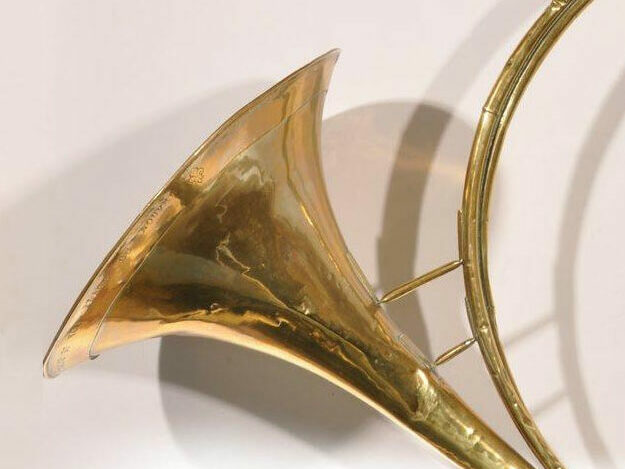
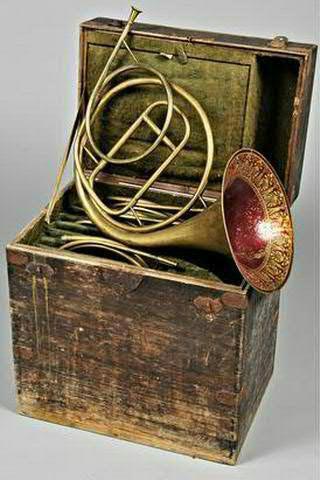
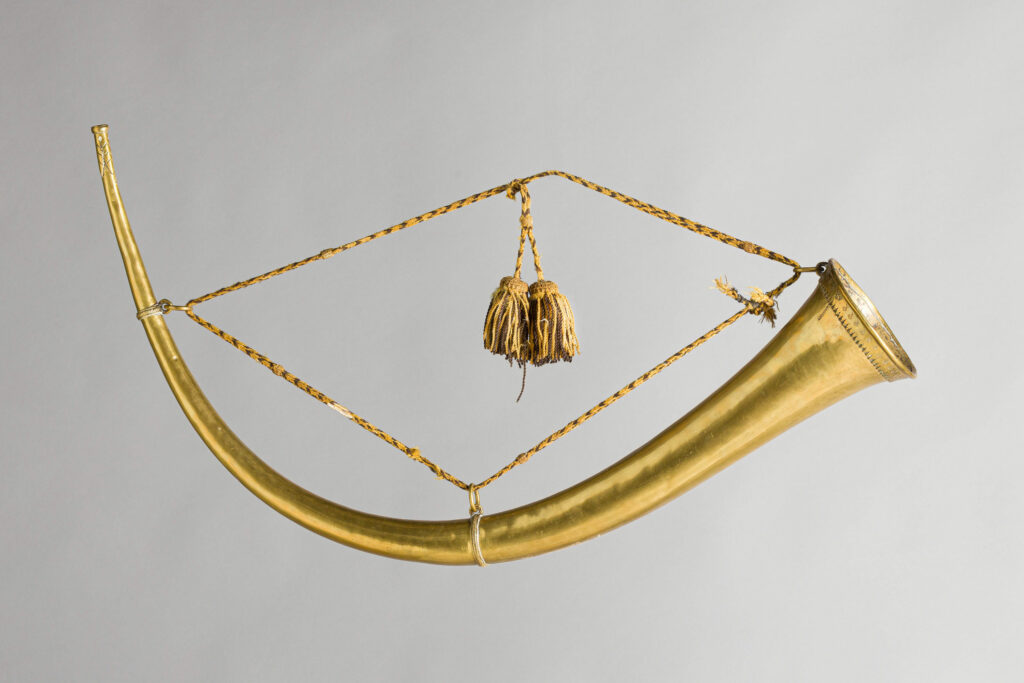
Le 2 mai 2026, les amateurs de cuivres historiques auront rendez-vous à Vichy pour une vente exceptionnelle où résonnera l’écho d’un nom légendaire : “Raoux, seul ordinaire du Roi”. Cette trompe de chasse en ré produite par Raoux illustre l’aboutissement d’une longue évolution technique et sonore. Elle porte l’estampille du facteur du roi, et témoigne d’un âge d’or de la facture des cuivres, venant dialoguer avec son ancêtre baroque – un grand cor de Crétien – présenté dans la même vente.
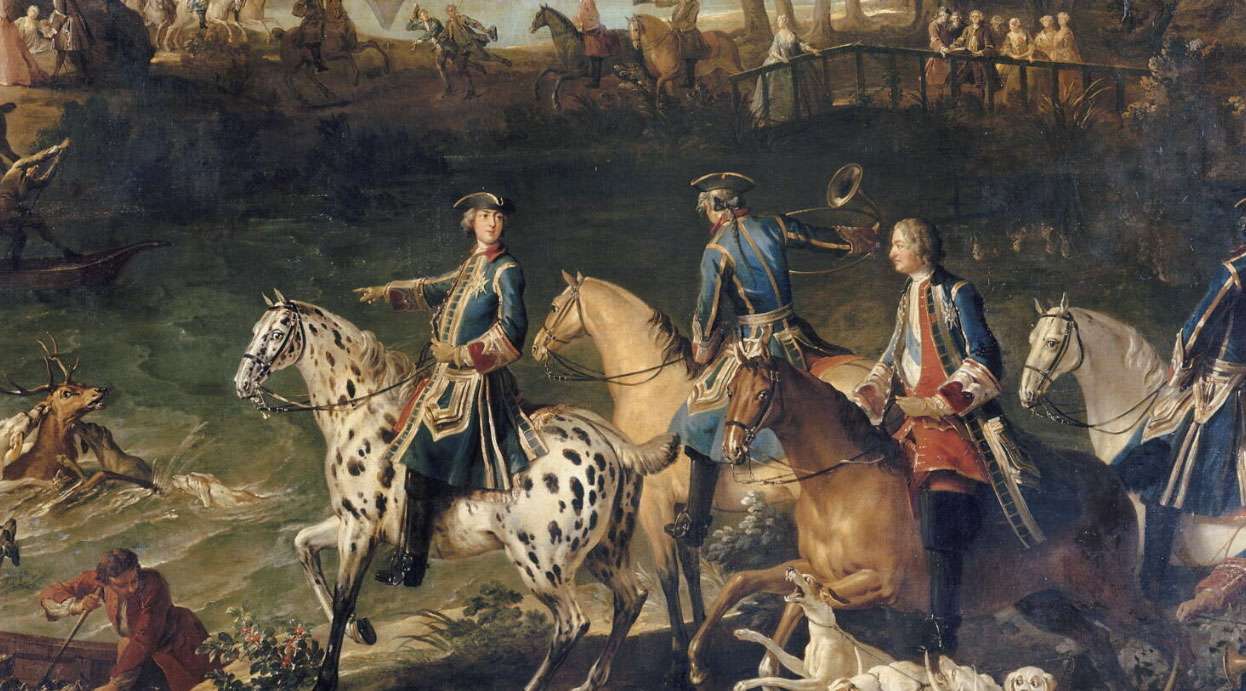
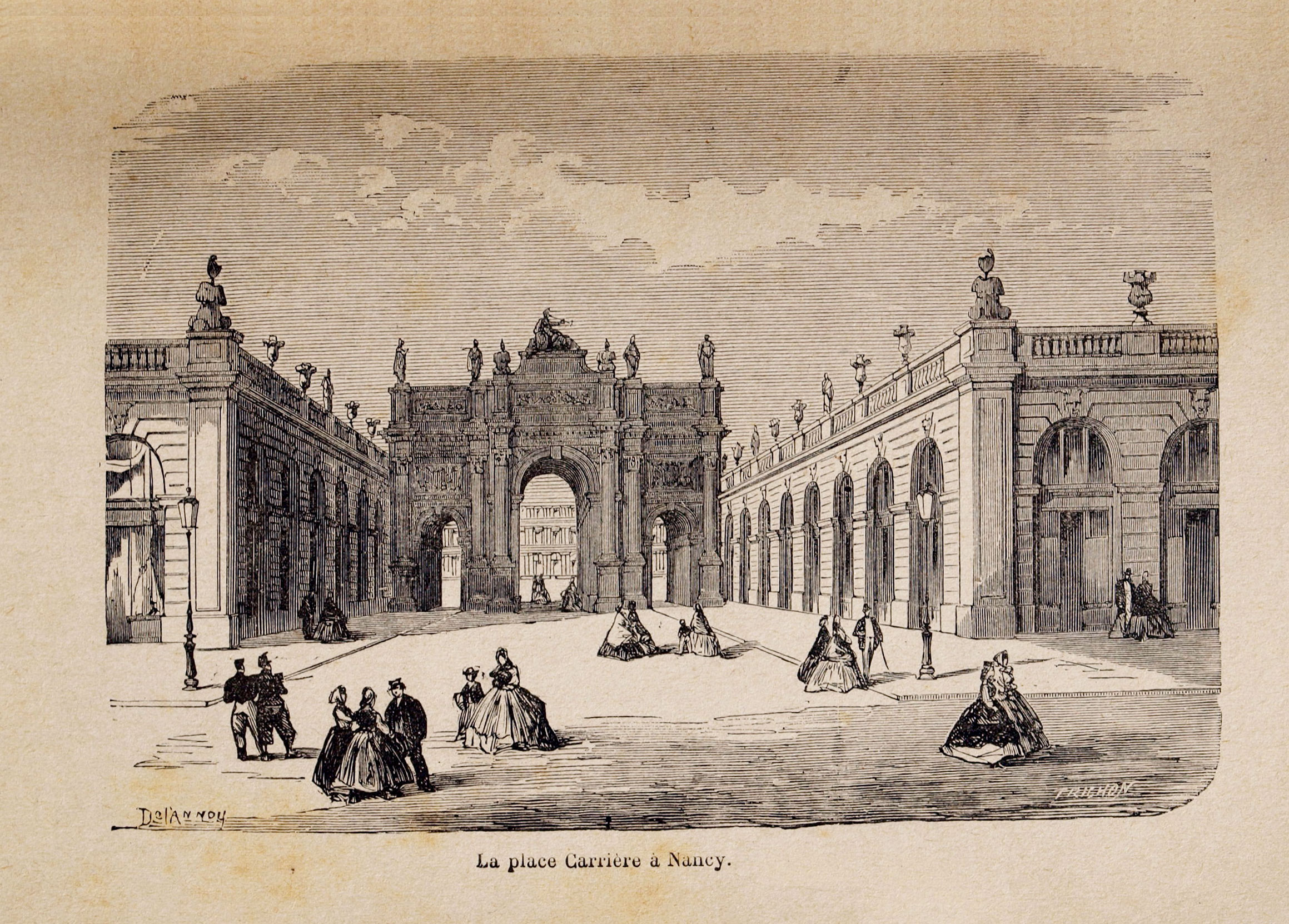
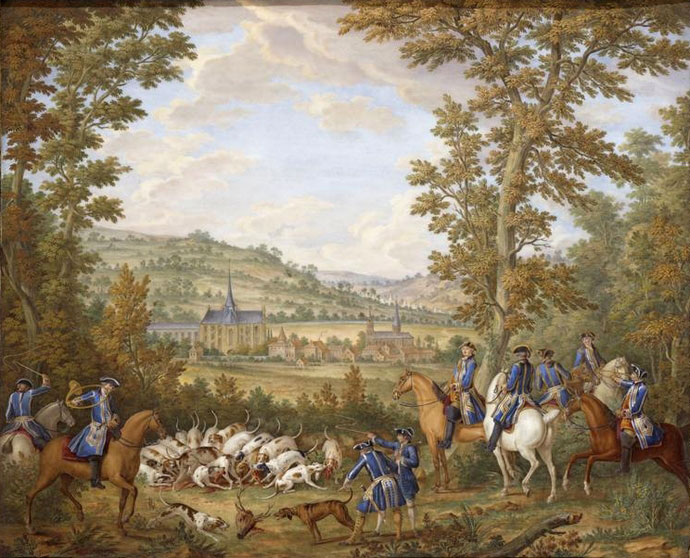
La famille Raoux compte parmi les plus illustres dynasties de facteurs d’instruments à vent en France, et fut active du XVIIème au XIXème siècle. Son fondateur, Louis Raoux (1648-1728), s’installe à Nancy en 1663 où il devient chaudronnier privilégié, ayant le droit exclusif de travailler le laiton et de fabriquer des instruments de guerre et de chasse, comprenant les cors et trompettes. Son fils François Raoux (v.1695-1749) poursuit l’activité familiale. Établi à Versailles en 1741, il est nommé “faiseur de cors de chasse du Roy”, fournissant la vénerie de Louis XV jusqu’à sa mort en 1749. Après François Raoux, deux de ses fils reprennent l’atelier. Pierre Raoux (1723-ap.1789) maintient l’atelier originel de Nancy ; tandis que Joseph Raoux (1725-1787) s’établit à Paris en 1749.
Bien qu’il ne fasse pas partie d’une corporation au départ – étant chaudronnier – Joseph finit par intégrer la guilde des luthiers en 1754 et obtient le titre de “maître luthier faiseur d’instruments de musique” par arrêté du Conseil du Roi. Il devient le principal facteur de trompes de chasse du roi sous Louis XV et Louis XVI. Les sources indiquent que Joseph Raoux fut le fournisseur exclusif des trompes de chasse de la Couronne. Son atelier parisien, successivement situé en des lieux stratégiques, enclos des Quinze-Vingts, rue Tiquetonne, puis Place du Louvre vers 1781, répond aux commandes royales et de la noblesse. Joseph Raoux, tout en continuant de fournir les équipages de vénerie royaux, contribue au nouvel essor des cuivres dans la musique.
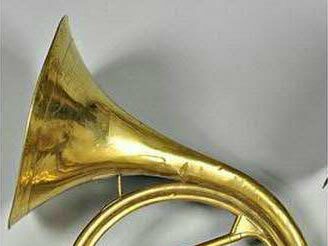
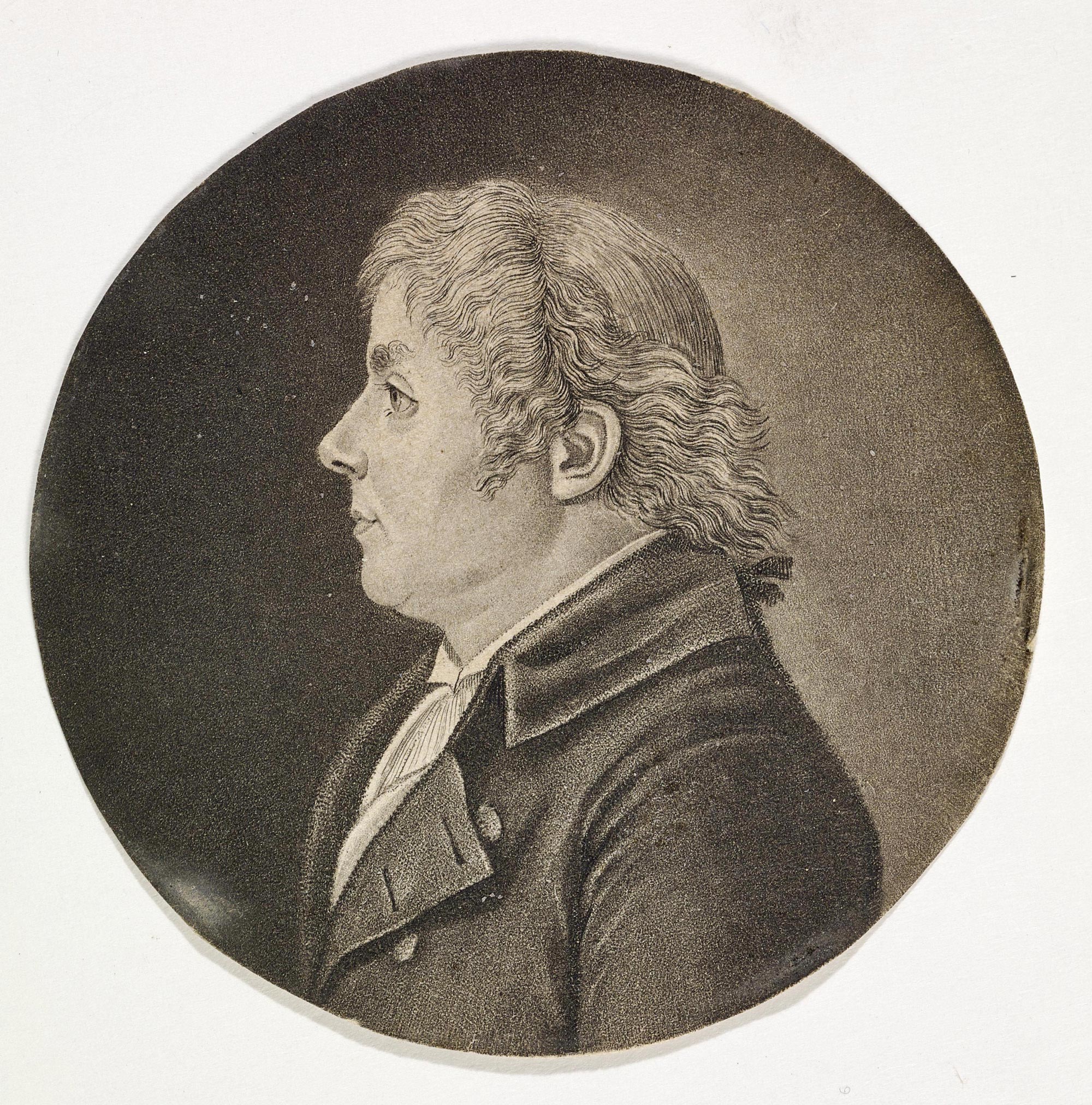
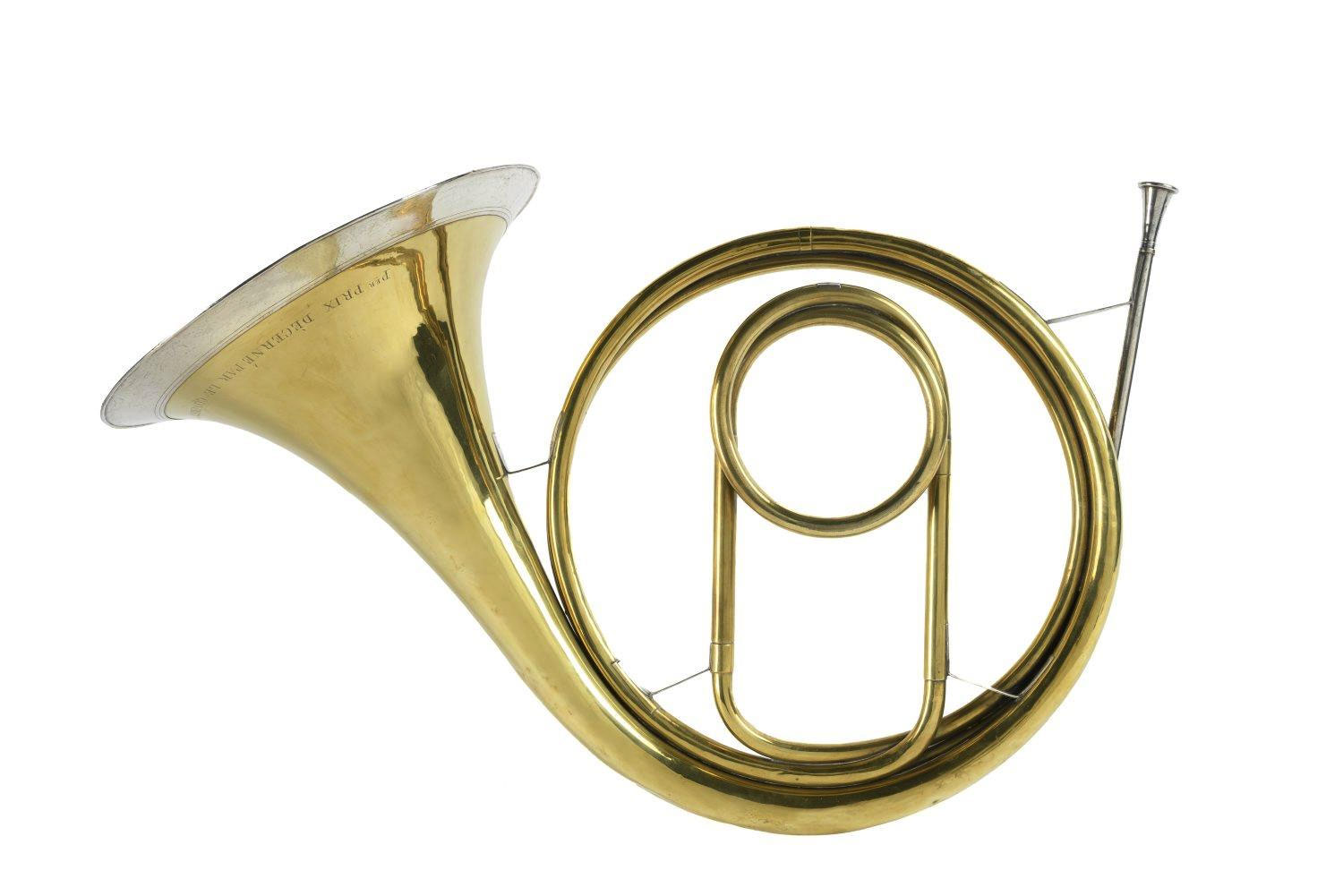
À la mort de Joseph en 1787, son fils Lucien Joseph Raoux (1752-1823) reprend l’atelier parisien. Formé auprès de son père, il avait un temps collaboré avec un concurrent, Jean-François Corméry, avant de revenir dans l’entreprise familiale[1]. En 1790, en pleine tourmente révolutionnaire, Lucien Joseph transfère l’atelier rue Serpente à Paris, adresse qui restera celle de la maison Raoux pendant plus d’un demi-siècle. L’activité se poursuit malgré les changements de régime. Lucien Joseph Raoux va jouer un rôle majeur dans le perfectionnement du cor “moderne” en France. Déjà avant la Révolution, il s’attache à faire évoluer les cors de chasse traditionnels pour les adapter aux exigences de l’orchestre naissant. En 1791, avec le concours du corniste virtuose Carl Türrschmidt, il met au point un nouveau modèle de cor d’orchestre dit “cor solo”, équipé de cinq tons de rechange, spécialement conçu pour les parties solistes. Un exemplaire superbe de ce cor solo, offert par Raoux au jeune Louis-François Dauprat à l’occasion de son premier prix de cor au Conservatoire en 1797, est aujourd’hui conservé au Musée de la Musique à Paris. Ce geste symbolique illustre les liens privilégiés que Raoux entretenait avec les musiciens d’élite de son époque. De fait, Lucien Joseph collabora étroitement avec les cornistes les plus renommés de l’Opéra de Paris et du Conservatoire. Outre Dauprat, on sait qu’il a fabriqué des cors pour des virtuoses tels que Giovanni Punto, Heinrich Domnich, Frédéric Duvernoy, Jean-Kilien Kenn ou Lebrun au tournant du XIXème siècle.
L’atelier de la rue Serpente tourne alors à plein régime, combinant tradition et innovation. Lucien Joseph, jusqu’à son décès en 1823, perfectionne la facture des cors naturels sans piston, au point de les rendre très prisés des cornistes solistes de l’époque. Il est aussi l’un des rares facteurs à oser la fabrication de trompettes circulaires au début des années 1820, instrument original qu’il destine aux orchestres romantiques. L’exemple de la trompette circulaire réalisée en 1825 par Auguste Raoux pour l’Opéra-Comique – passée à Vichy Enchères le 7 mai 2022 – a montré le succès éphémère mais réel de ces créations auprès des trompettistes parisiens de la Restauration.
[1] Thierry Maniguet, “La dynastie des Raoux, facteurs de “cors de chasse” du XVIIe au XVIIIe siècle, dans Musique. Images. Instruments, 2015, n°15
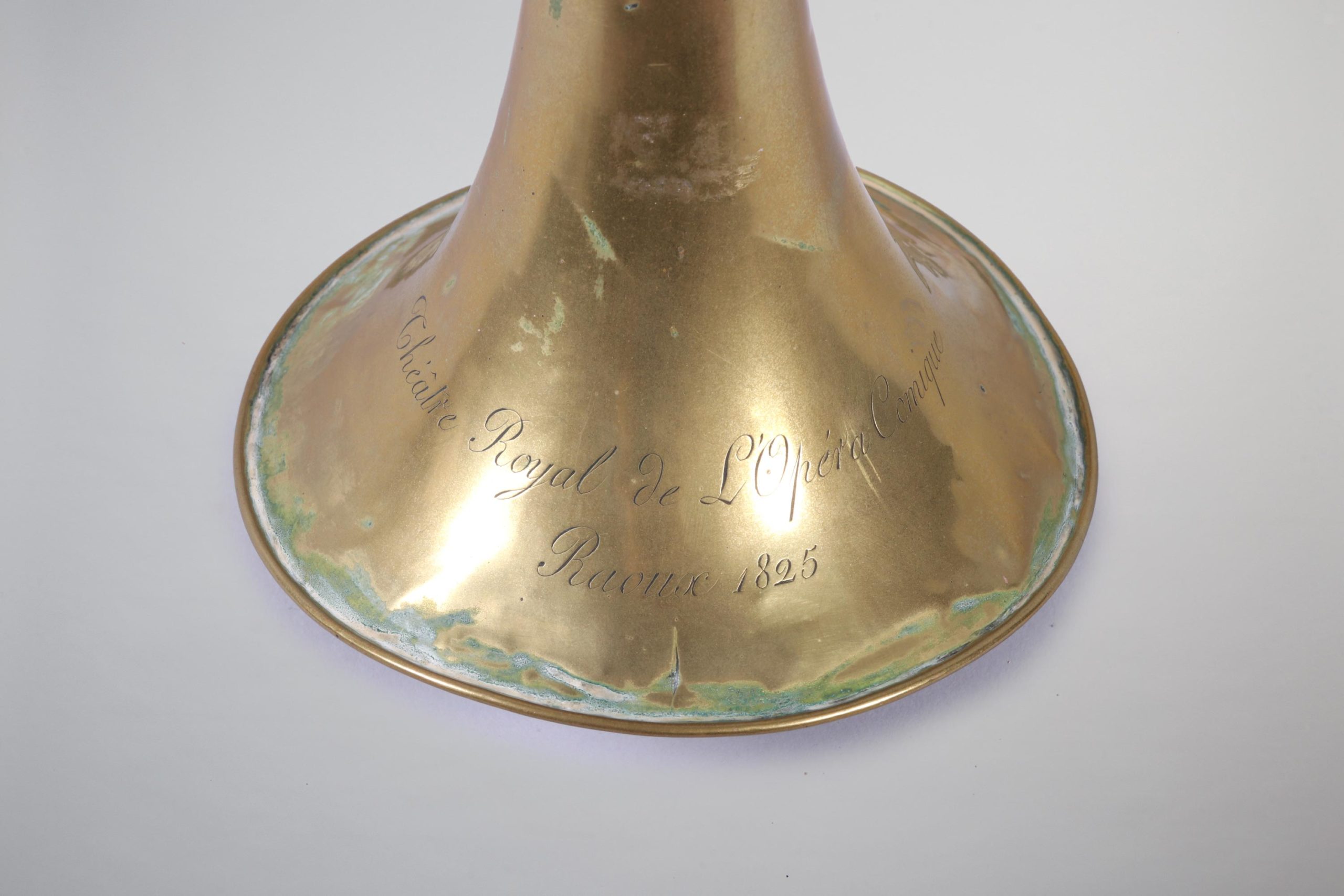
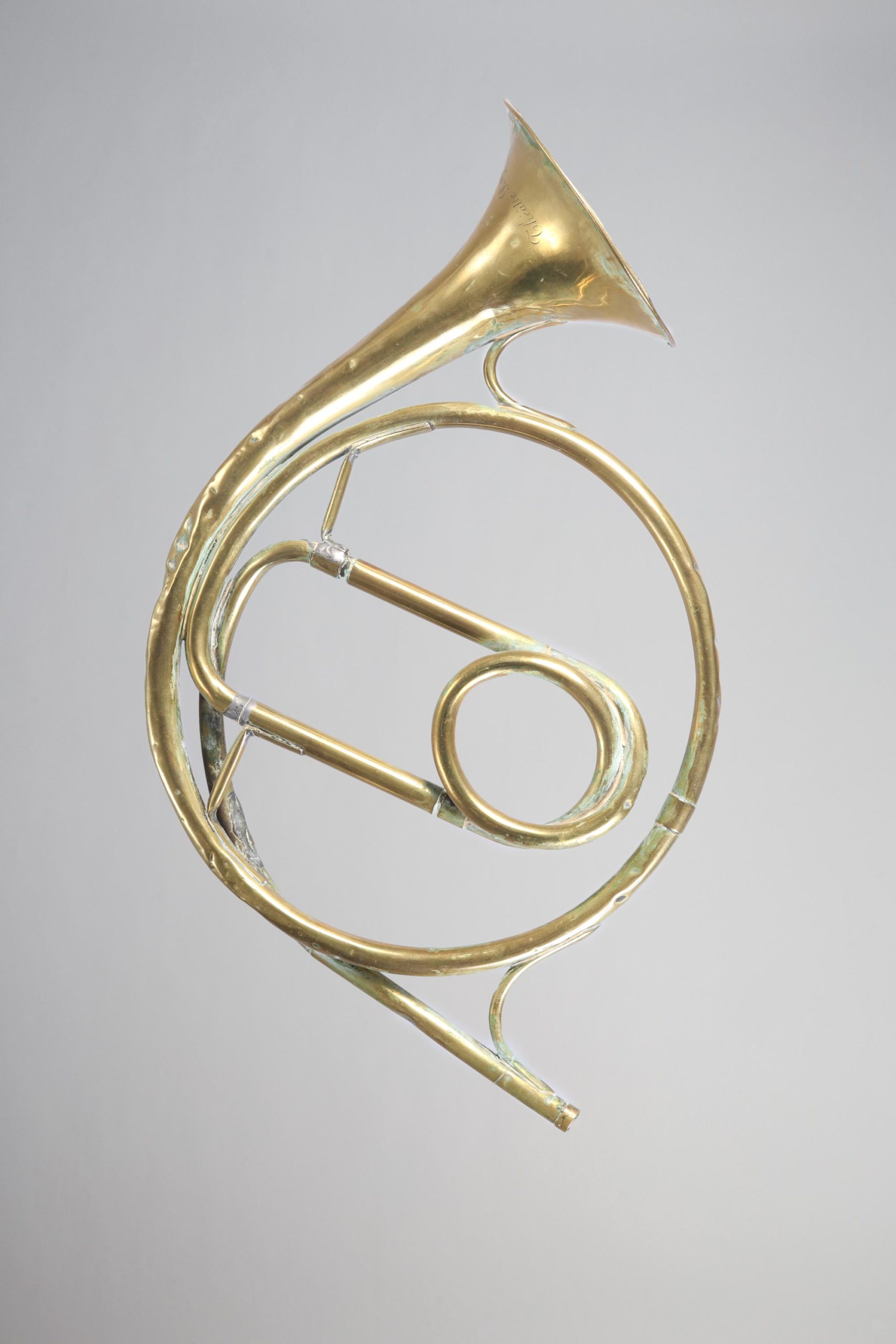
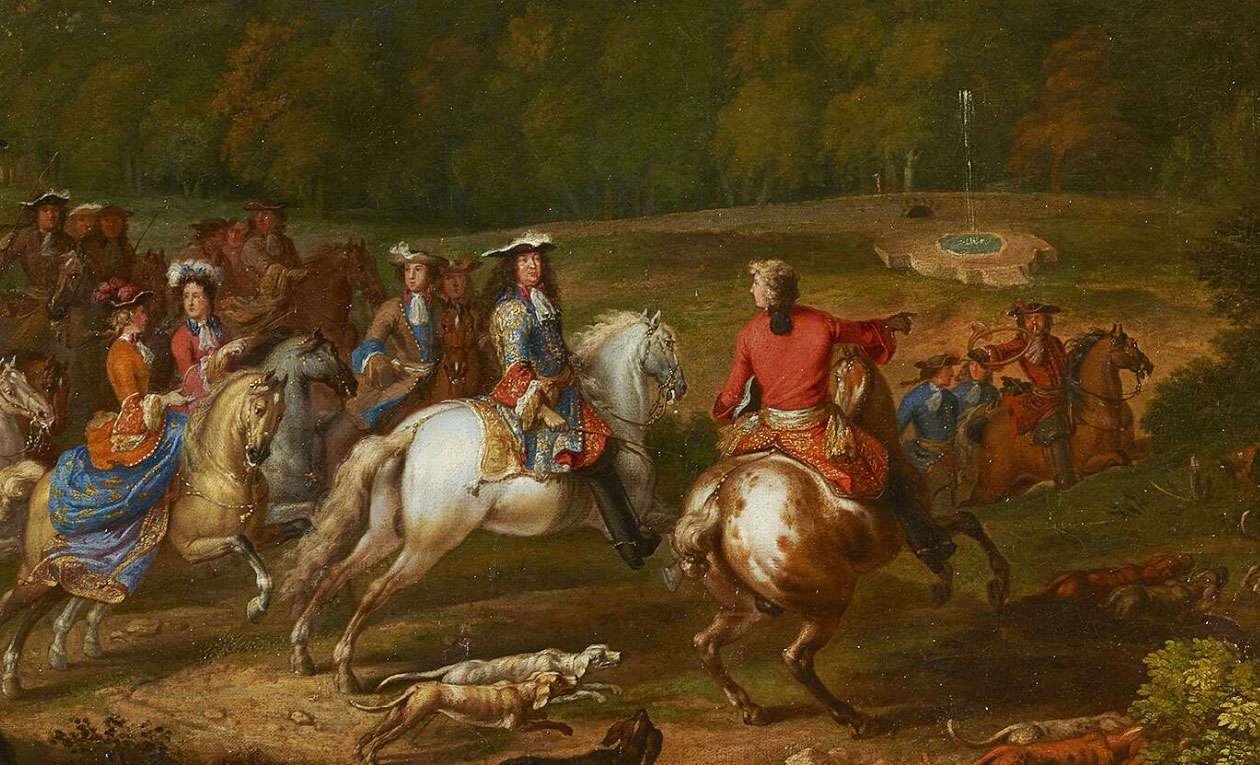
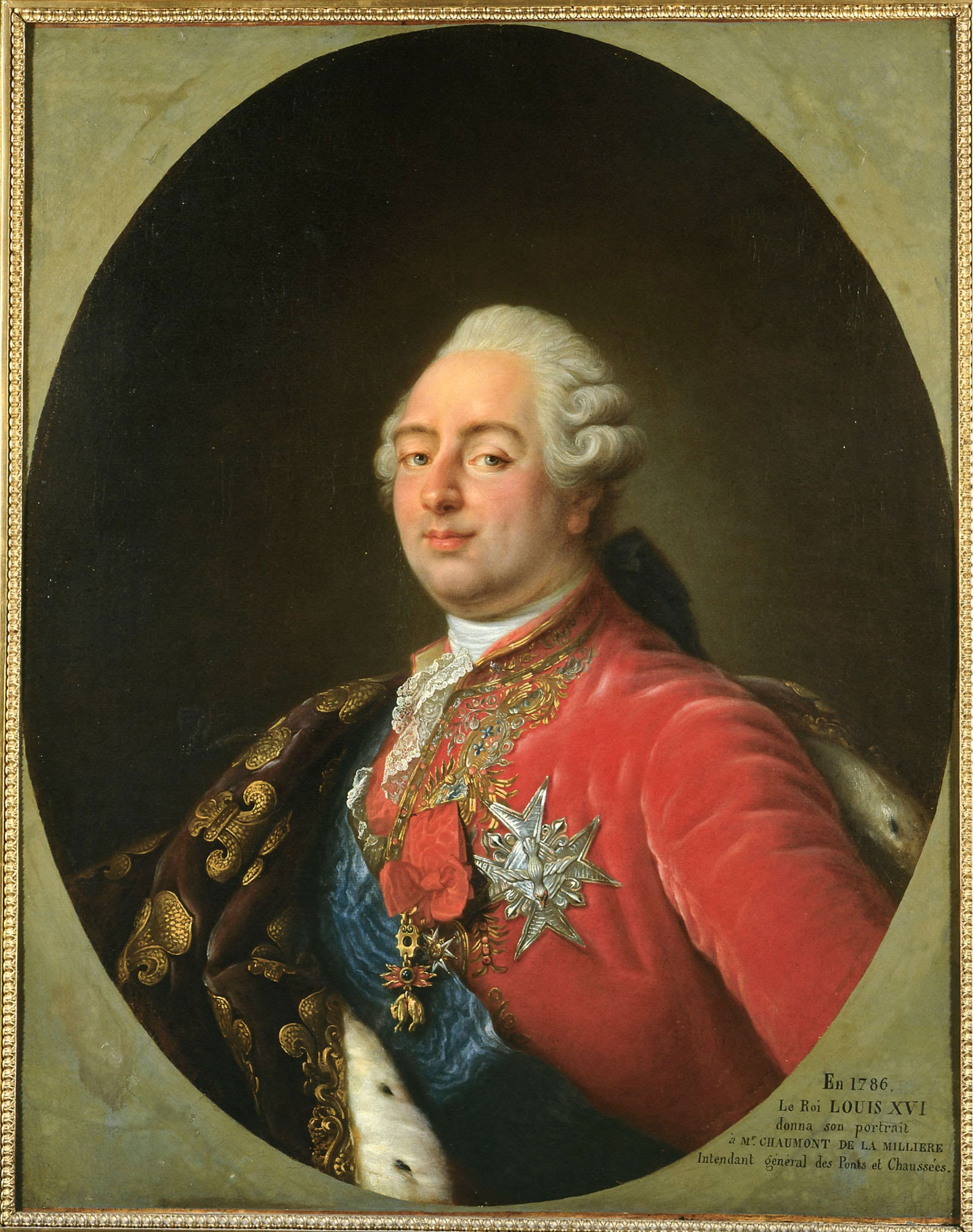
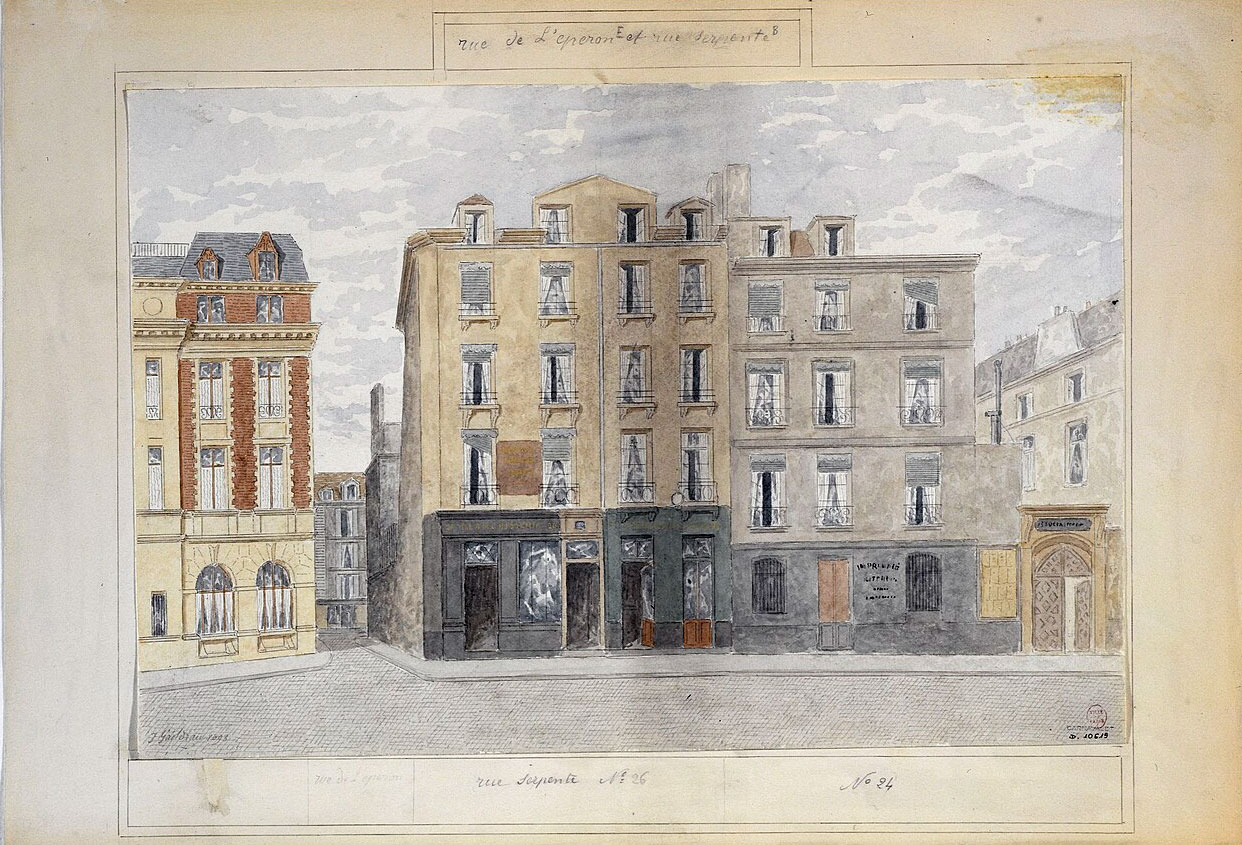
L’estampille “Raoux, seul ordinaire du Roi, rue Serpente à Paris”, présente sur l’instrument de la vente du 2 mai 2026, est en usage au moins depuis Joseph Raoux. Rappelons que Gustave Chouquet rapportait l’existence d’une trompe de chasse datée 1695 gravée “fait par Raoux, seul ordinaire du Roy, place du Louvre près de l’odiance du ministre, à Paris 1695”, dont la localisation est inconnue[1].
Comme l’a montré Thierry Maniguet, l’activité des Raoux, au milieu du XVIIIème siècle, est largement tournée vers la trompe de chasse. L’exemple de Joseph Raoux est intéressant. Sonneur lui-même, il travaillait principalement pour une clientèle de veneurs. Les archives en témoignent clairement, puisqu’entre 1769 et 1774 puis entre 1782 et 1783, le marquis de Louvois lui commande à lui seul une vingtaine de trompes, en plus de leur entretien régulier[2].
C’est dans ce contexte qu’il obtient le titre d’ordinaire du Roi, désignant un fournisseur régulier de la Cour. Plusieurs instruments conservés portent cette mention, associée aux différentes adresses de l’atelier. À partir des années 1780, l’inscription évolue en “seul ordinaire du Roi”, sans indiquer un monopole absolu, mais plutôt une position dominante – probablement dans le domaine spécifique de la trompe de chasse.
[1] Gustave Chouquet, Le musée du Conservatoire de musique, Catalogue descriptif et raisonné, Paris, Librairie de Firmin-Didot, 1884, p.147.
[2] Thierry Maniguet, “La dynastie des Raoux, facteurs de “cors de chasse” du XVIIe au XVIIIe siècle, dans Musique. Images. Instruments, 2015, n°15
Comme nous l’avons vu plus haut, l’adresse rue Serpente, présente sur notre instrument, renvoie quant à elle à la génération suivante, celle de Lucien-Joseph Raoux, qui reprend l’atelier après la Révolution. Comme souvent, il conserve les titres hérités, devenus de véritables marques d’atelier.
Ainsi, l’inscription “seul ordinaire du Roi” ne désigne pas seulement un homme, mais renvoie à l’histoire de la dynastie intrinsèquement liée à la vénerie royale, dont elle affirme le prestige et la continuité. Outre ce modèle, Vichy Enchères avait déjà vendu, en 2009, un cor portant l’inscription gravée “fait à Paris par Raoux, seul ordinaire du Roy, Place du Louvre”.
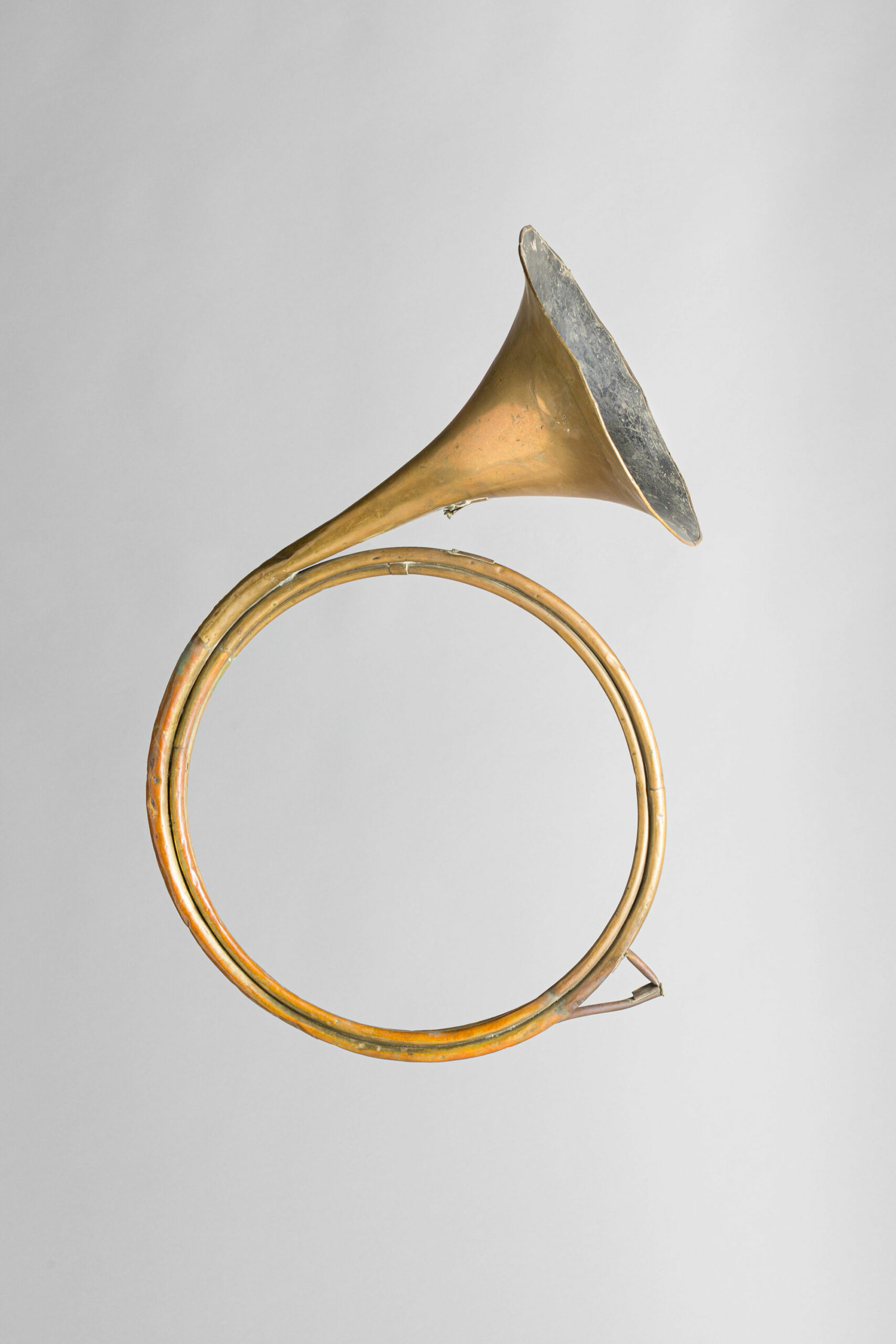
Dès 1814, le fils de Lucien, Marcel Auguste Raoux (1795-1871), obtient du roi Louis XVIII le brevet de “Facteur d’instruments du Roi et des théâtres royaux”. Ce titre confère à l’atelier le monopole de production des instruments à vent pour la Cour et les institutions royales comme l’Opéra. L’entreprise atteint alors son apogée et les cors naturels et trompes de chasse estampillés Raoux sont considérés comme ce qui se fait de mieux en Europe au milieu du XIXème siècle, prisés jusqu’en Angleterre. Cependant, en 1828-1830 apparaissent à Paris les premiers cors à pistons importés d’Allemagne, introduisant une concurrence technologique en rendant l’instrument totalement chromatique et en évitant la nécessité d’utiliser les sons bouchés en introduisant la main dans le pavillon.
Surtout, la Révolution de 1830 met fin au régime et Auguste Raoux perd ses brevets royaux lors de la chute de Charles X. Bien qu’il continue son activité et obtiendra en 1852 le titre de “Fournisseur de l’Empereur” de Napoléon III, la maison Raoux doit affronter la concurrence grandissante d’autres facteurs innovants, tel Adolphe Sax qui remportera en 1845 le concours des instruments d’orchestre pour l’armée française. Après des décennies de succès puis de difficultés, Auguste Raoux finit par céder en 1857 le fonds de commerce à un autre facteur, Jacques-Christophe Labbaye.
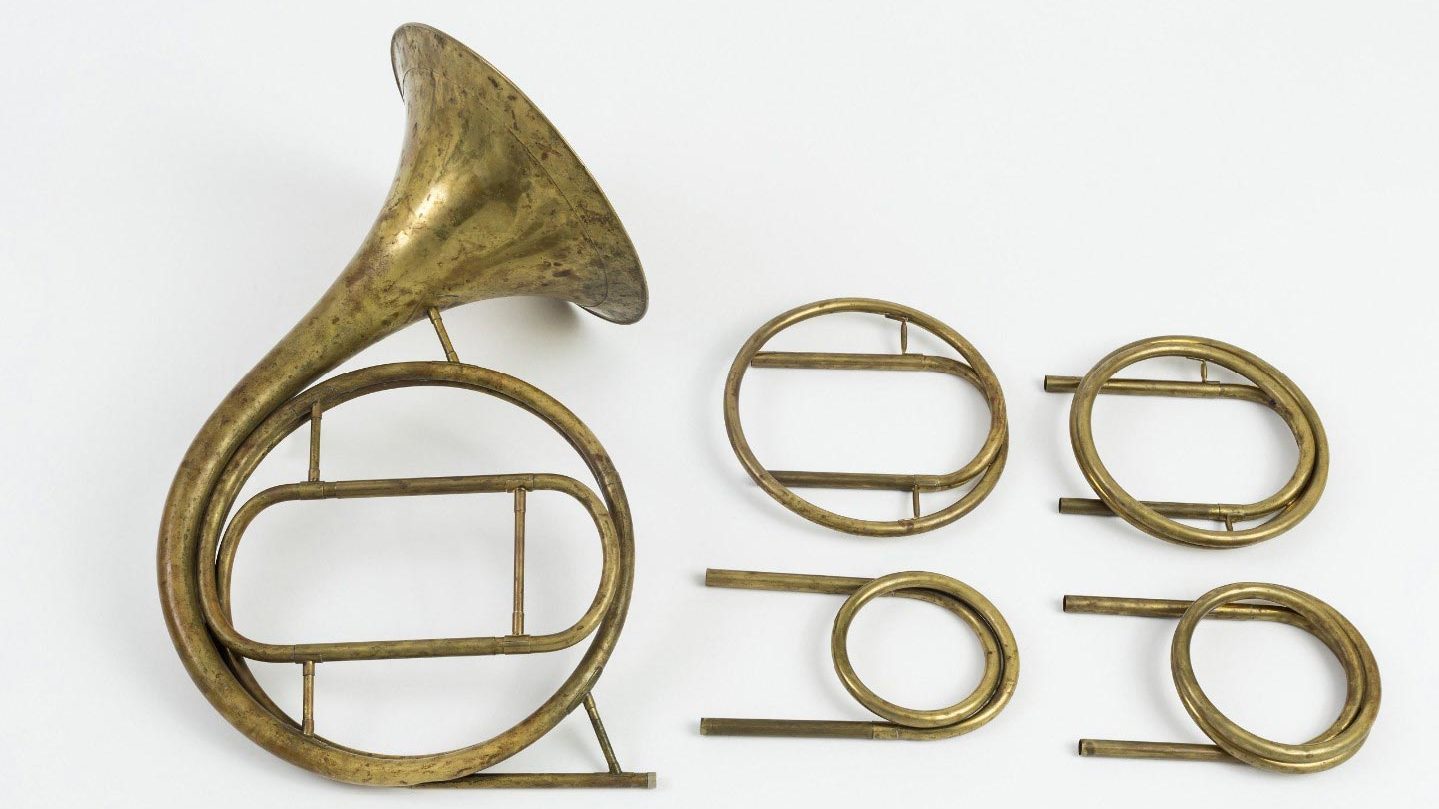
A côté du grand cor en demi-lune de Crétien, également présent dans la vente Vichy Enchères du 2 mai 2026, la trompe de chasse en ré de Raoux illustre l’évolution du cor de chasse entre le XVIIème et le XIXème siècle.
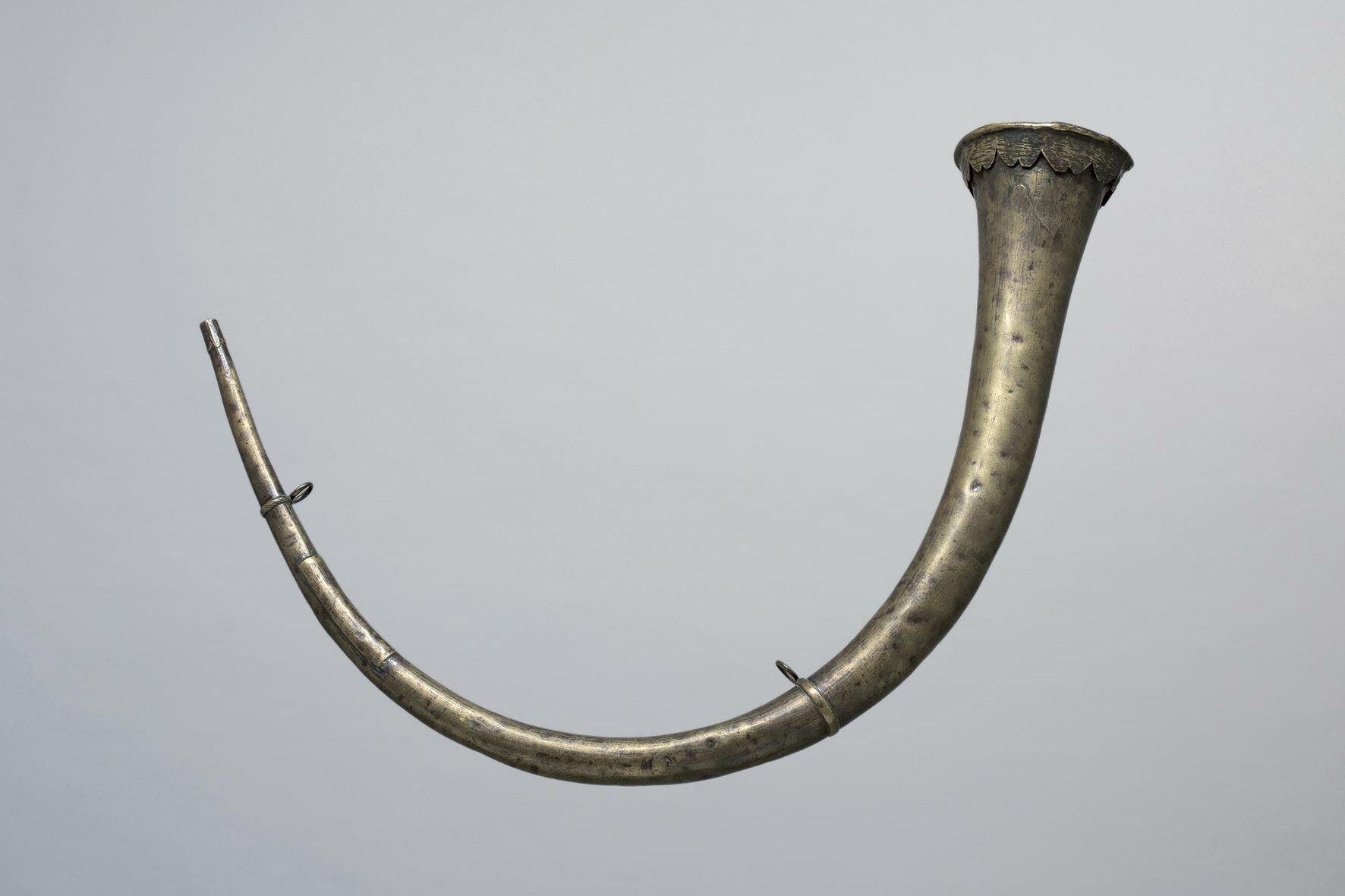
Au XVIIème siècle, les premiers grands cors métalliques remplacent les petits instruments utilitaires comme le huchet n’émettant qu’un son. La forme en demi-lune, développée notamment par les Crétien, permet d’allonger un peu le tube et d’enrichir les possibilités sonores. Vers 1680, ces instruments sont adoptés à la cour de Louis XIV, marquant l’essor de la trompe de chasse dans la vénerie royale.
Au XVIIIème siècle, l’instrument évolue vers la trompe en Ré, circulaire et beaucoup plus longue, ce qui permet l’émission de nombreux harmoniques rendant l’instrument pratiquement diatonique dans l’aigu. Elle a été introduite dans les fanfares de chasse sous l’impulsion du marquis de Dampierre.
Si les premiers modèles apparaissent chez les Crétien, la famille Raoux en assure le perfectionnement et la diffusion, notamment avec la trompe à la “Dauphine”. Cette filiation directe entre les deux ateliers est essentielle dans l’histoire de l’instrument.
Dans le même temps, le cor quitte progressivement la seule sphère de la chasse pour entrer dans celle de la musique. Adapté à l’orchestre grâce à l’ajout de tons de rechange, permettant de changer la tonalité de base de l’instrument, il devient un instrument à part entière, auquel les Raoux contribuent largement.
La trompe en ré de Raoux proposée ici est l’aboutissement de cette évolution. Plus compacte que les grands cors anciens, elle conserve pourtant la même fonction : sonner en plein air. Elle témoigne à la fois de la continuité d’un usage et de la transformation d’un instrument de signal en instrument de musique, reliant directement l’héritage des Crétien à la tradition des Raoux.
On peut ainsi, pour finir, reprendre les mots de Joël Bouëssée : “La conclusion se dégageant de tout ceci est dès lors fort nette ; Crétien et Raoux doivent partager l’honneur d’avoir créé la trompe en ré que le marquis de Dampierre sortit en 1722 des diverses trompes d’église pour la faire adopter à la vénerie du roi en août 1723 et la voir ensuite, grâce à Lebrun, autre fournisseur du roi, devenir en 1729, la Dauphine, nom qui disparut avec le Dauphin et ne fut remplacé qu’en 1818 par l’expression d’atelier “trompe Dampierre” .
On 2 May 2026, enthusiasts of historical brass instruments will gather in Vichy for an exceptional sale in which the legendary name of Raoux, “sole ordinary to the King”, will resonate. The hunting horn in D made by Raoux in this sale represents the culmination of a long evolution from a technical and sonic point of view. It bears the stamp of the King’s maker, and attests to a golden age of brass instrument making, while providing an interesting perspective on its Baroque ancestor – a great horn by Crétien – also included in the sale.
The Raoux family is among the most illustrious dynasties of wind instrument makers in France, and it was active from the 17th to the 19th centuries. Its founder, Louis Raoux (1648 – 1728), settled in Nancy in 1663 where he became a distinguished coppersmith, who benefited from the exclusive right to work brass and manufacture instruments of war and hunting, including horns and trumpets. His son, François Raoux (c.1695 – 1749), continued the family business. He set up shop in Versailles in 1741, and was appointed “maker of hunting horns to the King”, supplying the royal hunts under Louis XV until his death in1749. After François Raoux, two of his sons took over the workshop. Pierre Raoux (1723 – after 1789) ran the original workshop in Nancy, while Joseph Raoux (1725 – 1787) settled in Paris in 1749.
Although initially not a member of a guild – being a coppersmith – Joseph eventually joined the instrument makers’ guild in 1754 and obtained the title of “master luthier maker of musical instruments” by decree of the King’s Council. He became the principal maker of hunting horns for the king under Louis XV and Louis XVI. Sources indicate that Joseph Raoux was the exclusive supplier of hunting horns to the Crown. His Parisian workshop, which moved over the years while remaining in strategic locations – the Quinze-Vingts enclosure, rue Tiquetonne and then Place du Louvre around 1781 – fulfilled orders from the king and the nobility. While continuing to supply the royal hunting parties, Joseph Raoux contributed to the renewed popularity of brass instruments in music.
Upon Joseph’s death in 1787, his son Lucien Joseph Raoux (1752 – 1823) took over the Parisian workshop. After his initial training with his father, he briefly worked with a competitor, Jean-François Corméry, before returning to the family business [1]. In 1790, amid the turmoil of the French Revolution, Lucien Joseph moved the workshop to rue Serpente in Paris, where it remained for over half a century. Its activity carried on despite political regime changes. Lucien Joseph Raoux played a major role in the development of the « modern » horn in France. Even before the Revolution, he endeavoured to adapt traditional hunting horns to meet the demands of the emerging orchestra. In 1791, with the help of the virtuoso horn player Carl Türrschmidt, he developed a new model of orchestral horn known as the « solo horn, » equipped with five alternative tones, specially designed for solo parts. A superb example of this type of solo horn, presented by Raoux to the young Louis-François Dauprat on the occasion of his first prize for horn at the Conservatoire in 1797, is now held at the Musée de la Musique in Paris. This symbolic gesture illustrates the close ties Raoux had with the elite musicians of his time. Indeed, Lucien Joseph collaborated closely with the most renowned horn players of the Paris Opera and the Conservatoire. Besides Dauprat, he is known to have made horns for virtuosos such as Giovanni Punto, Heinrich Domnich, Frédéric Duvernoy, Jean-Kilien Kenn, and Lebrun at the turn of the 19th century.
The workshop on rue Serpente was then operating at full capacity, combining tradition and innovation. Until his death in 1823, Lucien Joseph perfected the construction of natural horns without valves, making them highly sought after by solo horn players of the time. In the early 1820s, he was also one of the few makers to dare producing circular trumpets, an original instrument he intended for use in Romantic orchestras. The circular trumpet made in 1825 by Auguste Raoux for the Opéra-Comique – sold at Vichy Enchères on 7 May 2022 – demonstrates the short-lived but real success of these creations among Parisian trumpeters during the Restoration period.
[1] Thierry Maniguet, “La dynastie des Raoux, facteurs de “cors de chasse” du XVIIe au XVIIIe siècle, dans Musique. Images. Instruments, 2015, n°15
The stamp “Raoux, seul ordinaire du Roi, rue Serpente à Paris,” present on the instrument in the 2 May 2026 sale, was in use at least since Joseph Raoux. It is worth remembering that Gustave Chouquet reported the existence of a hunting horn dated 1695, engraved “fait par Raoux, seul ordinaire du Roy, place du Louvre près de l’odiance du ministre, à Paris 1695”, and whose location is unknown [1].
As Thierry Maniguet has demonstrated, the activity of the Raoux family, in the mid-18th century, was mainly focused on the hunting horn. The case of Joseph Raoux is interesting. He was a horn player himself, and worked primarily for a hunting clientele. The archives clearly attest to this, since between 1769 and 1774, and then again between 1782 and 1783, the Marquis de Louvois alone commissioned some 20 horns from him, in addition to calling upon him for their regular maintenance [2].
It was in this context that he obtained the title of ordinary to the King, which designated a regular supplier to the Court. Several surviving instruments bear mention of this title, along with the various addresses of the workshop. From the 1780s onward, the inscription evolved into « sole ordinary to the King », which did not indicate an absolute monopoly, but rather a dominant position – probably in relation to hunting horns specifically.
[1] Gustave Chouquet, Le musée du Conservatoire de musique, Catalogue descriptif et raisonné, Paris, Librairie de Firmin-Didot, 1884, p.147.
[2] Thierry Maniguet, “La dynastie des Raoux, facteurs de “cors de chasse” du XVIIe au XVIIIe siècle, dans Musique. Images. Instruments, 2015, n°15
As discussed previously, the address of rue Serpente, found on our instrument, refers to the next generation, that of Lucien-Joseph Raoux, who took over the workshop after the Revolution. As was often the case, he retained the inherited titles, which had become real workshop trademarks.
Therefore, the inscription “sole ordinary to the King” did not refer to a particular individual, but to the family history, whose prestige and continuity it denoted, in relation to royal hunting in particular. Besides this example, Vichy Enchères already sold, in 2009, a horn bearing the engraved inscription “fait à Paris par Raoux, seul ordinaire du Roy, Place du Louvre”.
As early as 1814, Lucien’s son, Marcel Auguste Raoux (1795-1871), obtained from King Louis XVIII the title of “Maker of instruments to the King and the royal theatres”. This title granted the workshop a monopoly on the production of wind instruments for the Court and royal institutions such as the Opera. It was during this period, in the first half of the 19th century, when natural horns and hunting horns stamped Raoux were considered the finest in Europe, and were sought after even in England, that the company reached its peak. However, around 1828 – 1830, the first valve horns imported from Germany appeared in Paris, introducing technological innovations that made the instrument fully chromatic and eliminated the need to insert the hand into the bell to produce certain notes.
Furthermore, the Revolution of 1830 brought an end to the regime, and Auguste Raoux lost his royal titles with the fall of Charles X. Although he continued his activity, and in 1852 was granted the title of “Supplier to the Emperor” by Napoleon III, the Raoux had to contend with growing competition from other innovative instrument makers, such as Adolphe Sax, who won the competition for orchestral instruments for the French army in 1845. After decades of success followed by difficulties, Auguste Raoux finally sold the business in 1857 to another instrument maker, Jacques-Christophe Labbaye.
When considered alongside Crétien’s great crescent-shaped horn, also in the Vichy Enchères sale on 2 May 2026, Raoux’s hunting horn in D illustrates the evolution of the hunting horn between the 17th and 19th centuries.
In the 17th century, the first large metal horns replaced the small utilitarian instruments like the hooting horn, which produced only one sound. The crescent shape, developed in particular by the Crétien family, allowed for a slightly longer tube and expanded the instrument’s range. Around 1680, these instruments were adopted at the court of Louis XIV, marking the rise in popularity of the hunting horn in royal hunting.
In the 18th century, the instrument evolved into the horn in D, a circular and much longer instrument, which allowed for the production of harmonics, making the instrument practically diatonic in the upper register. It was introduced into hunting bands at the instigation of the Marquis de Dampierre.
While the first models were produced by the Crétien family, the Raoux family perfected them and contributed to their popularity, as is the case in particular with the « Dauphine » horn. This strong connection between the two workshops is essential in understanding the history of the instrument.
At the same time, the horn gradually moved beyond the realm of hunting and into that of music. It was adapted for orchestral use through the addition of alternative tones, allowing the instrument’s standard pitch to be changed, and it became a fully-fledged musical instrument, thanks in large part to the contributions made by the Raoux family.
The Raoux horn in D offered here is the culmination of this evolution. While more compact than the larger horns of the past, it nevertheless retains the same function: to resonate outdoors. It embodies both to the continuity of a practice and the transformation of a signalling instrument into a musical instrument, directly linking the Crétien legacy to the Raoux tradition.
In closing, let us quote the words of Joël Bouëssée: “The conclusion we can draw from all this is therefore quite clear: Crétien and Raoux must share the distinction for having created the hunting horn in D that the Marquis de Dampierre took, in 1722, from among the various church horns, to have it adopted for the king’s hunts in August 1723 and then, thanks to Lebrun, another supplier to the king, to turn it, in 1729, into the Dauphine, a name that disappeared with the Dauphin and was only replaced in 1818 by the workshop term “Dampierre horn”.”