La vente du 4 juin 2026 réunit deux violoncelles de Lorenzo Storioni, faits à Crémone respectivement vers 1780 et en 1792. Une telle conjoncture est exceptionnelle – les violoncelles du luthier crémonais étant extrêmement rares. Il est, en effet, inouï de pouvoir observer simultanément deux instruments de Storioni, d’autant plus qu’ils témoignent chacun d’un des deux modèles caractéristiques de la production de luthier.
“Cet artiste véritablement polyvalent et exceptionnel a, presque à lui seul, détourné la lutherie crémonaise de sa course effrénée vers l’abîme.”
Traduction de Dmitry Gindin, The Late Cremonese Violin Makers, Edizioni Novecento
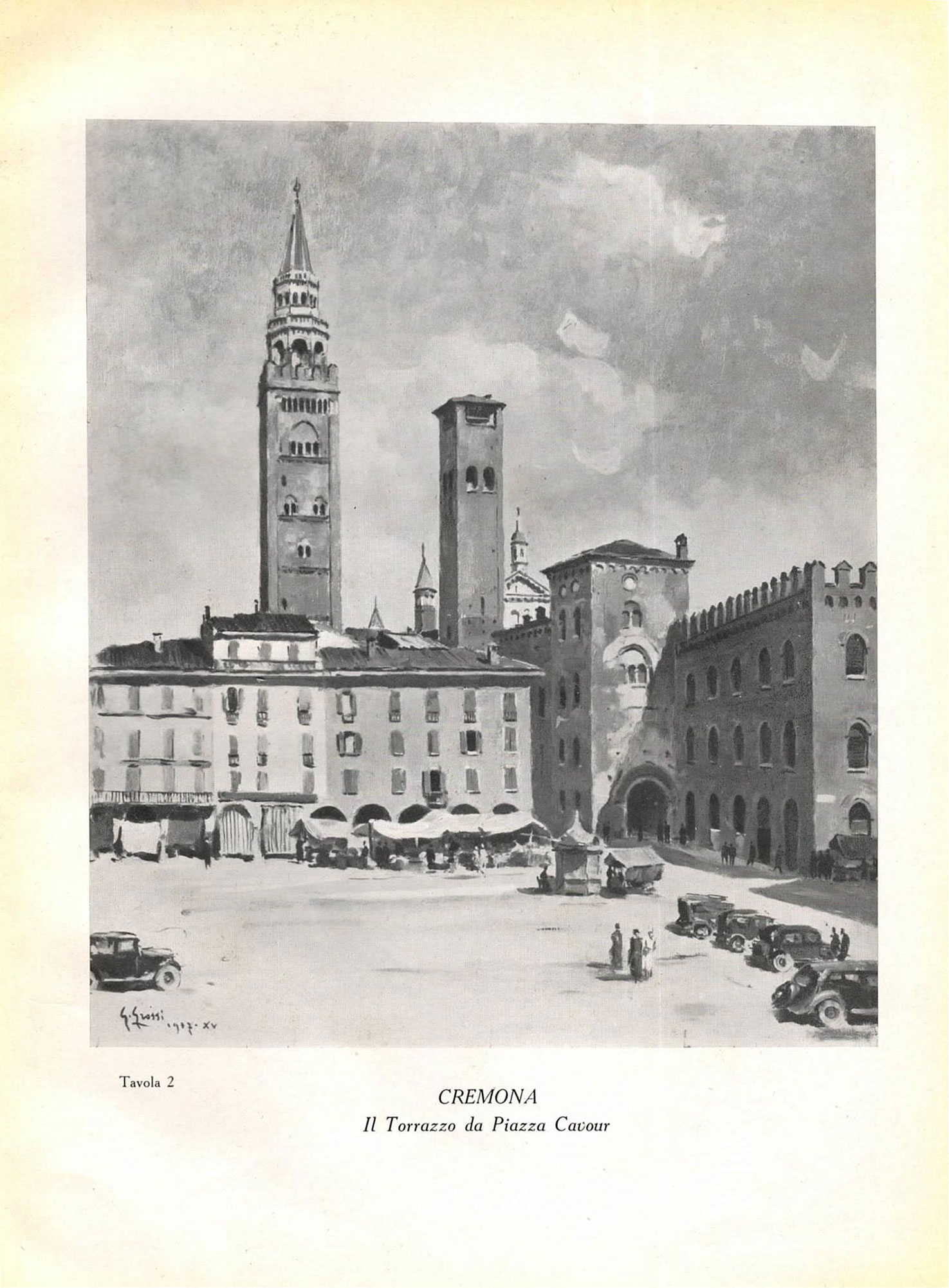
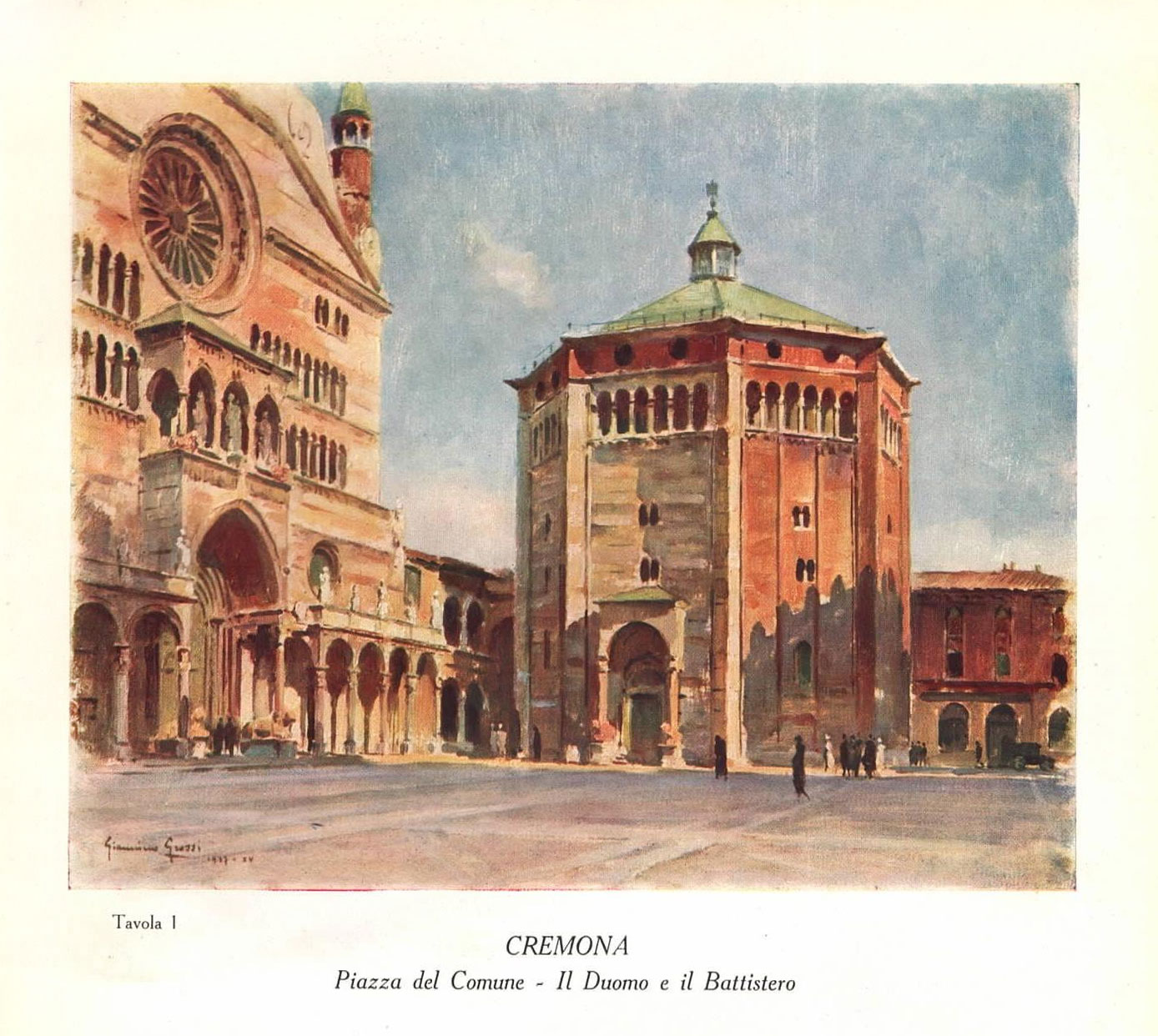
La place de Lorenzo Storioni s’inscrit dans un moment charnière de l’histoire de Crémone. La mort d’Antonio Stradivari en 1737, de Giuseppe Guarneri del Gesù en 1744, puis de Carlo Bergonzi en 1747, marquent la fin de l’apogée de la lutherie crémonaise. Toutefois, il ne faut pas comprendre cette période comme une rupture soudaine, mais plutôt comme un déclin progressif, déjà perceptible dans les dernières années des grands ateliers.
Après 1747, Crémone demeure une ville prestigieuse, mais son rôle change. Les plus beaux instruments anciens quittent progressivement la ville et commencent à être recherchés par une clientèle fortunée, tandis que les luthiers encore actifs travaillent davantage pour un marché local, moins aristocratique. La concurrence d’autres centres italiens – tels que Milan, Turin, Venise ou Mantoue – s’affirme, et l’accès aux bois et vernis de grande qualité devient plus difficile.
C’est dans ce contexte que se développe ce qu’on a appelé la lutherie “crémonaise tardive”[1], dont Lorenzo Storioni est la figure centrale.
[1] Dmitry Gindin, The Late Cremonese Violin Makers, Edizioni Novecento
Né à Crémone le 10 novembre 1744, Lorenzo Storioni appartient à une génération qui n’a pas connu directement l’âge d’or, mais qui en hérite indirectement.
“Il est très improbable que Storioni ait eu le moindre contact avec l’atelier de Michele Angelo Bergonzi, puisqu’il n’avait que treize ans lorsque Michele Angelo mourut […] Zosimo Bergonzi (mort en 1779) fut sans doute le seul luthier vivant à Crémone capable de susciter l’intérêt de Storioni pour la lutherie en tant que profession. Ainsi, entouré de diverses influences issues du passé de Crémone, Storioni a pu s’inscrire dans la lignée des techniques et du style déjà bien établis tant par les fils d’Antonio Stradivari et de Carlo Bergonzi que par les descendants de Francesco Rugeri.”
Dmitry Gindin, The Late Cremonese Violin Makers, Edizioni Novecento
Son activité est attestée dès la fin des années 1760. Marié en 1771, il s’impose progressivement comme le principal luthier de Crémone dans les décennies suivantes, notamment dans les années 1780, période la plus féconde de sa production. Il travaille alors avec son apprenti Giovanni Rota.
À partir du tournant du XIXème siècle, sa production décline et ses dernières années sont marquées par des déplacements encore mal documentés, avant son retour à Crémone où il meurt en 1816 dans des conditions modestes.
“Les meilleurs instruments fabriqués par Storioni durant ces années [environ de 1780 à 1790] soutiennent favorablement la comparaison avec les réalisations des deux autres grands luthiers de la fin du XVIIIe siècle, Balestrieri et G.B. Guadagnini […] Peu d’œuvres de cette époque sont aujourd’hui disponibles pour l’étude.”
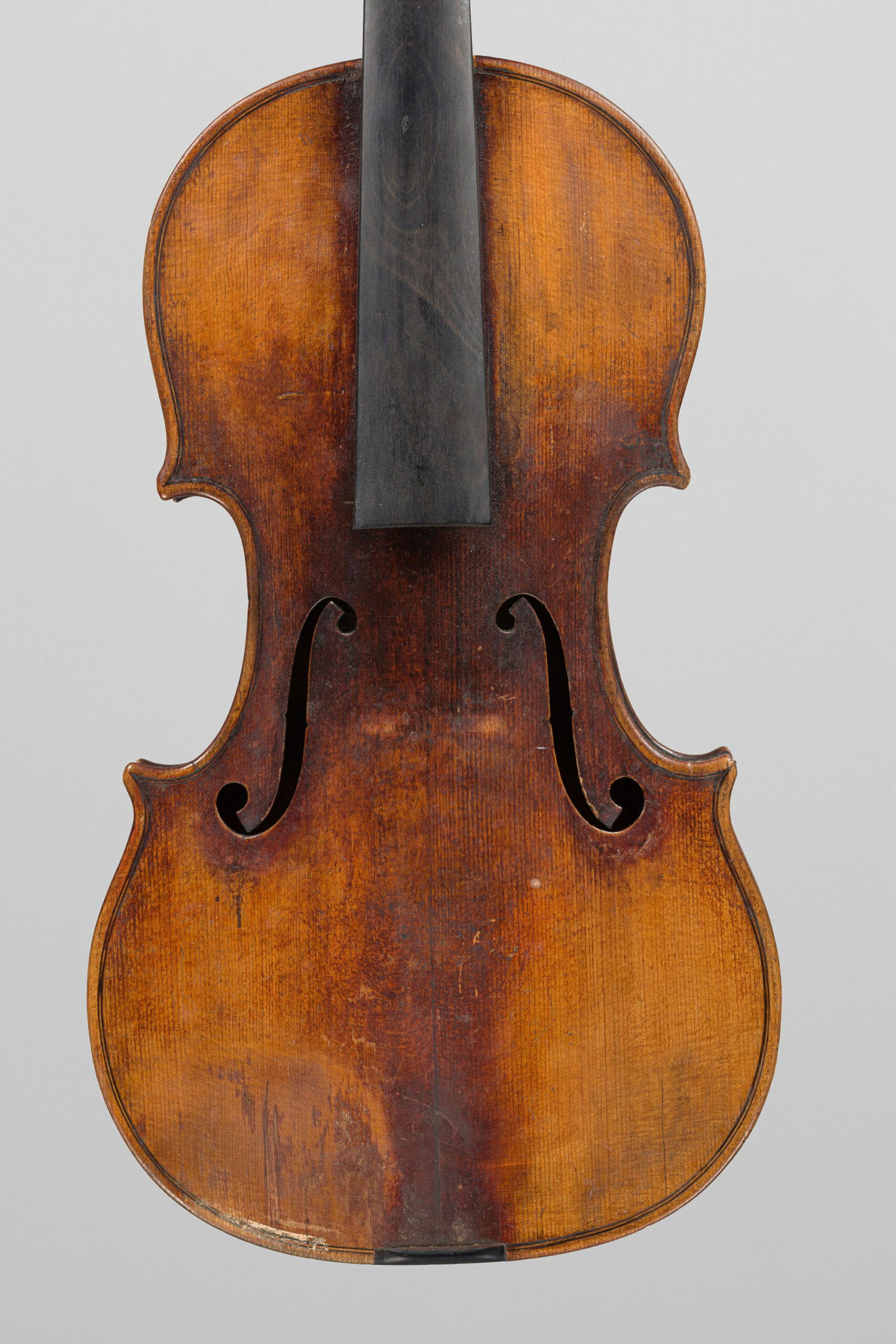
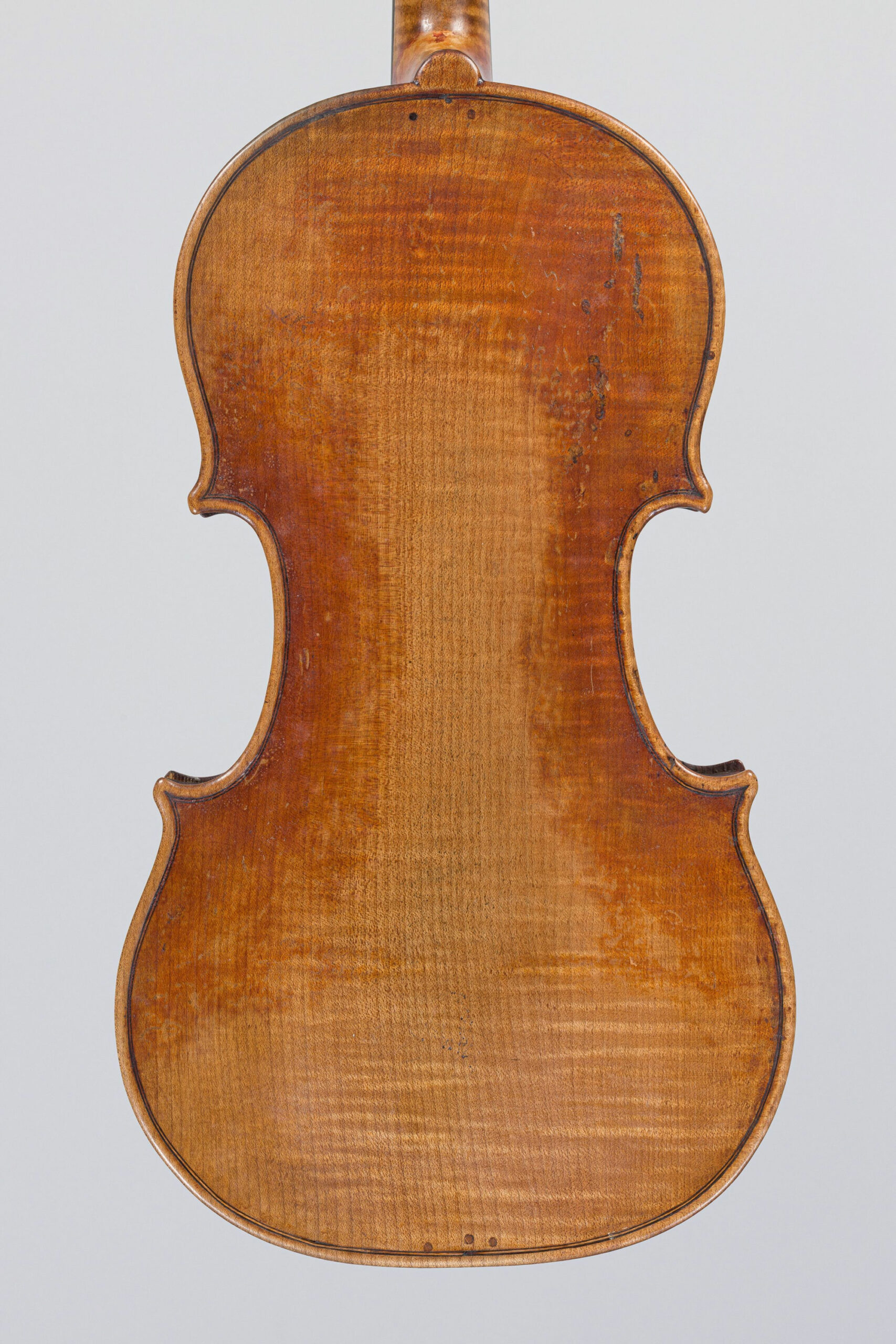
Loin de chercher à reproduire les modèles de l’âge d’or, Storioni affirme une identité propre. Ses instruments, souvent plats, assez larges, rarement longs, se distinguent par des coins larges, un filet marqué, des bois souvent locaux et un vernis sec, jaune-orangé à rouge-orangé. Par sa facture, il contribue à définir une nouvelle manière de faire à Crémone dans les années 1770-1790[1], dont témoignent les deux violoncelles présentés à Vichy Enchères.
[1] Dmitry Gindin, The Late Cremonese Violin Makers, Edizioni Novecento
“Étant donné qu’il est né à peine trois semaines après l’un des événements les plus tristes de l’histoire de Crémone – la mort prématurée de Guarneri del Gesù -, j’aime à considérer les meilleures œuvres de Storioni comme la continuité de l’esprit de ce grand maître.”
Dmitry Gindin, The Late Cremonese Violin Makers, Edizioni Novecento
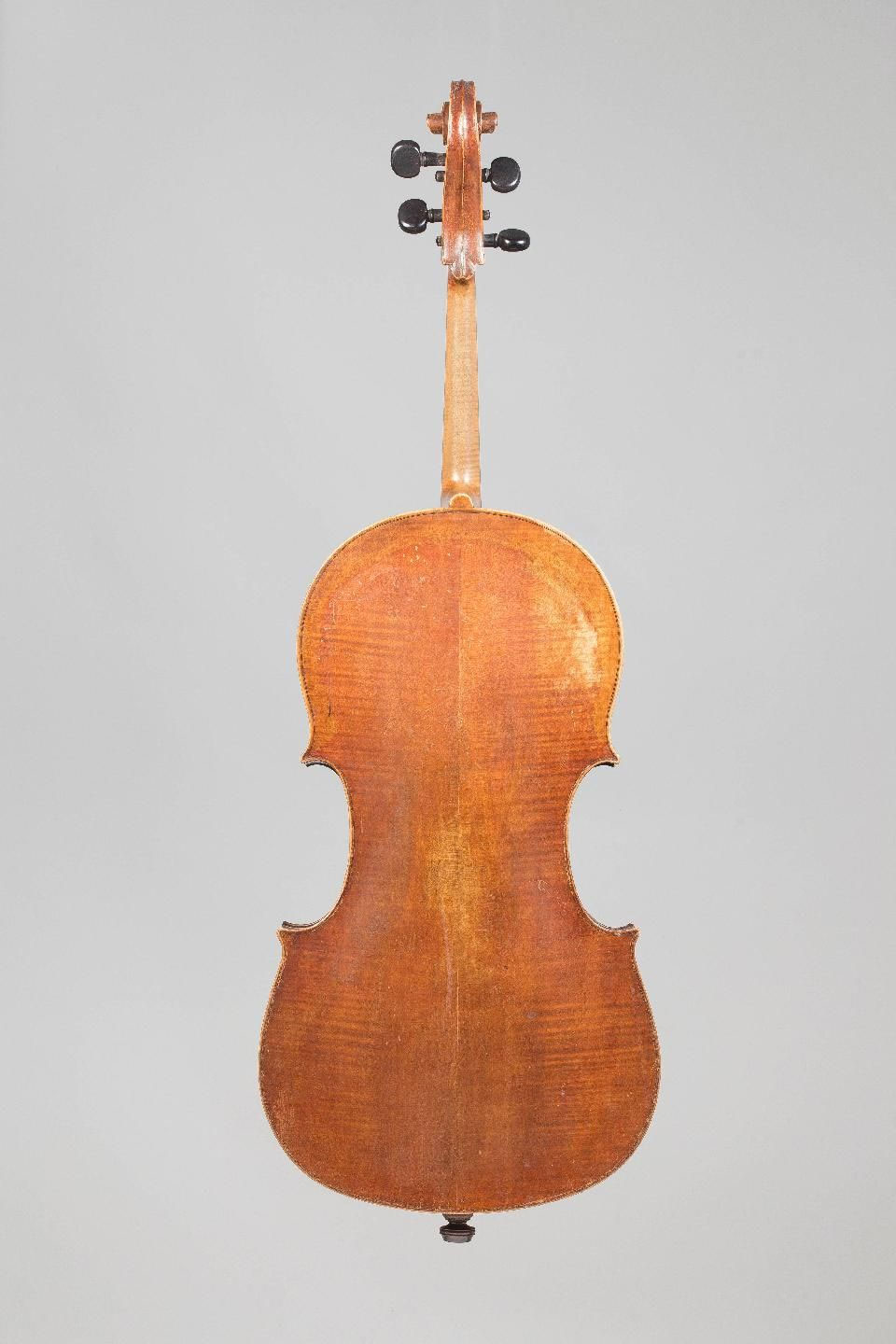
Comme l’explique Jonathan Marolle, la production de Storioni en matière de violoncelles se distingue essentiellement par deux grands types de modèles, à savoir un modèle court et trapu, et un modèle plus grand et large. Le premier instrument, fait à Crémone vers 1780, porte une étiquette de Storioni et présente une longueur de corps de 740 mm, sensiblement supérieure à celle du violoncelle de 1792.
“On est ici en présence d’un bon exemple de violoncelle assez grand chez Storioni, avec un corps moins trapu, plus large et avec des C plus grands.”
Entretien avec Jonathan Marolle, Maison Vatelot-Rampal, expert lutherie près la cour d’appel de Paris, avril 2026
Ce modèle se caractérise par une silhouette plus ouverte, avec des proportions moins ramassées. Les coins sont plus développés et l’allure générale est imposante.
Jonathan Marolle attire également l’attention sur le choix du bois :
“Le bois chez Storioni révèle des pratiques locales, ici il s’agit d’érable champêtre.”
Entretien avec Jonathan Marolle, Maison Vatelot-Rampal, expert lutherie près la cour d’appel de Paris, avril 2026
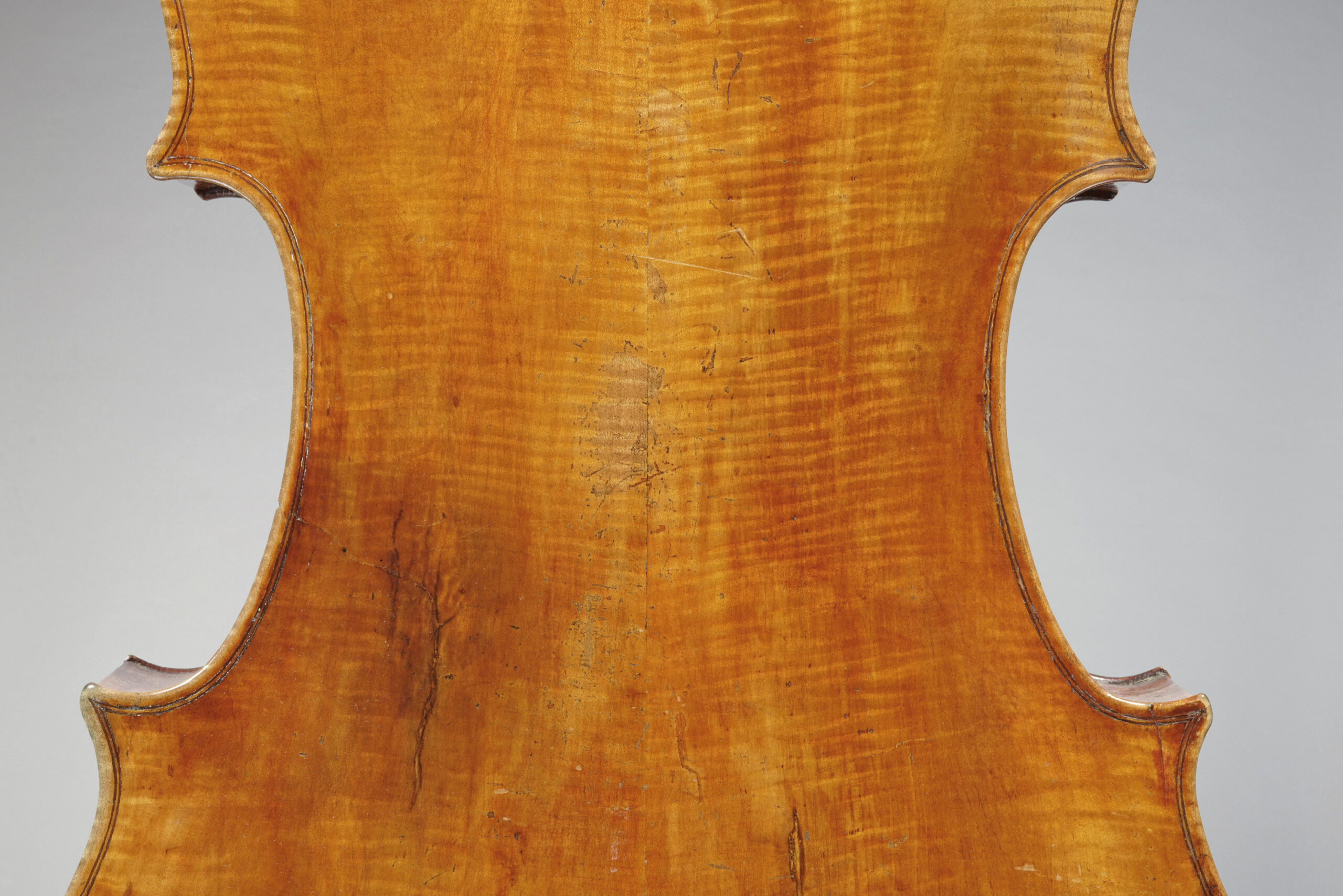
Ce détail est révélateur des conditions de production de la lutherie crémonaise tardive, dans un contexte d’accès plus limité aux matériaux les plus prestigieux, obligeant les luthiers à recourir à des ressources locales. L’instrument présente par ailleurs une tête italienne plus tardive, non d’origine, ainsi que des traces de vers et différentes altérations du fond, témoignant de son ancienneté et de son usage.
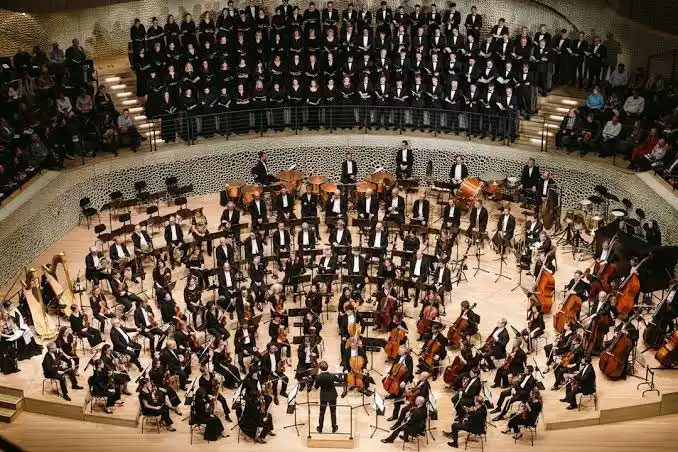
Ce violoncelle a accompagné pendant plus de quarante ans un musicien de l’Orchestre de Paris et, dès lors, est étroitement lié à la vie musicale française de la seconde moitié du XXème siècle. Présent dès les premières décennies de l’orchestre, après la dissolution de la Société des Concerts du Conservatoire, il a résonné au sein d’une institution qui a profondément marqué la vie symphonique française.
Au fil des saisons, l’instrument a été joué sous la direction de plusieurs générations de chefs, parmi lesquels Herbert von Karajan, Georg Solti, Daniel Barenboim ainsi que Christoph Eschenbach, participant à l’exploration d’un vaste répertoire allant des grandes œuvres symphoniques aux créations contemporaines. À travers des décennies de concerts, de répétitions et de voyages, ce violoncelle conserve ainsi la mémoire d’une intense vie musicale, étroitement liée à l’histoire de l’orchestre et à celle des grandes scènes européennes de la seconde moitié du XXème siècle.
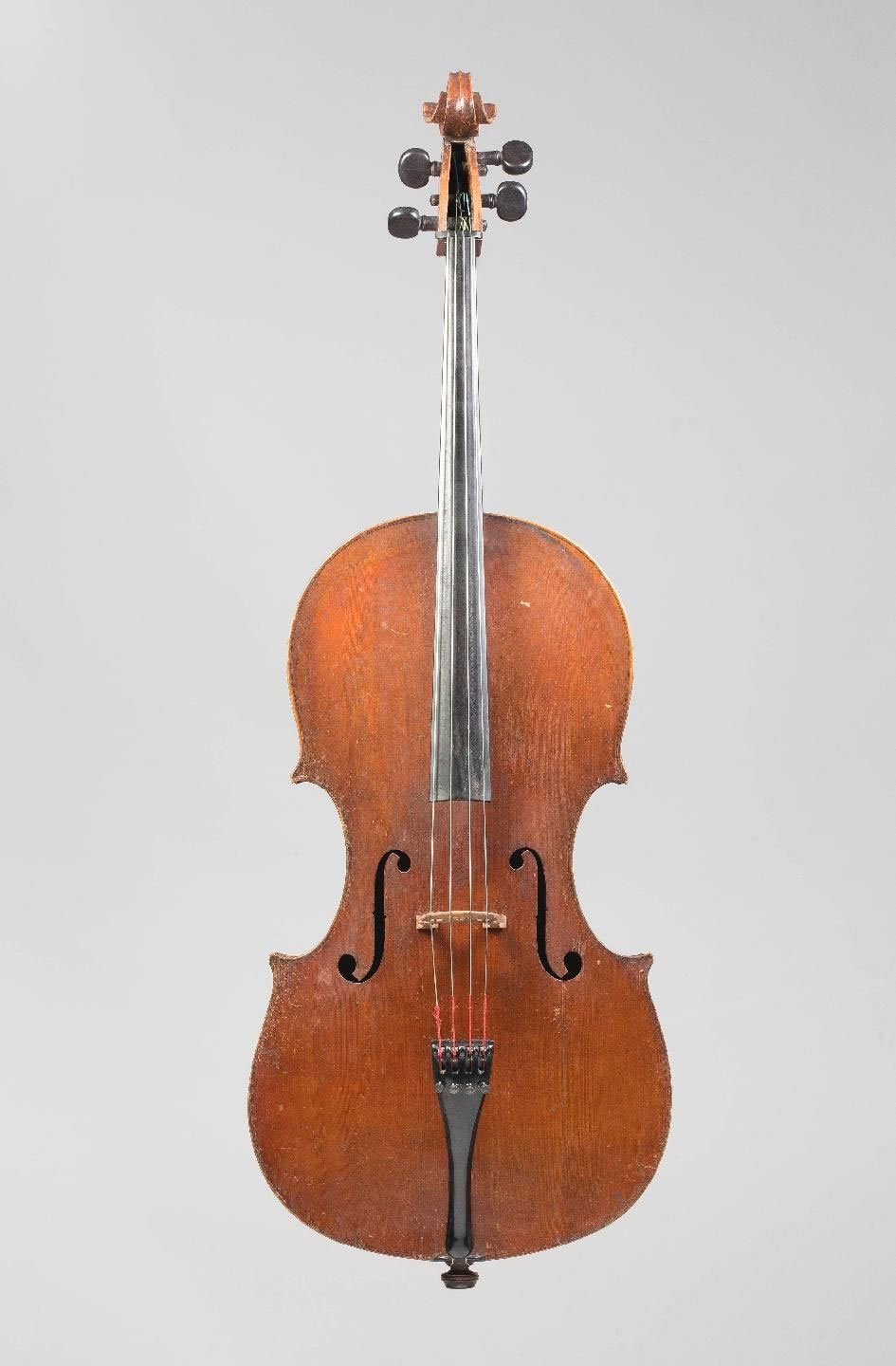
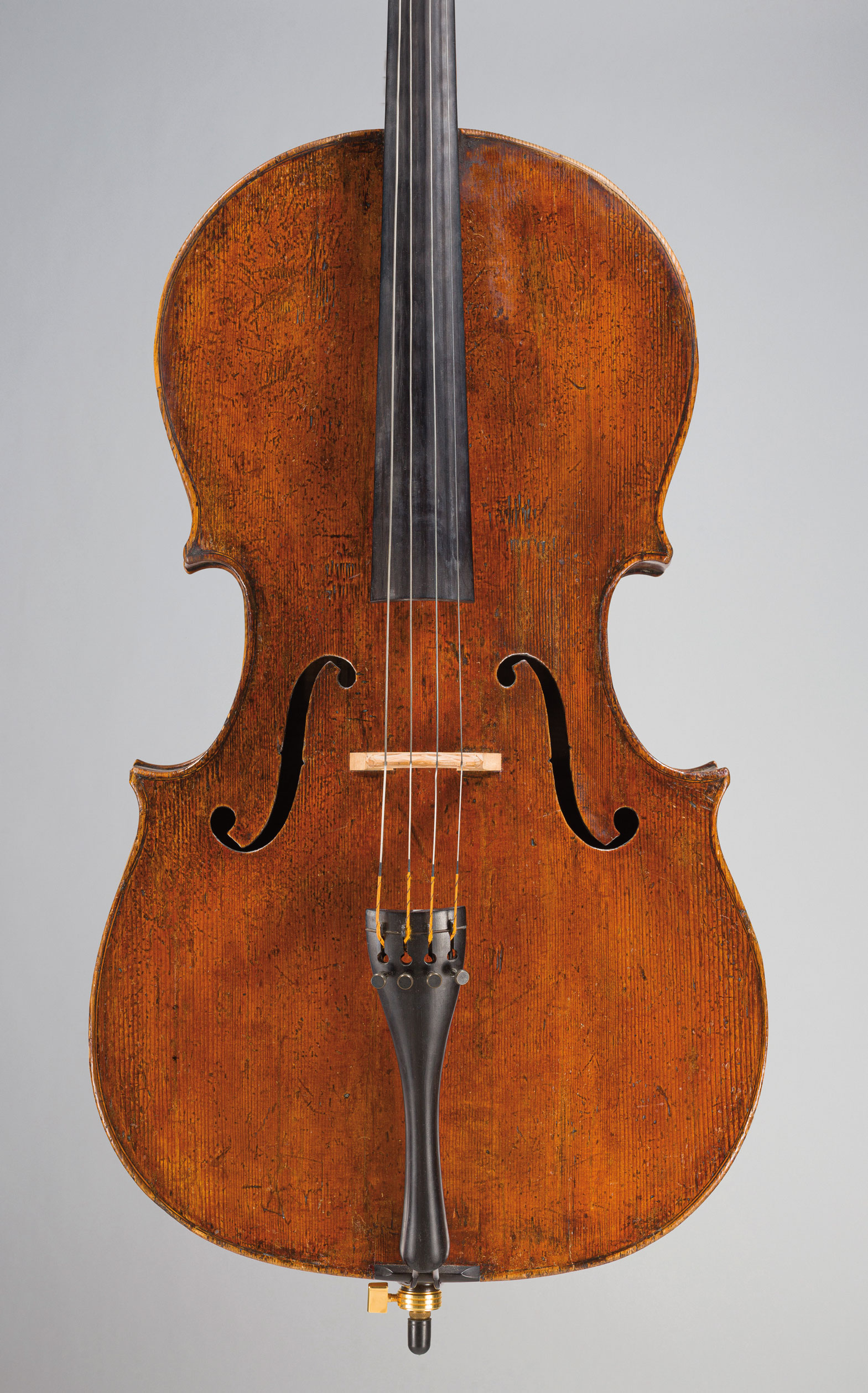
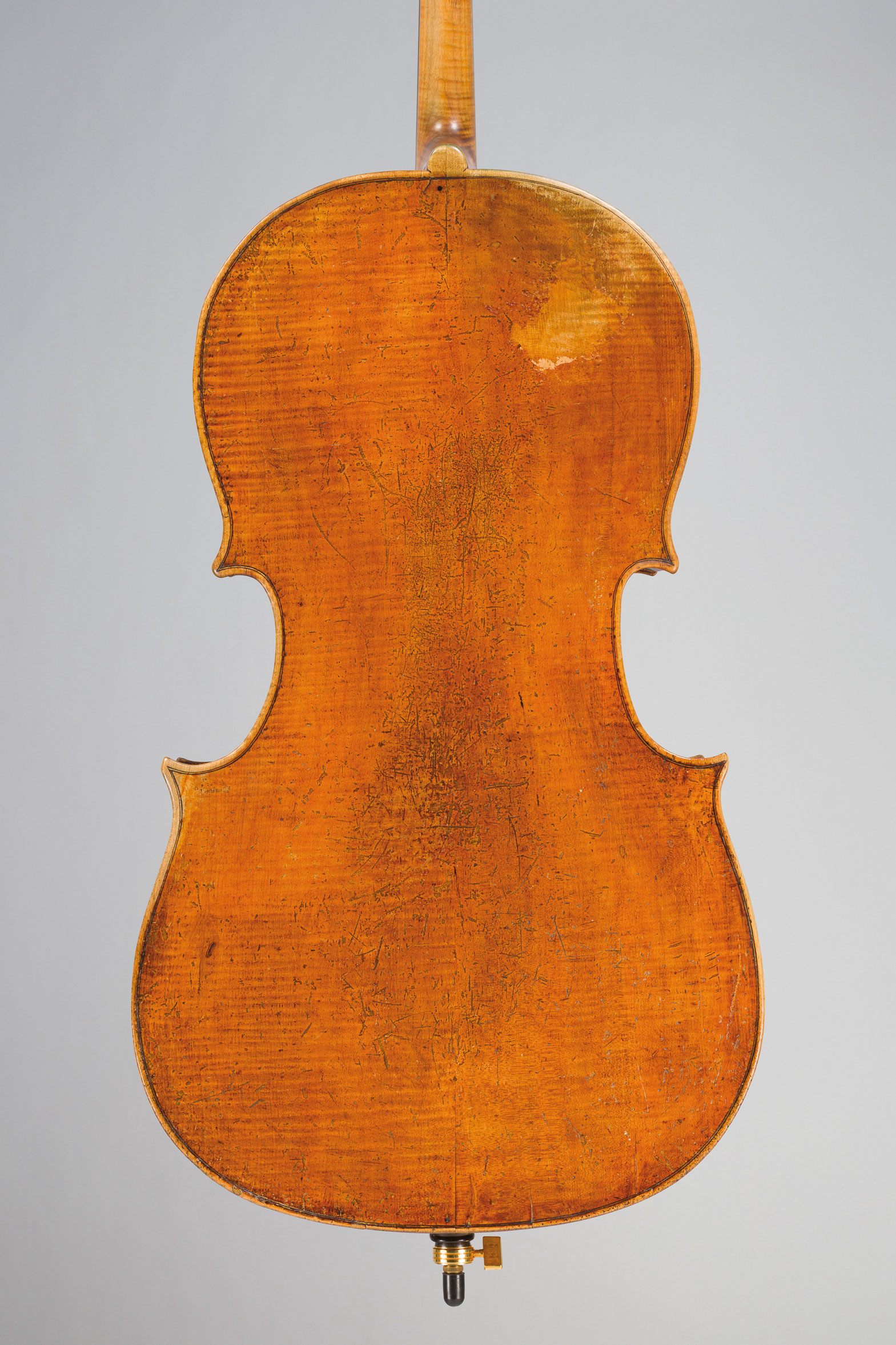
Le second instrument, un violoncelle fait à Crémone en 1792, est, quant à lui, caractéristique de l’autre modèle identifié dans la production de Storioni. En effet, celui-ci est nettement plus petit que le premier modèle, avec une longueur de corps de 720 mm.
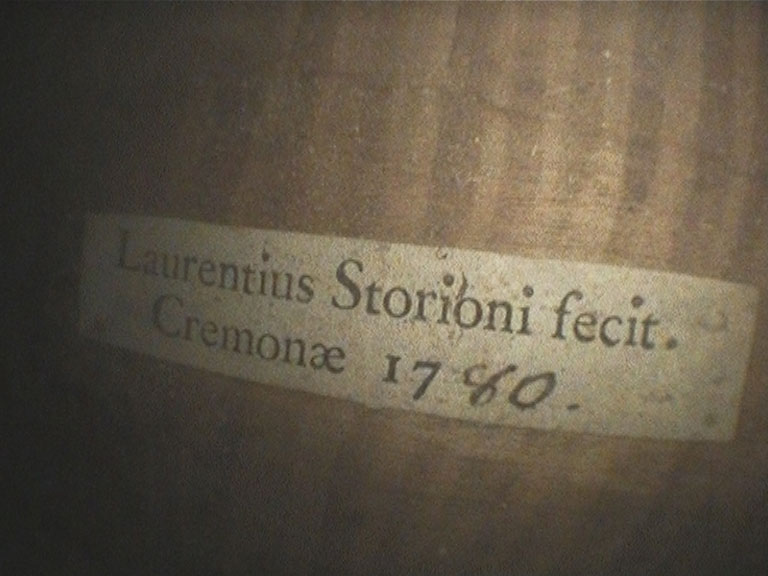
“Cet instrument est particulièrement intéressant. Il a gardé son étiquette d’origine et il est typique de l’autre type de violoncelle courant chez Storioni, c’est-à-dire un modèle assez court, plutôt trapu, avec des petits C étroits et assez carrés.”
Entretien avec Jonathan Marolle, Maison Vatelot-Rampal, expert lutherie près la cour d’appel de Paris, avril 2026
L’instrument s’éloigne ainsi des grands modèles plus allongés, pour se rapprocher de conceptions plus courtes et larges dans la partie centrale, que l’expert rapproche de certaines traditions vénitiennes. “Dans les tailles, si on voulait faire des comparaisons, on dirait qu’on s’inspire de ce qui se faisait à Venise, avec des instruments plus courts […] loin des grands modèles de Stradivari.”
Entretien avec Jonathan Marolle, Maison Vatelot-Rampal, expert lutherie près la cour d’appel de Paris, avril 2026
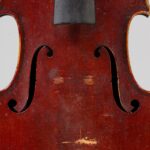
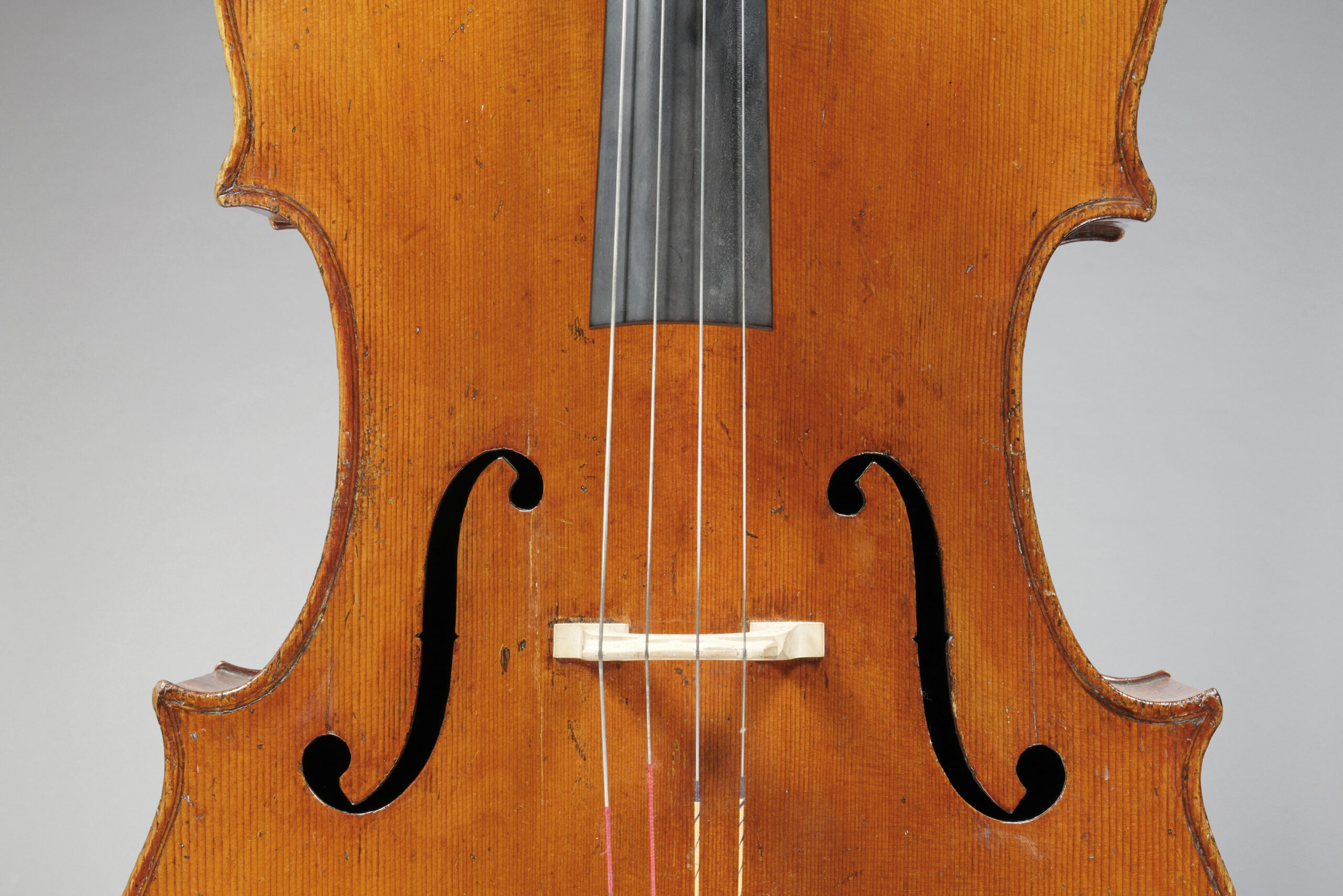
Les ouïes, relativement basses, petites et inclinées vers l’intérieur, ainsi que le vernis sec et fin, de teinte jaune-orangé, participent à la singularité de ce modèle.
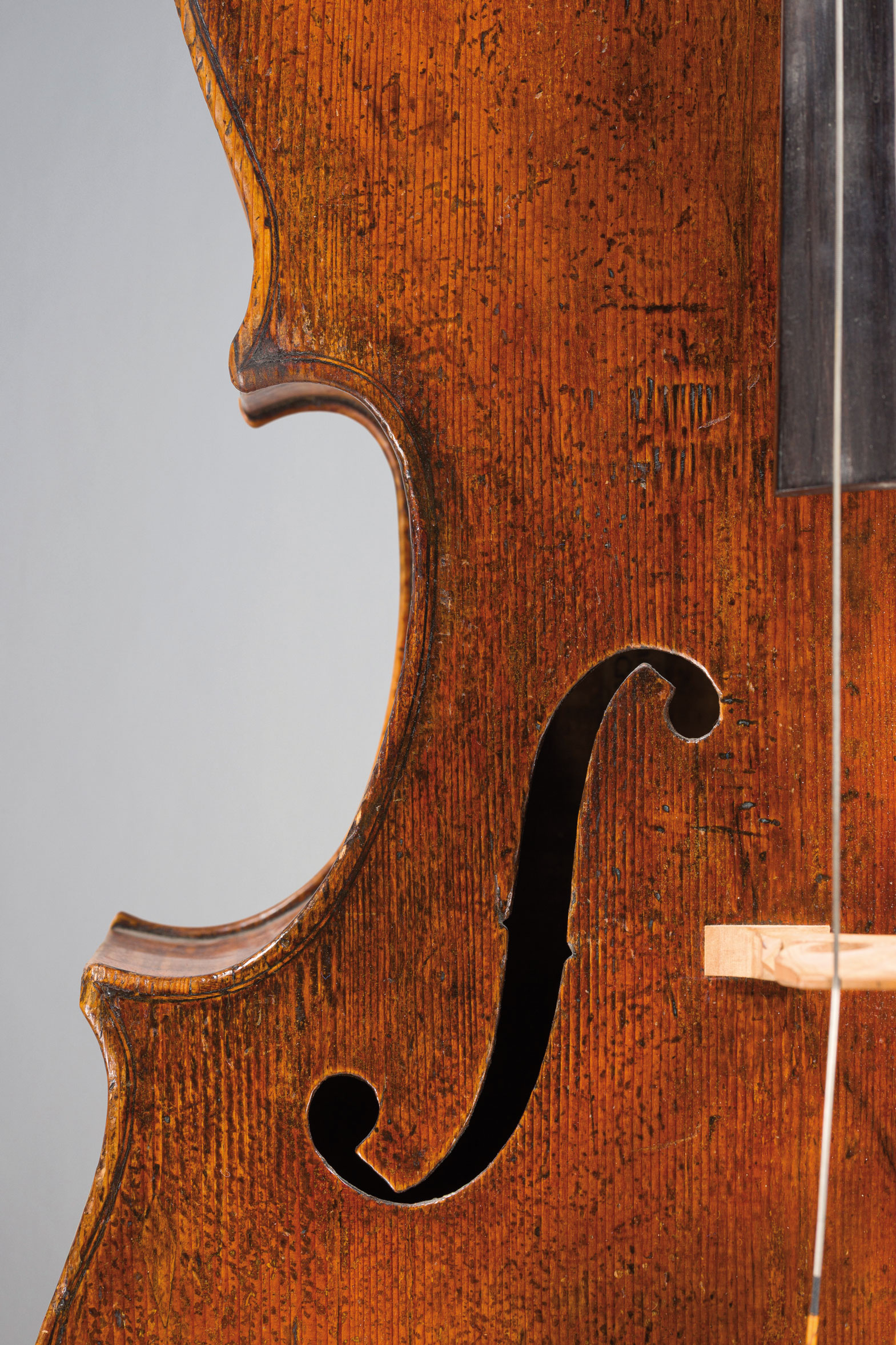
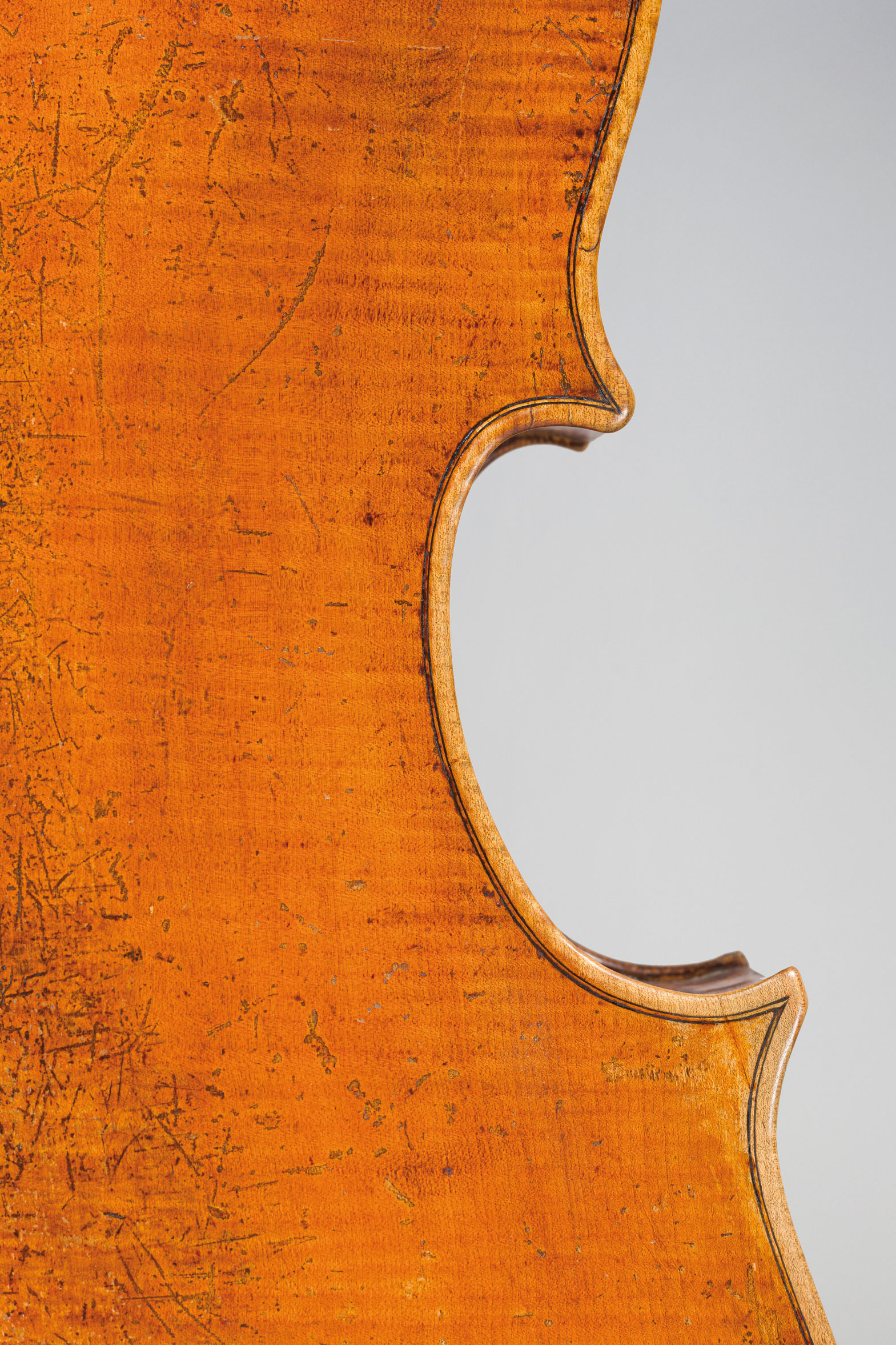
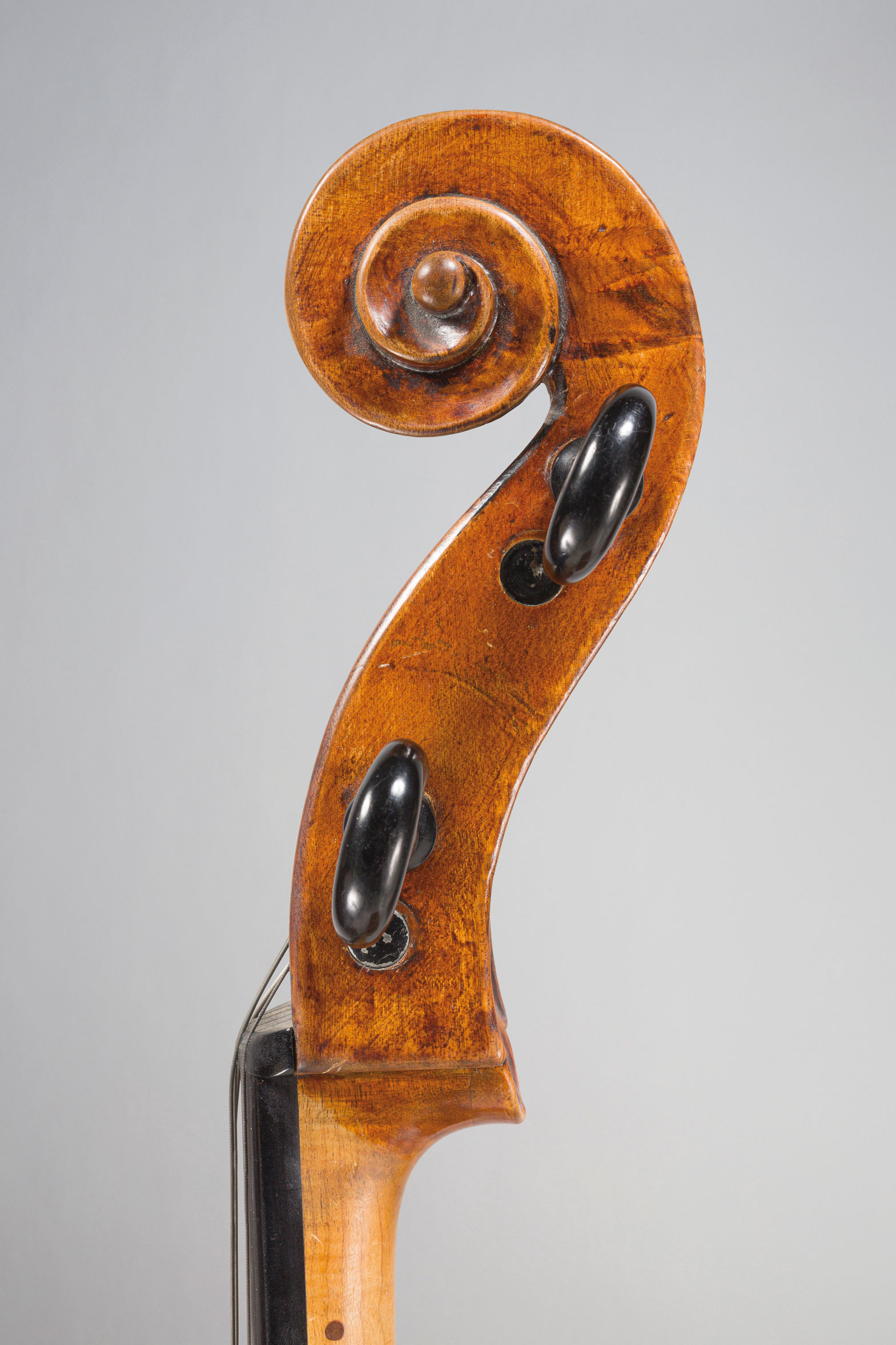
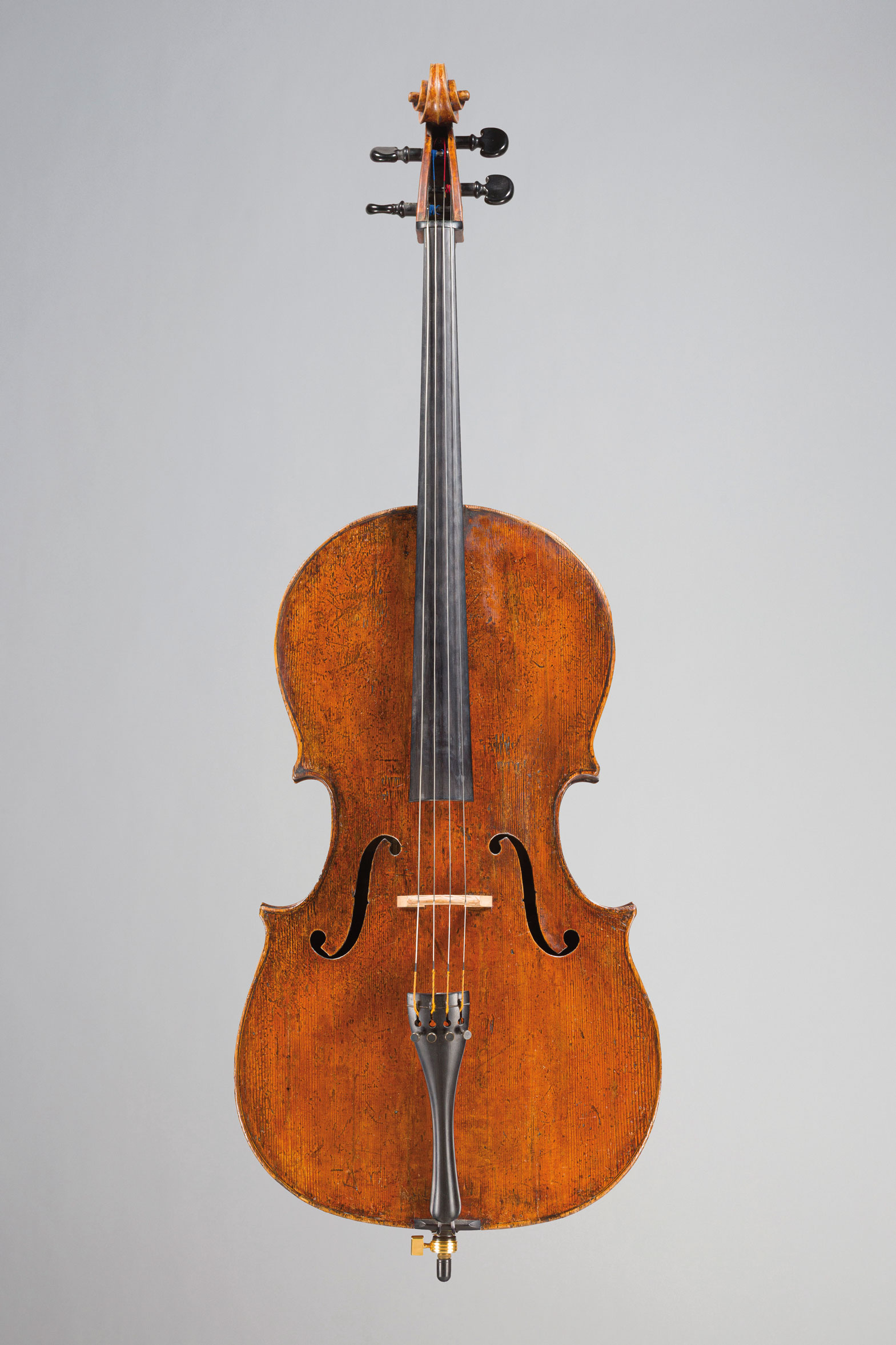
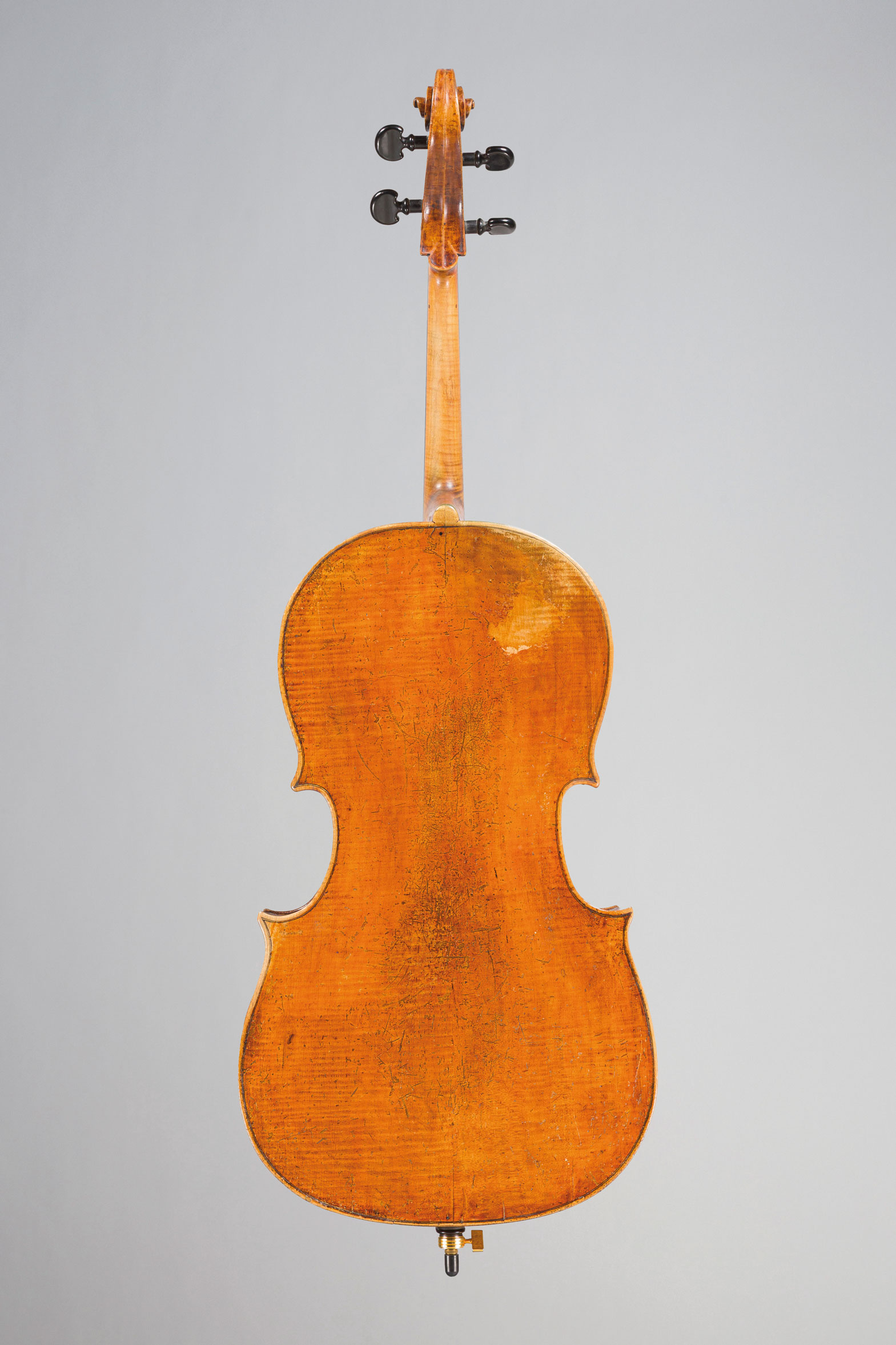
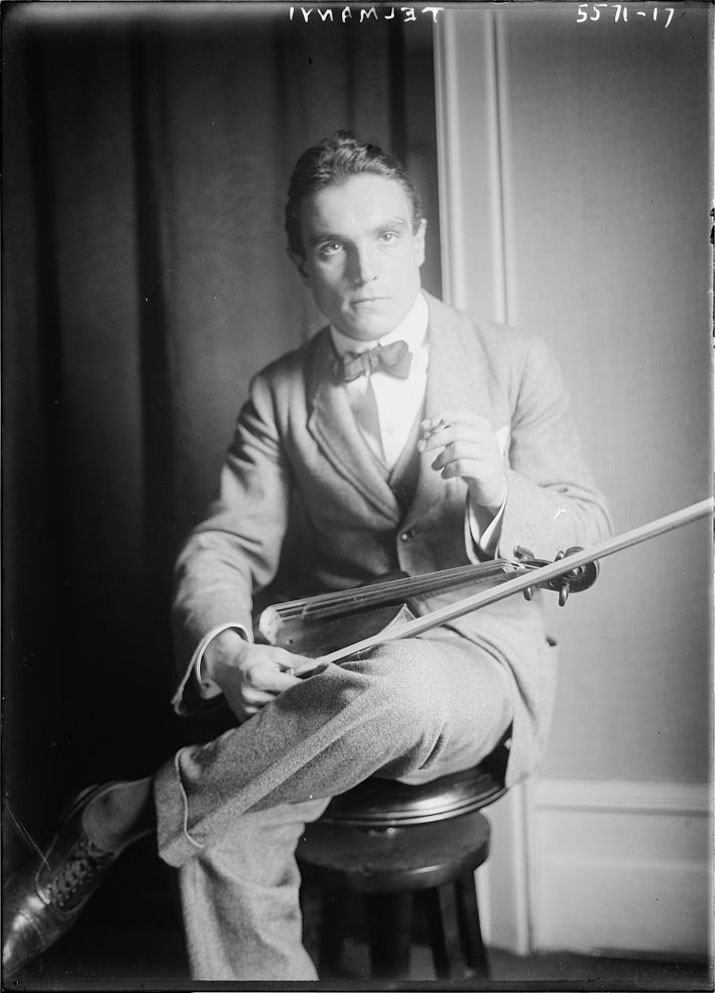
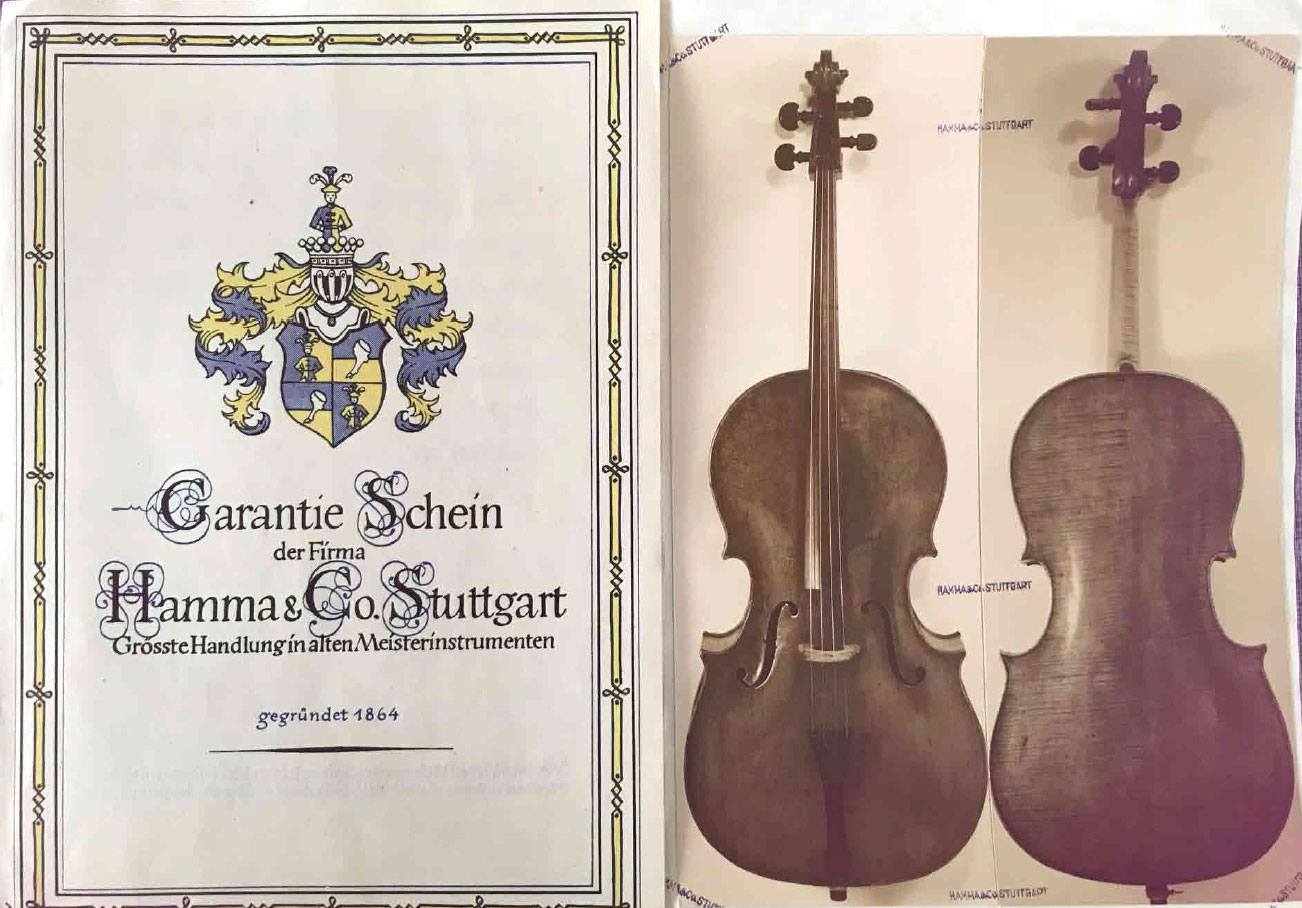
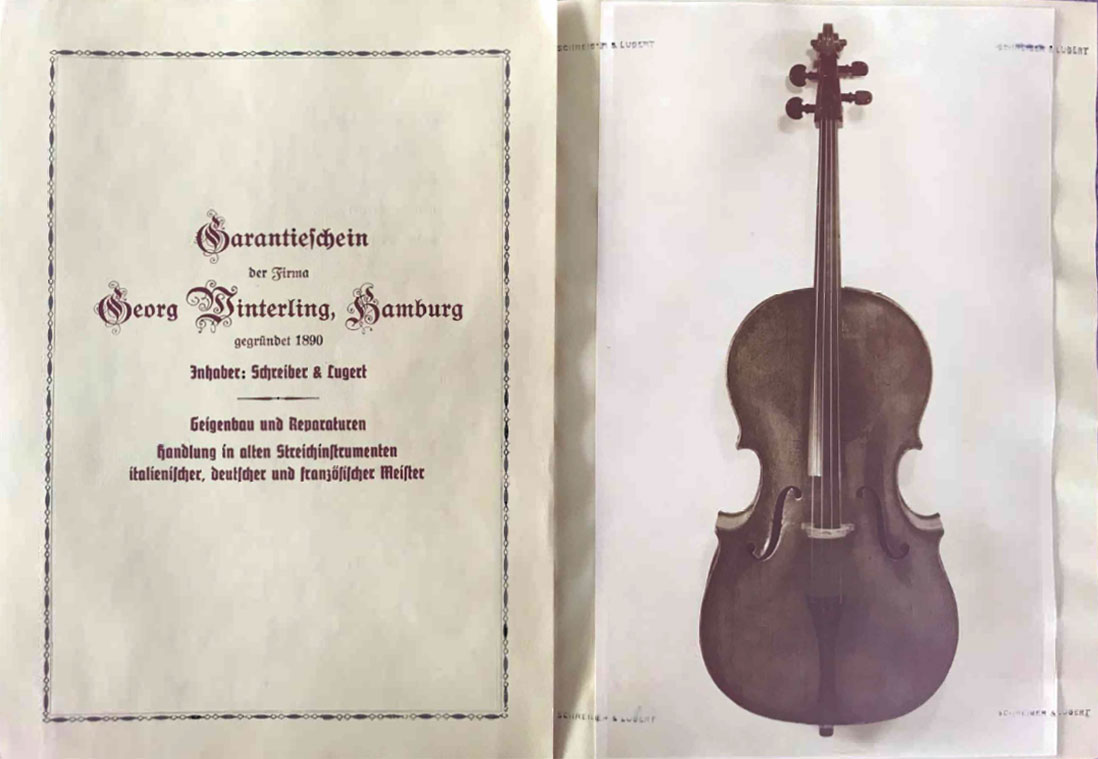
La provenance de ce violoncelle est particulièrement bien documentée. Il fut acquis en 1958 à Hambourg par Cecilia Mihalyka Telmanyi Thomsen, alors âgée de vingt ans. L’achat fut formalisé par son père, Emil Telmányi, violoniste hongrois-danois de premier plan.
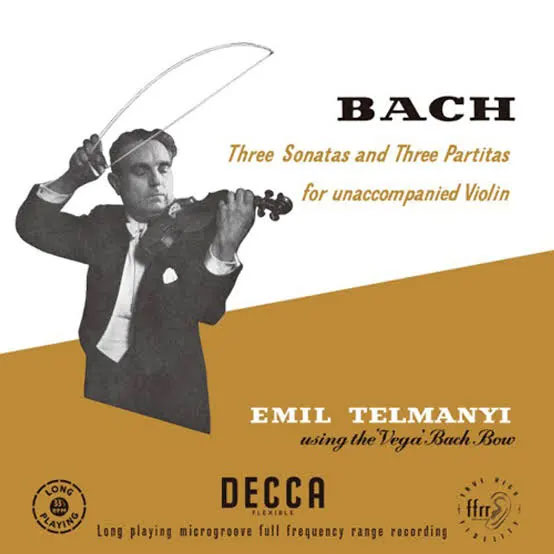
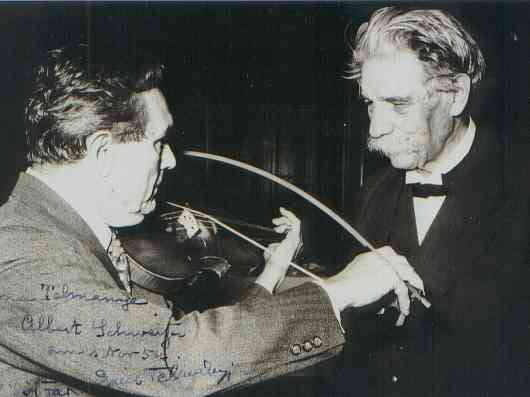
Emil Telmányi fut également chef d’orchestre et pédagogue, proche du compositeur Carl Nielsen, dont il fut le gendre et l’interprète privilégié. Il mena une carrière de soliste internationale et contribua activement à la diffusion du répertoire scandinave. Son implication dans l’acquisition de ce violoncelle le replace dans un environnement artistique de premier plan, au contact des grandes figures de la vie musicale scandinave du XXème siècle.
L’instrument fut acheté auprès de la maison Georg Winterling à Hambourg, établissement fondé en 1890 et spécialisé dans le commerce et la restauration d’instruments anciens. Il passa également par la Maison Hamma & Co. de Stuttgart, fondée en 1864, l’une des plus importantes références européennes en matière de lutherie historique.
Le violoncelle accompagna Cecilia Mihalyka Telmanyi Thomsen tout au long de sa carrière, notamment au sein de l’Orchestre symphonique d’Aarhus, où elle joua pendant près de quarante ans.
La réunion de ces deux violoncelles de Lorenzo Storioni illustre une période charnière de la lutherie crémonaise, entre héritage des grands maîtres et affirmation d’un style propre. Chacun témoigne d’un des deux modèles caractéristiques de la production du luthier, offrant un aperçu de sa facture particulièrement rare. Leurs provenances, toutes deux liées à des figures marquantes de la vie musicale européenne, renforcent leur intérêt. Leur présentation conjointe lors de la vente du 4 juin 2026 est ainsi une opportunité unique d’étude et d’acquisition pour les chercheurs, musiciens et collectionneurs.
The sale on 4 June 2026 brings together two cellos by Lorenzo Storioni, made in Cremona around 1780 and in 1792. Such an occurrence is exceptional – cellos by this Cremonese violin maker are extremely rare indeed. In fact, being able to study two Storioni instruments side by side is unheard of, let alone two that exemplify each of the two models typically produced by this maker.
“This truly versatile and exceptional artist almost single-handedly diverted Cremonese violin making from its headlong rush towards the abyss.”
Traduction de Dmitry Gindin, The Late Cremonese Violin Makers, Edizioni Novecento
Lorenzo Storioni’s place in Cremona’s history is situated at a pivotal moment. The deaths of Antonio Stradivari in 1737, Giuseppe Guarneri del Gesù in 1744 and Carlo Bergonzi in 1747 marked the end of the golden age of Cremonese violin making. However, this period should not be understood as a sudden break, but rather as a gradual decline, already perceptible in the final years of the great workshops.
After 1747, Cremona remained a prestigious city, but its role changed. The finest antique instruments gradually left the city and began to be sought after by a wealthy clientele, while the remaining active makers worked more for a local, less aristocratic clientele. Competition from other Italian centres – such as Milan, Turin, Venice and Mantua – intensified, and access to high-quality woods and varnishes became more difficult.
It is in this context that what has been referred to as « late Cremonese » violin making developed[1], with Lorenzo Storioni as its central figure.
[1] Dmitry Gindin, The Late Cremonese Violin Makers, Edizioni Novecento
Lorenzo Storioni was born in Cremona on 10 November 1744, and belongs to a generation that did not experience first-hand the golden age, instead inheriting it indirectly.
“It is highly unlikely that Storioni had any contact whatsoever with Michele Angelo Bergonzi’s workshop, since he was only 13 years old when Michele Angelo died […] Zosimo Bergonzi (who died in 1779) was most likely the only living maker in Cremona capable of sparking Storioni’s interest in violin making as a profession. Therefore, surrounded by various influences from Cremona’s past, Storioni was able to follow in the footsteps of the techniques and style already well established by the sons of Antonio Stradivari and Carlo Bergonzi, as well as the descendants of Francesco Rugeri.”
Dmitry Gindin, The Late Cremonese Violin Makers, Edizioni Novecento
His activity is documented from the late 1760s. He married in 1771, and gradually established himself as Cremona’s leading violin maker in the following decades, particularly in the 1780s, the most prolific period of his career. He was working at the time with his apprentice, Giovanni Rota.
From the turn of the 19th century, his production declined, and his final years were marked by poorly documented travels, before his return to Cremona, where he died in 1816 in modest circumstances.
“The best instruments made by Storioni during these years [approximately from 1780 to 1790] compare favourably with the work of the two other great violin makers of the late 18th century, Balestrieri and G.B. Guadagnini […] Few examples from this period are available for study today.”
Far from seeking to reproduce the models of the golden age, Storioni asserted his own identity. His instruments, often flat, quite wide and rarely long, are distinguished by wide corners, pronounced purfling, the use of local woods, and a dry, yellow-orange to red-orange, varnish. Through his craftsmanship, he helped create a new approach to cello making in Cremona from 1770 to 1790[1], as evidenced by the two cellos offered at Vichy Enchères.
[1] Dmitry Gindin, The Late Cremonese Violin Makers, Edizioni Novecento
“Given that he was born barely three weeks after one of the saddest events in Cremona’s history – the untimely death of Guarneri del Gesù – I like to think of Storioni’s finest works as a continuation of the spirit of this great master.”
Dmitry Gindin, The Late Cremonese Violin Makers, Edizioni Novecento
As Jonathan Marolle explains, Storioni’s cello production can be essentially divided into two main types of models: a short and stocky model, and a larger and wider one. The first instrument, made in Cremona around 1780, bears a Storioni label and has a body length of 740mm, significantly longer than that of the 1792 cello.
“Here we have a good example of a fairly large Storioni cello, with a wider, less stocky body and larger C-bouts.”
Interview with Jonathan Marolle, Maison Vatelot-Rampal, violin expert appointed to the Paris Court of Appeal, April 2026.
This model is characterized by a more open outline, with less compressed proportions. The corners are more developed, and the overall appearance is imposing.
Jonathan Marolle also draws attention to the choice of wood:
“The wood used by Storioni attests to local practices; here, it is field maple.”
Interview with Jonathan Marolle, Maison Vatelot-Rampal, violin expert appointed to the Paris Court of Appeal, April 2026.
This detail is revealing of the conditions in which late Cremonese violin makers had to operate, with more limited access to the most prestigious materials, forcing them to rely on local supplies. Furthermore, the instrument features a later, non-original, Italian head, as well as traces of woodworm damage and various alterations to the back, attesting to its age and use.
This cello accompanied a musician from the Orchestre de Paris for over forty years and is therefore closely linked to French musical life in the second half of the 20th century. A fixture from the orchestra’s earliest decades, following the dissolution of the Société des Concerts du Conservatoire, it resonated within an institution that left a profound mark on French symphonic life.
Over the seasons, the instrument was played under the baton of several generations of conductors, including Herbert von Karajan, Georg Solti, Daniel Barenboim and Christoph Eschenbach, contributing to the exploration of a vast repertoire ranging from major symphonic works to contemporary premieres. Through decades of concerts, rehearsals and tours, this cello thus preserves the memory of an intense musical life, closely linked to the history of the orchestra and to that of the great European stages of the second half of the 20th century.
The second instrument, a cello made in Cremona in 1792, is typical of the other model identified in Storioni’s output. Indeed, it is significantly smaller than the first example, with a body length of 720mm.
“This instrument is particularly interesting. It has retained its original label and is typical of the other type of cello common with Storioni, i.e., a rather short, somewhat stocky model, with small, narrow and fairly square C-bouts.”
Interview with Jonathan Marolle, Maison Vatelot-Rampal, violin expert appointed to the Paris Court of Appeal, April 2026.
The instrument thus departed from the larger and more elongated models, and moved in the direction of shorter designs with a wider central section, which the expert links to certain Venetian traditions. “In terms of size, if we wanted to make comparisons, we would say that it was inspired by what was being done in Venice, with shorter instruments […] far removed from the large Stradivari models.”
Interview with Jonathan Marolle, Maison Vatelot-Rampal, violin expert appointed to the Paris Court of Appeal, April 2026.
The relatively low, small and inwardly sloping f-holes, along with the dry and thin yellow-orange varnish, contribute to the unique character of this example.
The provenance of this cello is particularly well documented. It was acquired in 1958 in Hamburg by Cecilia Mihalyka Telmanyi Thomsen, then 20 years old. The purchase was formalized by her father, Emil Telmányi, a leading Hungarian-Danish violinist.
Emil Telmányi was also a conductor and teacher, close to the composer Carl Nielsen, whose son-in-law and preferred interpreter he was. He pursued an international solo career and actively contributed to the spread of the Scandinavian repertoire. His involvement in acquiring this cello placed him within a leading artistic circle, giving him access to the major figures of 20th-century Scandinavian musical life.
The instrument was purchased from Georg Winterling in Hamburg, an establishment founded in 1890 and specializing in the sale and restoration of antique instruments. It also passed through the hands of Hamma & Co. in Stuttgart, which was founded in 1864 and was one of Europe’s most important references with regards to historical instruments.
The cello accompanied Cecilia Mihalyka Telmanyi Thomsen throughout her career, in particular with the Aarhus Symphony Orchestra, with which she played for nearly 40 years.
The coming together of these two cellos by Lorenzo Storioni illustrates a pivotal period in Cremonese instrument making, between the legacy of the great masters and the emergence of a distinctive style. Each one constitutes an example of the two typical models in the maker’s output, offering a particularly unique glimpse into his craftsmanship. Their provenance, which links both instruments to prominent figures in European musical life, only serves to enhance their appeal. Their joint presentation, in connection with the sale on 4 June 2026, thus offers a unique opportunity for researchers, musicians and collectors to study and acquire them.