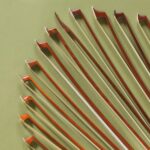
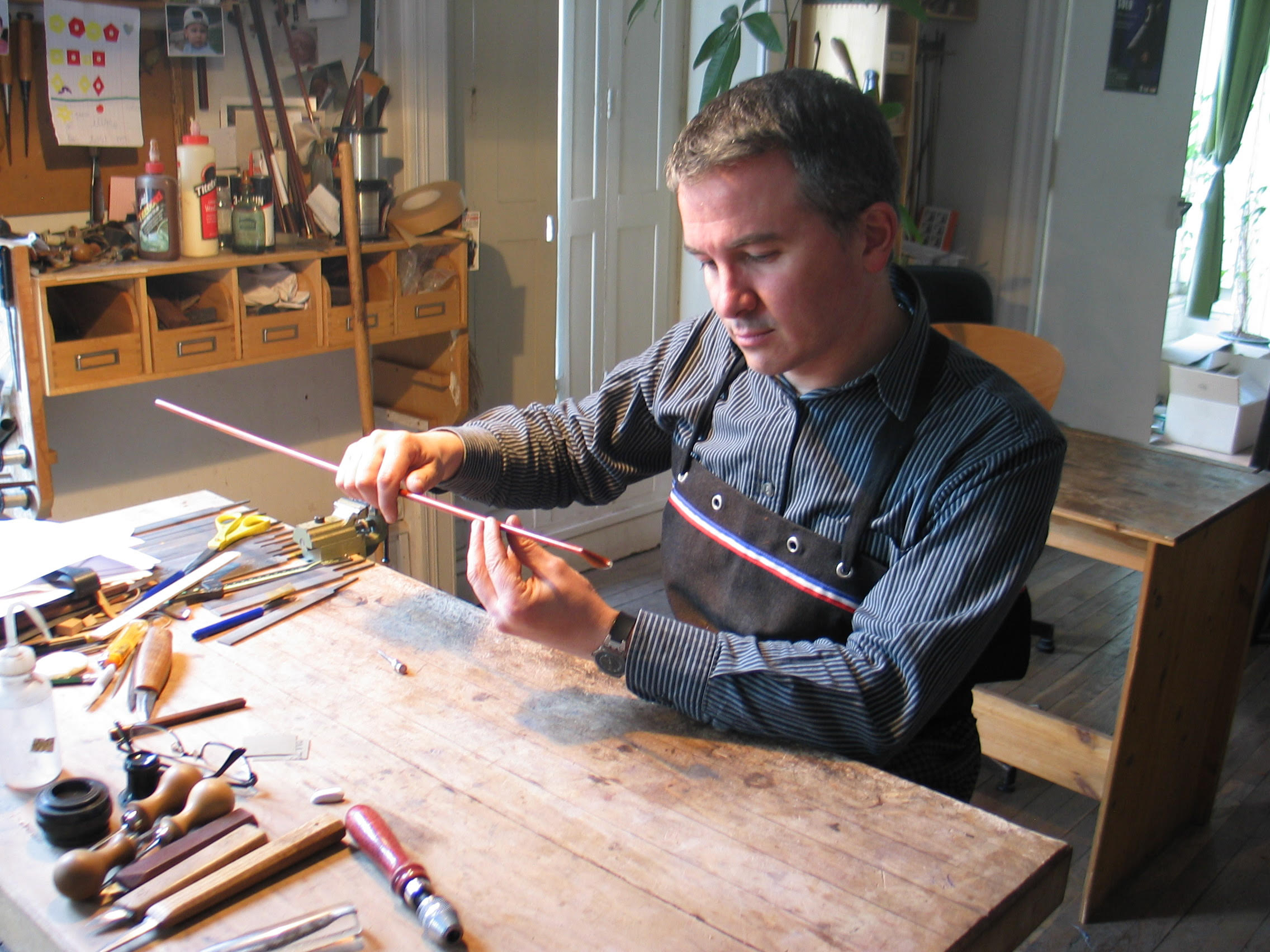
Le 4 juin 2026, Vichy Enchères présentera un quatuor d’archets réalisé par Sylvain Bigot en 2002. Ces instruments remarquablement conservés offrent l’occasion de revenir sur le parcours de Sylvain Bigot, archetier aujourd’hui reconnu comme l’un des spécialistes majeurs de la spécialité, à la fois pour son travail d’atelier et pour son expertise.
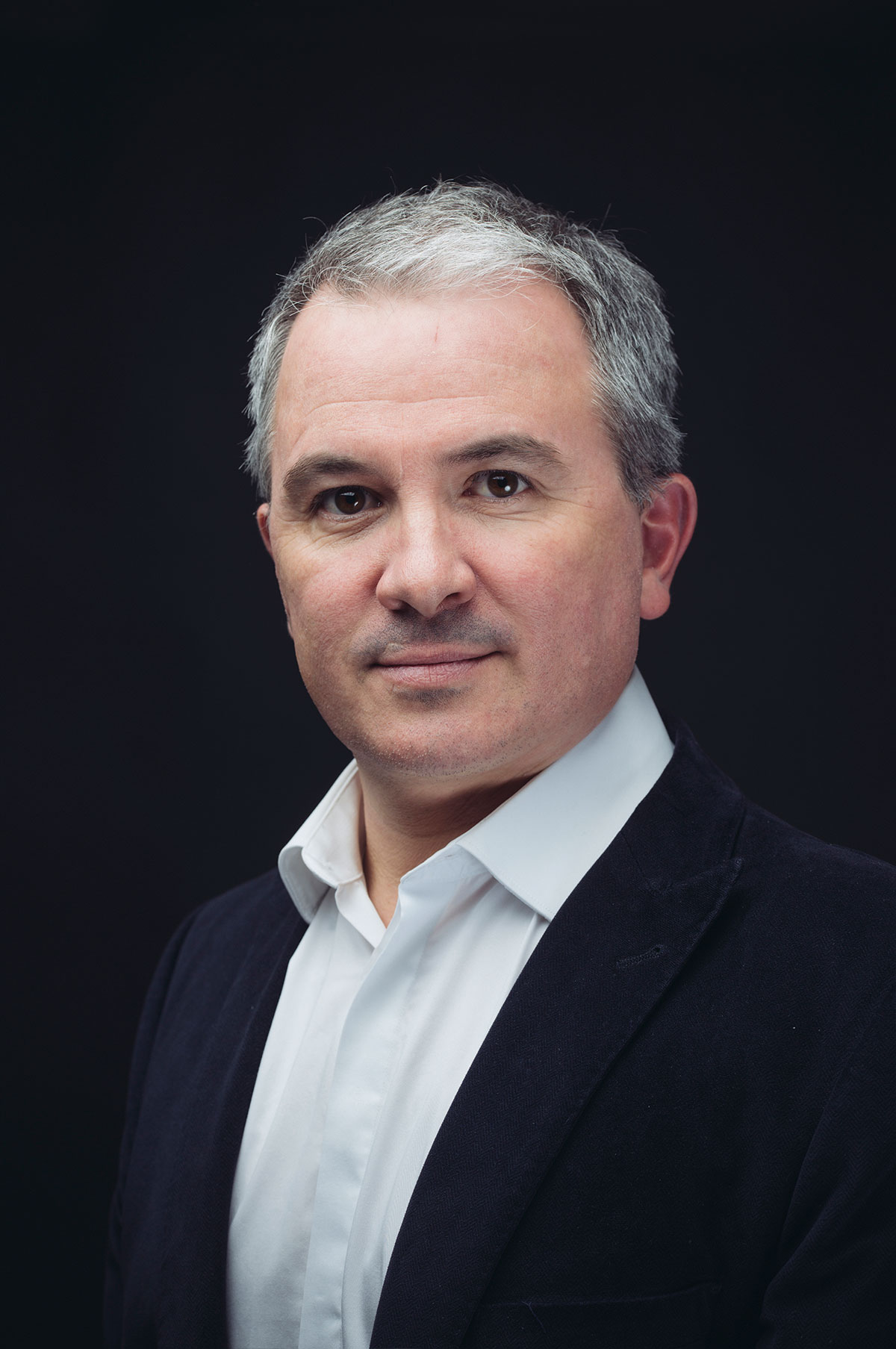
Sylvain Bigot intègre en 1987 l’École nationale de lutherie Jean-Baptiste Vuillaume de Mirecourt, où il suit une formation complète. Il obtient en 1990 un CAP et un Brevet de Technicien en facture instrumentale, puis en 1992, un Diplôme des Métiers d’Art, avec un travail consacré à l’alto ténor.
Cette formation lui donne une connaissance directe des instruments à cordes et de leur fonctionnement, ainsi qu’une maîtrise du travail du bois. C’est naturellement qu’il s’oriente ensuite vers l’archèterie, dans la continuité de cet apprentissage.
À l’issue de sa formation, Sylvain Bigot démarre sa carrière à Paris. Il travaille d’abord en 1992-1993 comme assistant chez le luthier François Varcin, avant de rejoindre, en septembre 1993, l’atelier de Jean-François Raffin, où il restera jusqu’en décembre 2002.
Durant près de dix ans, il perfectionne son savoir-faire en assurant la fabrication et la restauration d’archets, tout en se formant à l’expertise.
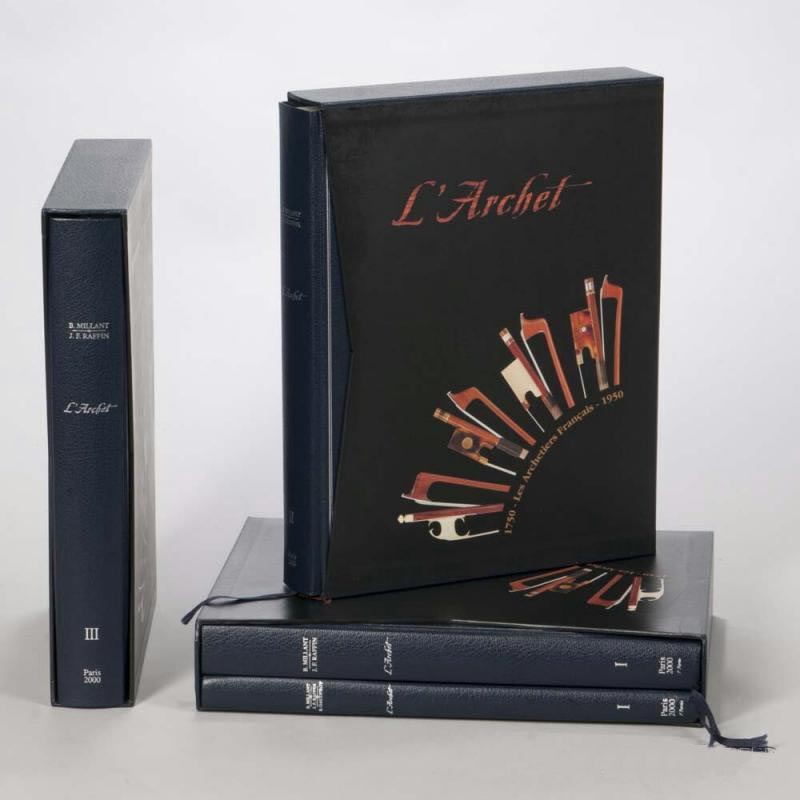
Ces années chez Jean-François Raffin lui permettent d’examiner un grand nombre d’archets, d’en comparer les caractéristiques et la facture, et d’affiner progressivement son oeil. En parallèle, il participe dès 1996 à la réalisation de l’ouvrage de référence L’Archet, dirigé par Bernard Millant et Jean-François Raffin. Ce travail de compilation, fondé sur l’observation, l’inventaire et la documentation des modèles, vient enrichir et consolider son expertise.
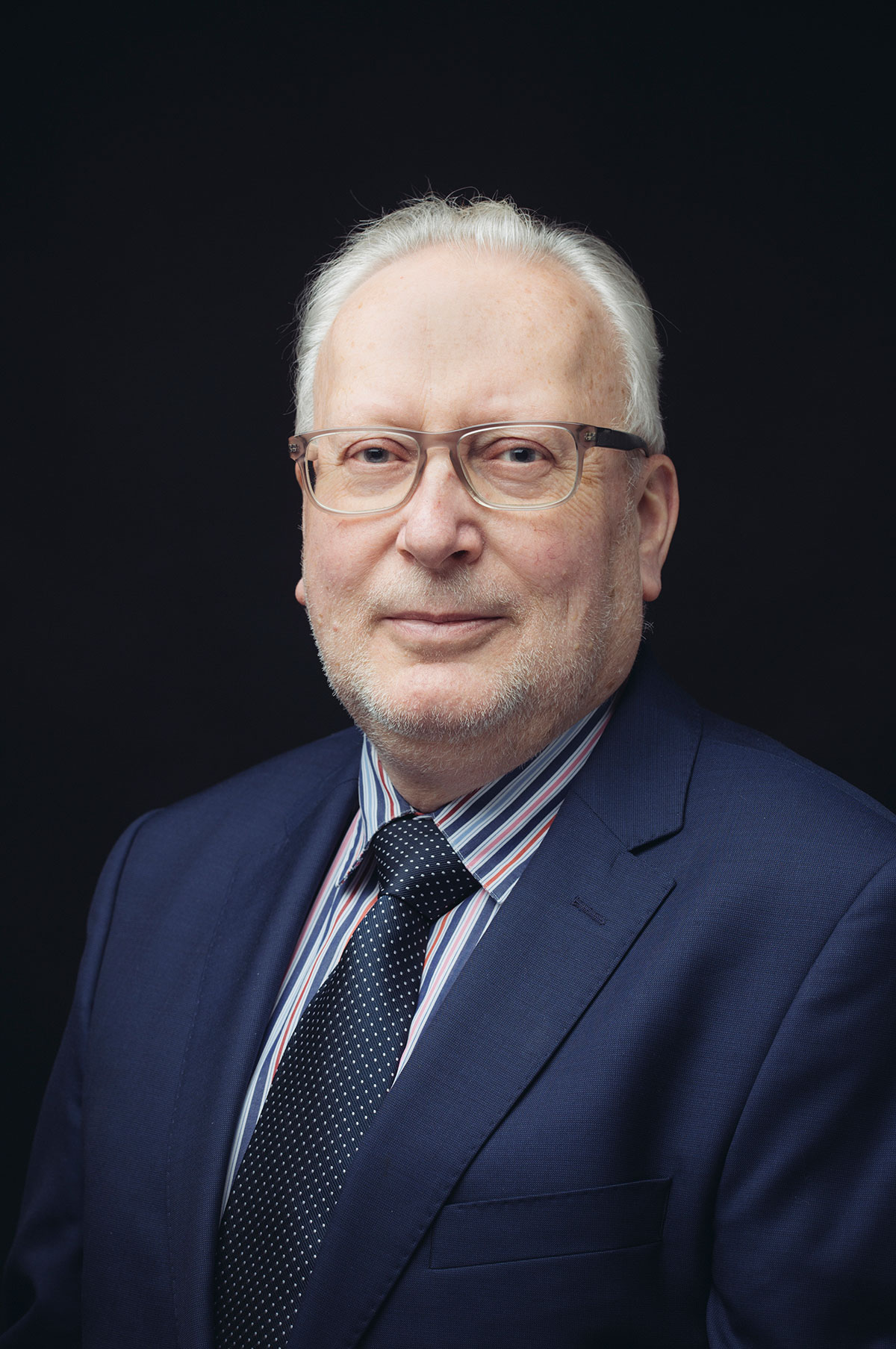
En février 2003, Sylvain Bigot s’installe à son compte à Lyon. Il y développe une activité d’archetier comprenant fabrication, restauration et reméchage.
Dès les premières années, il poursuit également une activité d’enseignement ponctuel en s’impliquant dans le milieu professionnel. Il est alors membre du GLAAF à partir de 1997 et en devient vice-secrétaire entre 2000 et 2004, tout en présidant l’association des Amis de l’École de Lutherie de Mirecourt entre 2001 et 2004.
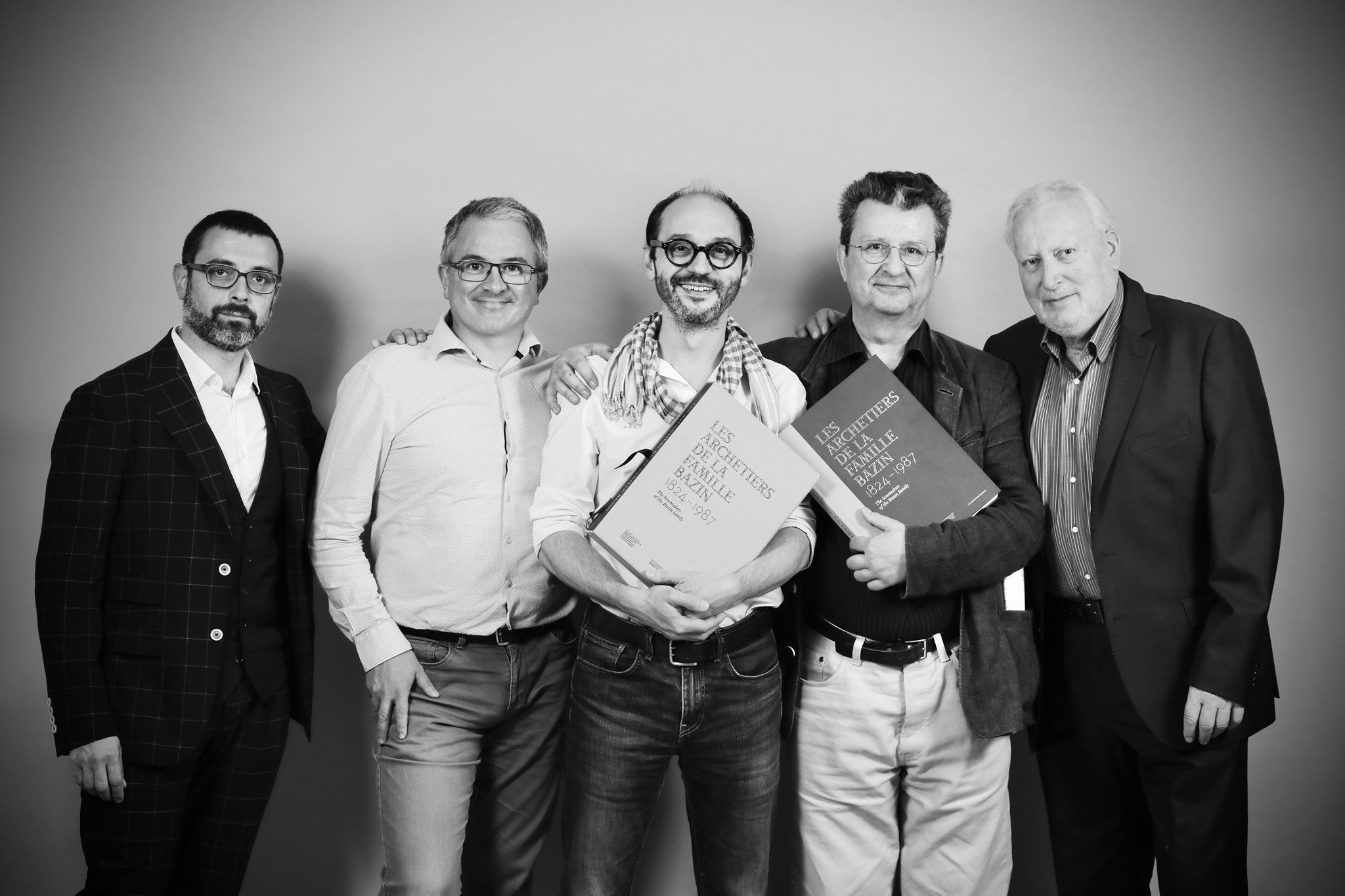
Parallèlement à son activité d’atelier et d’expertise, il développe une activité éditoriale accompagné de Jean-François Raffin, Yannick Le Canu, Arthur Dubroca et Lothair Mabru, avec la création, en 2015, de la structure “Les Archetiers Français”, consacrée à la publication d’ouvrages de référence sur l’archèterie.
Le parcours de Sylvain Bigot est jalonné de consécrations. En décembre 1999, il obtient une médaille d’argent au concours international de lutherie et d’archèterie de Paris.
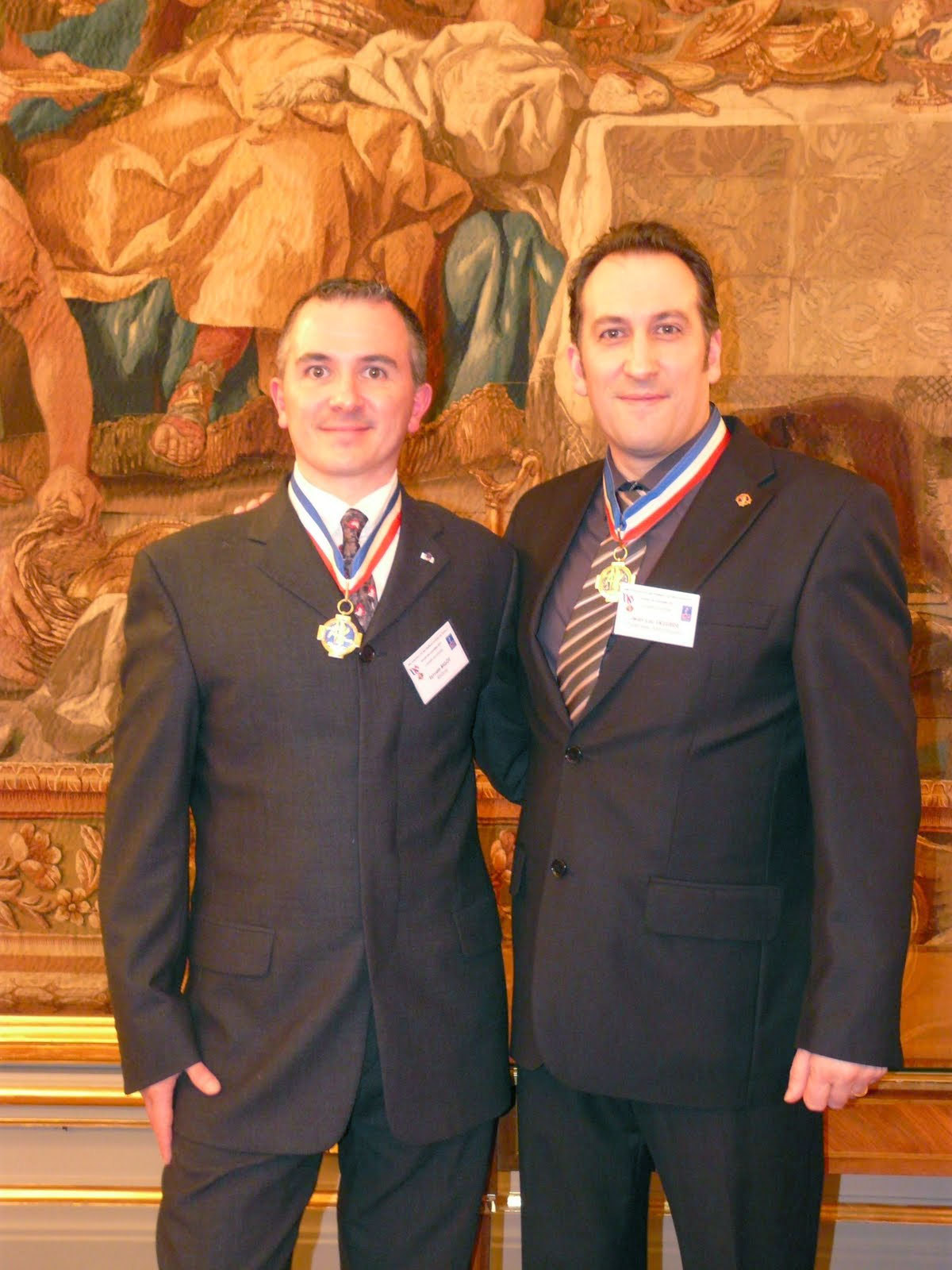
Il est présélectionné en 2010 pour le concours des Meilleurs Ouvriers de France, qu’il obtient en mai 2011 dans la classe lutherie-archèterie.
Cette distinction vient consacrer son savoir-faire et son haut niveau de maîtrise technique.
La même année, en décembre 2011, il est inscrit sur la liste des experts judiciaires près la Cour d’appel de Lyon et, depuis 2025, la Cour d’appel de Paris.
Dès 2010, il assiste Jean-François Raffin lors de ventes aux enchères, notamment à Vichy. En juin 2011, il intervient comme assistant sur la partie expertise aux côtés de Yannick Le Canu.
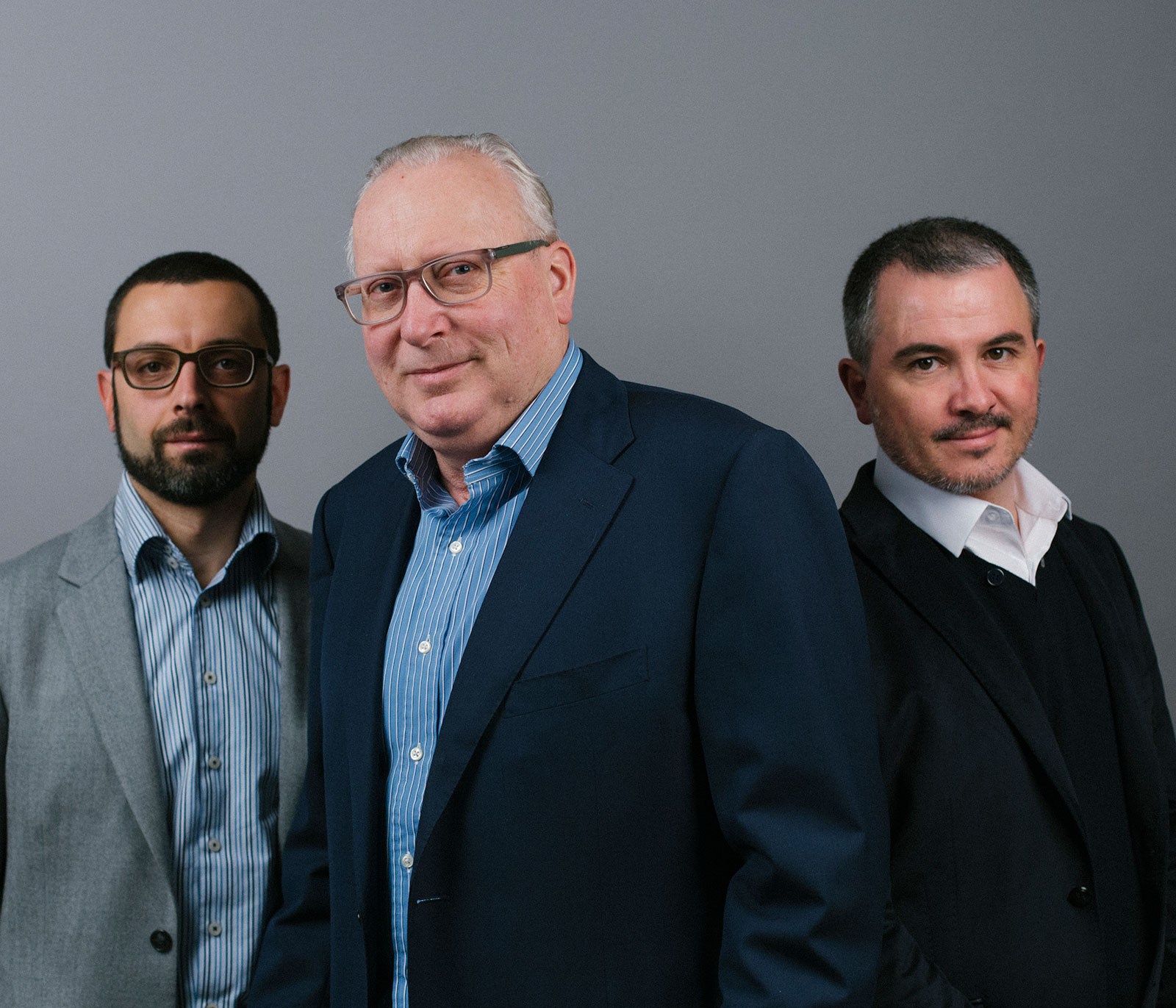
En 2012, il devient associé au sein de la SAS Cabinet d’archetiers experts Jean-François Raffin, aux côtés de Jean-François Raffin (président) et Yannick Le Canu (directeur général).
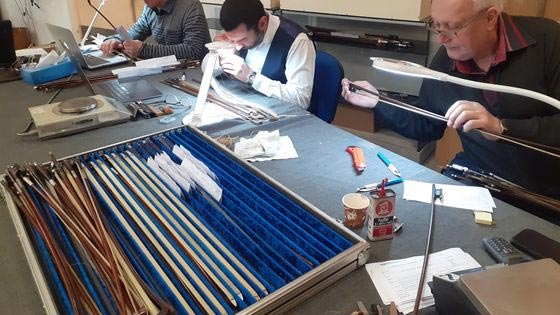
Cette activité se développe à l’international, avec des expertises régulières en Europe, aux États-Unis et en Asie. Elle comprend l’authentification, l’attribution et l’estimation des archets anciens, ainsi que l’étude de grandes collections, comme celle de Bernard Millant, dont la vente s’est tenue à Vichy Enchères entre 2017 et 2019.
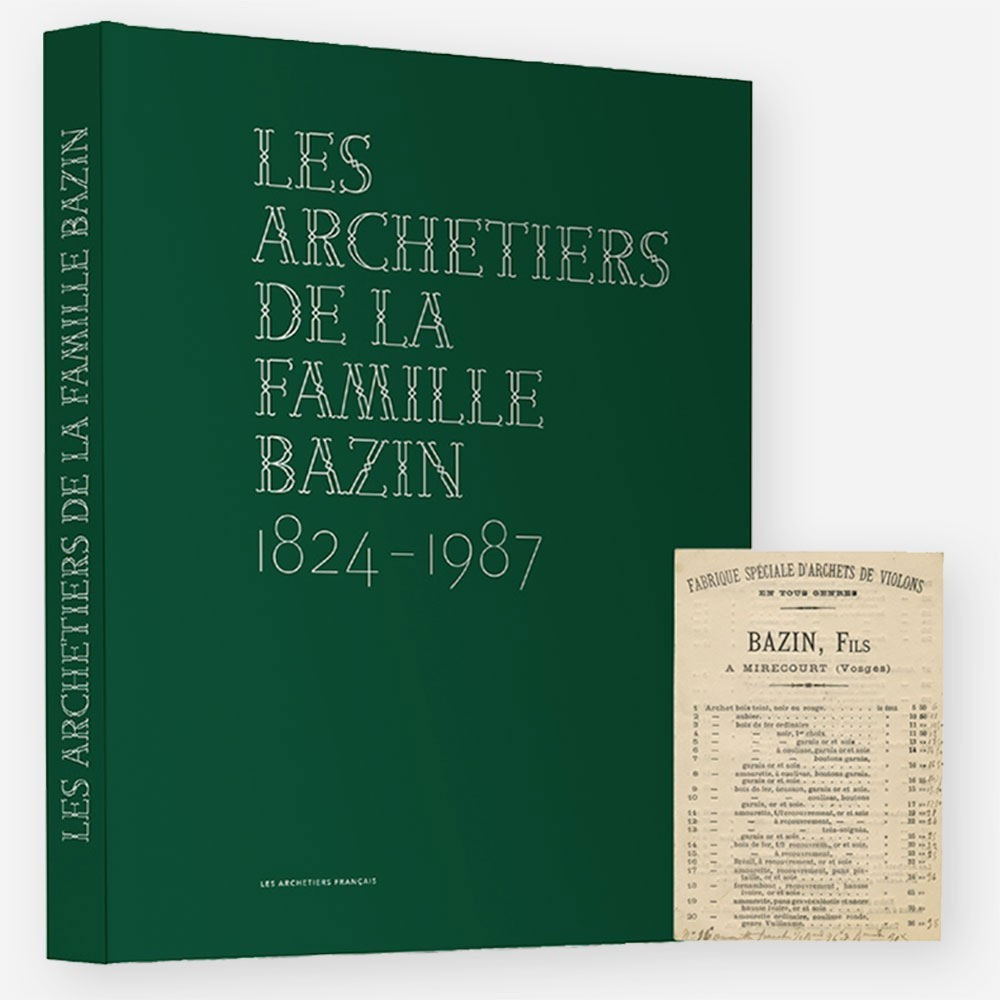
Sylvain Bigot participe également à plusieurs travaux de référence consacrés à l’archèterie. Il collabore à l’ouvrage L’Archet, publié en 2000, puis à celui consacré aux Archetiers de la famille Bazin : 1824-1987, paru en 2021 aux éditions Les Archetiers français, avec Jean-François Raffin et Yannick Le Canu. Ces publications s’inscrivent dans un travail de mise en forme et de synthèse des connaissances, en rassemblant et structurant des informations issues de l’étude des archetiers et de leurs productions.
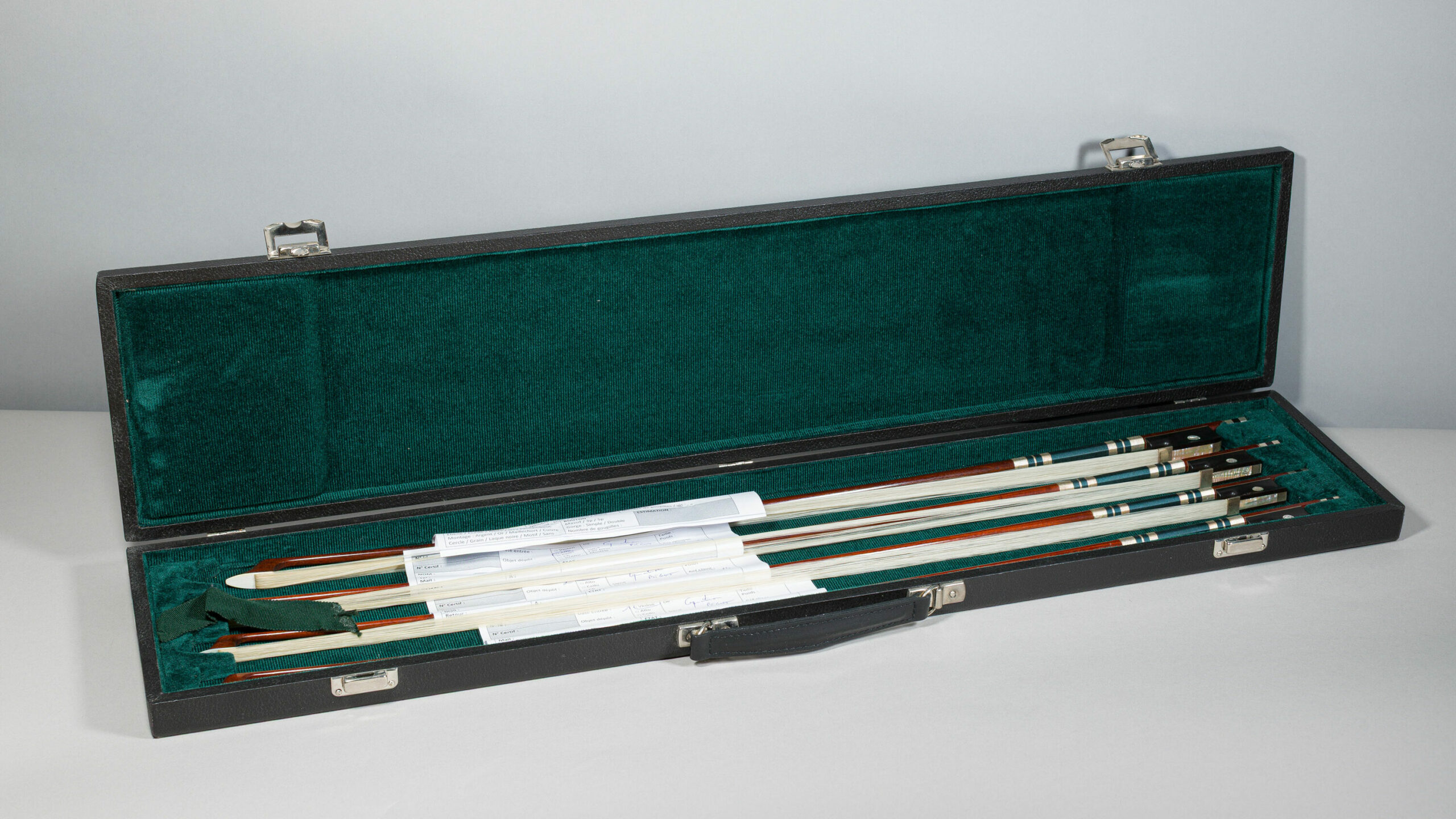
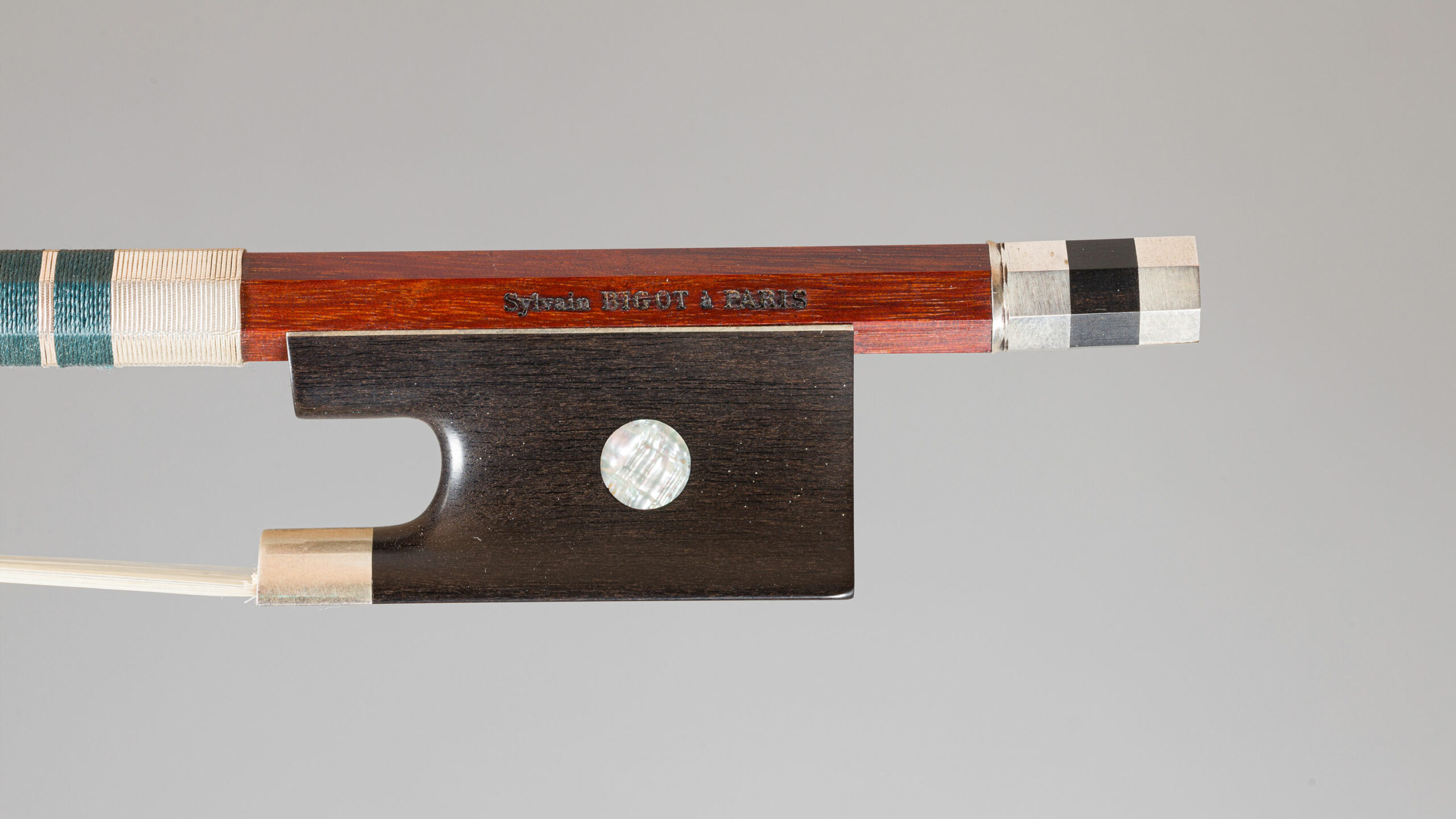
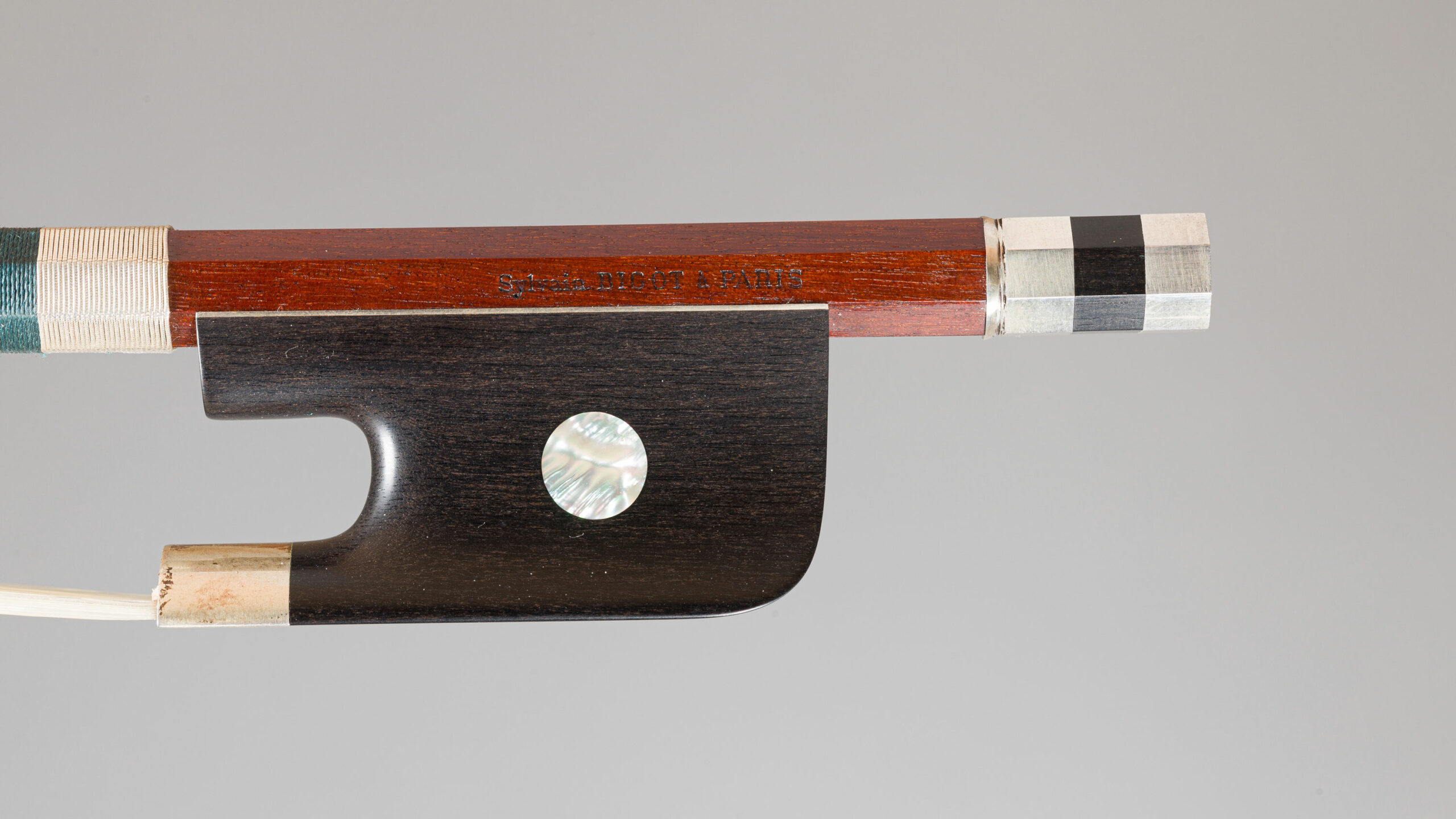
L’ensemble présenté à Vichy Enchères se compose de quatre archets – deux violons, un alto et un violoncelle – réalisés en 2002, en bois de pernambouc, montés argent, et conservés dans un état proche du neuf. Ils proviennent de la collection d’Hiroaki Okitsu et ont été commandés directement à Sylvain Bigot.
Comme il l’explique lui-même :
“Ce quatuor d’archets a été commandé en 2002 par Hiroaki Okitsu, pour sa collection. À l’époque, j’étais encore chez Jean-François Raffin. Comme c’est le cas dans beaucoup de commandes internationales, il m’a été demandé le modèle Peccatte qui parle à beaucoup de monde et qui est beaucoup apprécié à l’étranger.”
Entretien avec Sylvain Bigot, avril 2026
Cette commande s’inscrit dans un moment particulier. À la fin des années 1990 et au début des années 2000, la reproduction de modèles historiques – notamment français du XIXème siècle – commence à se développer dans certains ateliers, notamment chez Jean-François Raffin :
“C’était, à l’époque, encore relativement nouveau de se permettre de réaliser des archets inspirés des modèles français du milieu du XIXe siècle. C’est quelque chose qui a été développé ou redéveloppé justement chez Jean-François Raffin à partir de 1998-2000.”
Entretien avec Sylvain Bigot, avril 2026
Le choix du modèle Peccatte s’inscrit dans cette logique. Dominique Peccatte, figure majeure de l’archèterie du XIXème siècle, est associé à une esthétique reconnaissable. Ce modèle, largement diffusé, est aujourd’hui l’un des plus recherchés, notamment à l’étranger, où il reste une référence de l’archèterie française.
Dans le cas présent, ce modèle sert de base à un travail d’ensemble. Il permet de définir un vocabulaire commun qui peut être décliné de manière cohérente sur les différents instruments du quatuor. Comme le précise Sylvain Bigot :
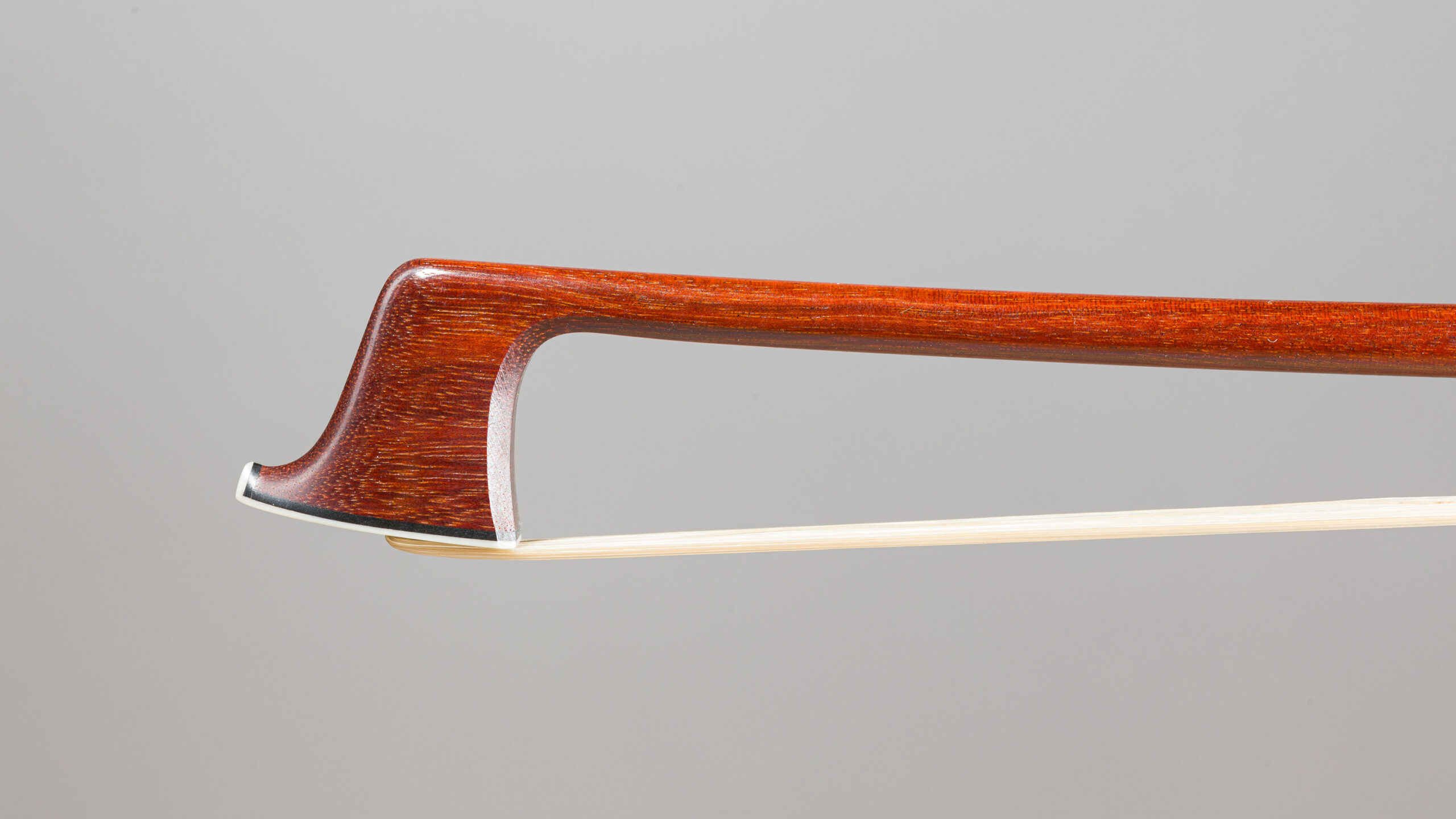
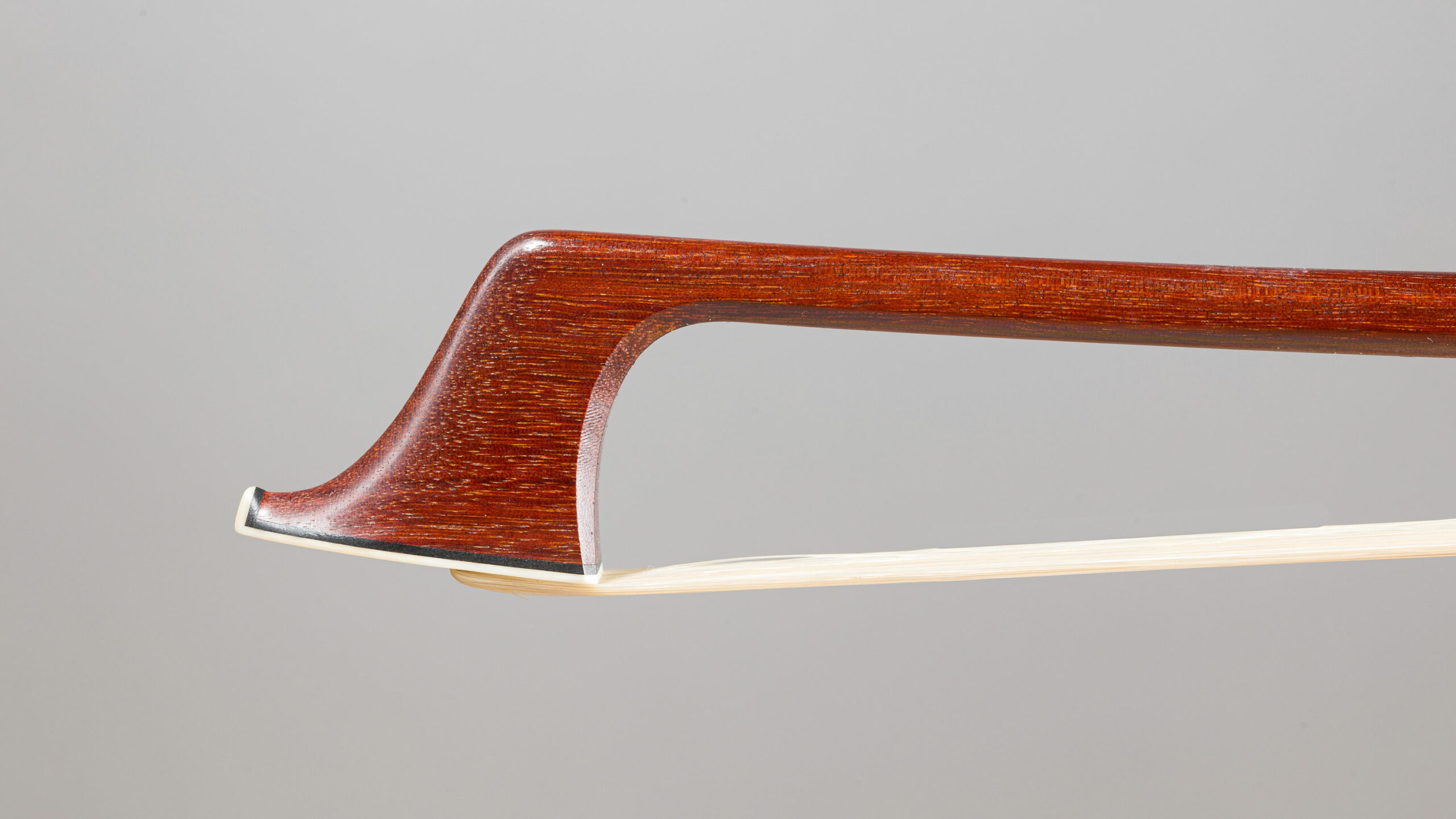
“On est principalement sur des têtes carrées sur le dessus, avec un dégorgement chez Peccatte qui ressemble un peu à l’avant d’un sabot. On a un travail des hausses à angle droit, avec une unité aussi dans le choix des nacres d’ormeau.”
Ces éléments participent à cette recherche d’unité. Ils ne sont pas traités isolément, mais comme des points de repère permettant d’assurer une continuité visuelle et structurelle entre les archets. Dans le cas d’un quatuor, cette cohérence devient essentielle.
“Pour des instruments appartenant à un quatuor, on cherche à avoir quatre baguettes identiques pour avoir une vraie unité. Le quatuor, c’est avant tout un travail très intéressant d’unité dans le style.”
Les quatre archets déclinent ainsi un même modèle sur le violon, l’alto et le violoncelle, en adaptant les proportions à chaque instrument tout en conservant une ligne commune. Les archets présentés se distinguent également par leur état de conservation, quasiment celui d’origine, puisque les instruments n’ont probablement jamais été joués.
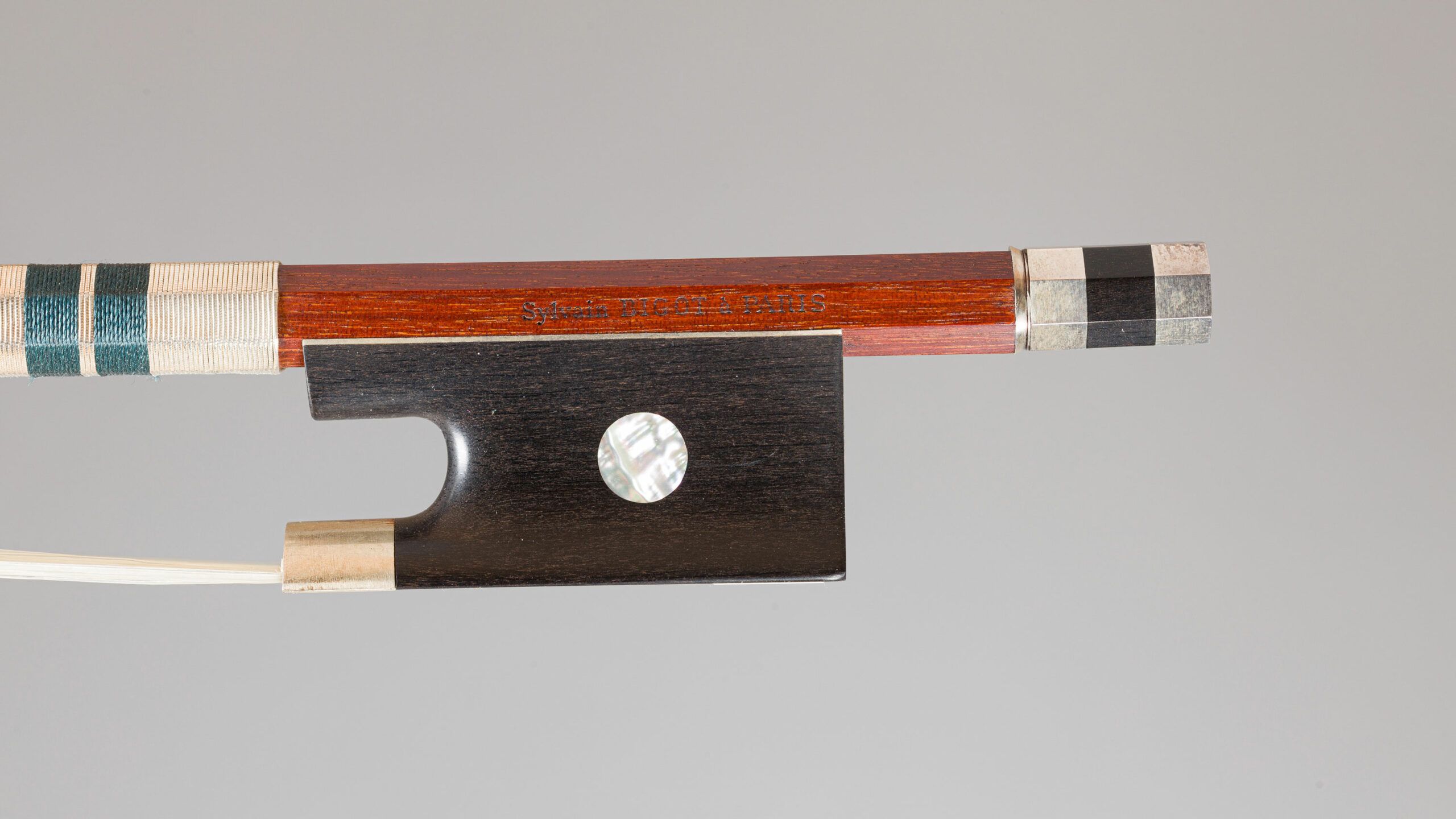
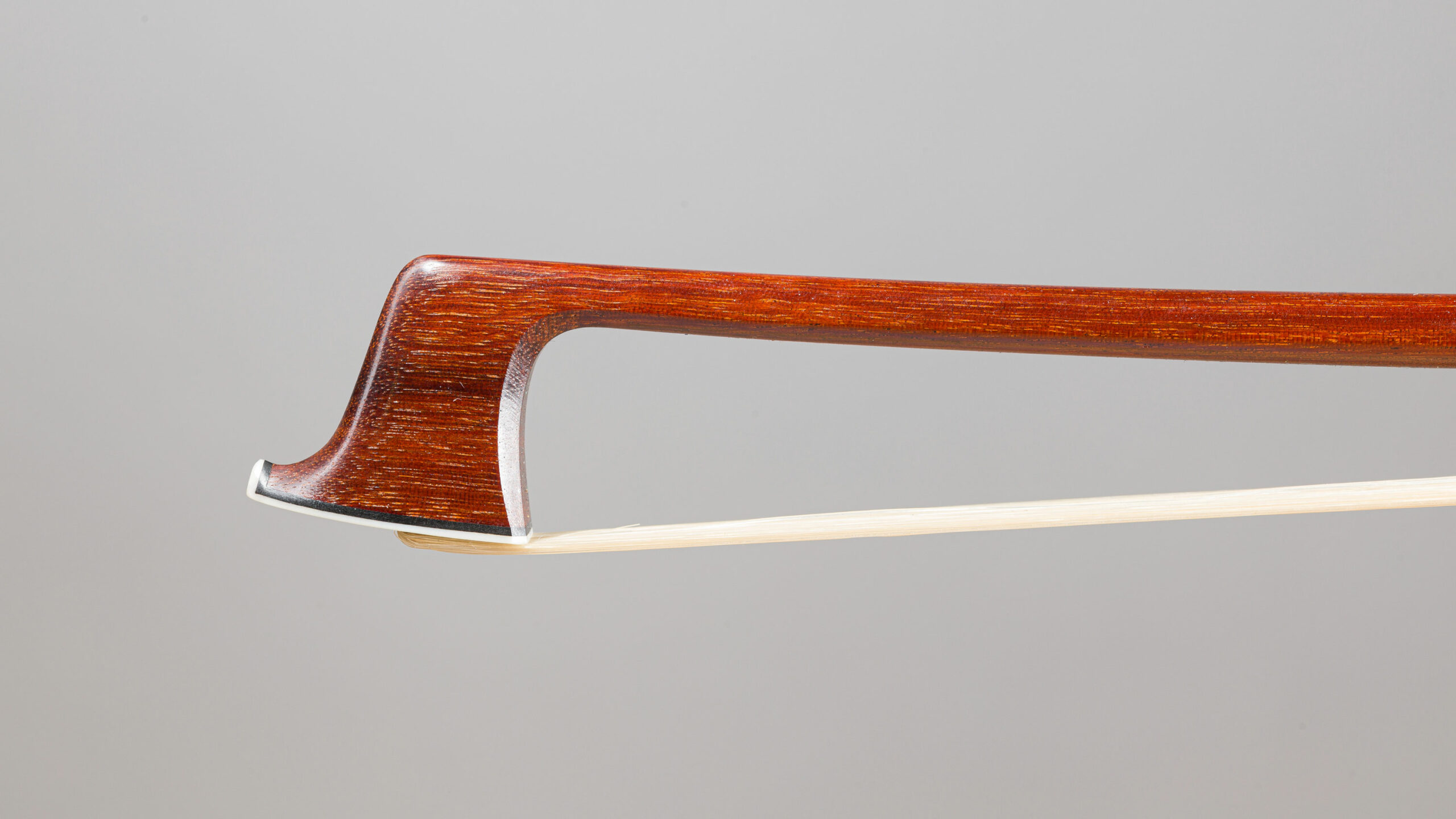
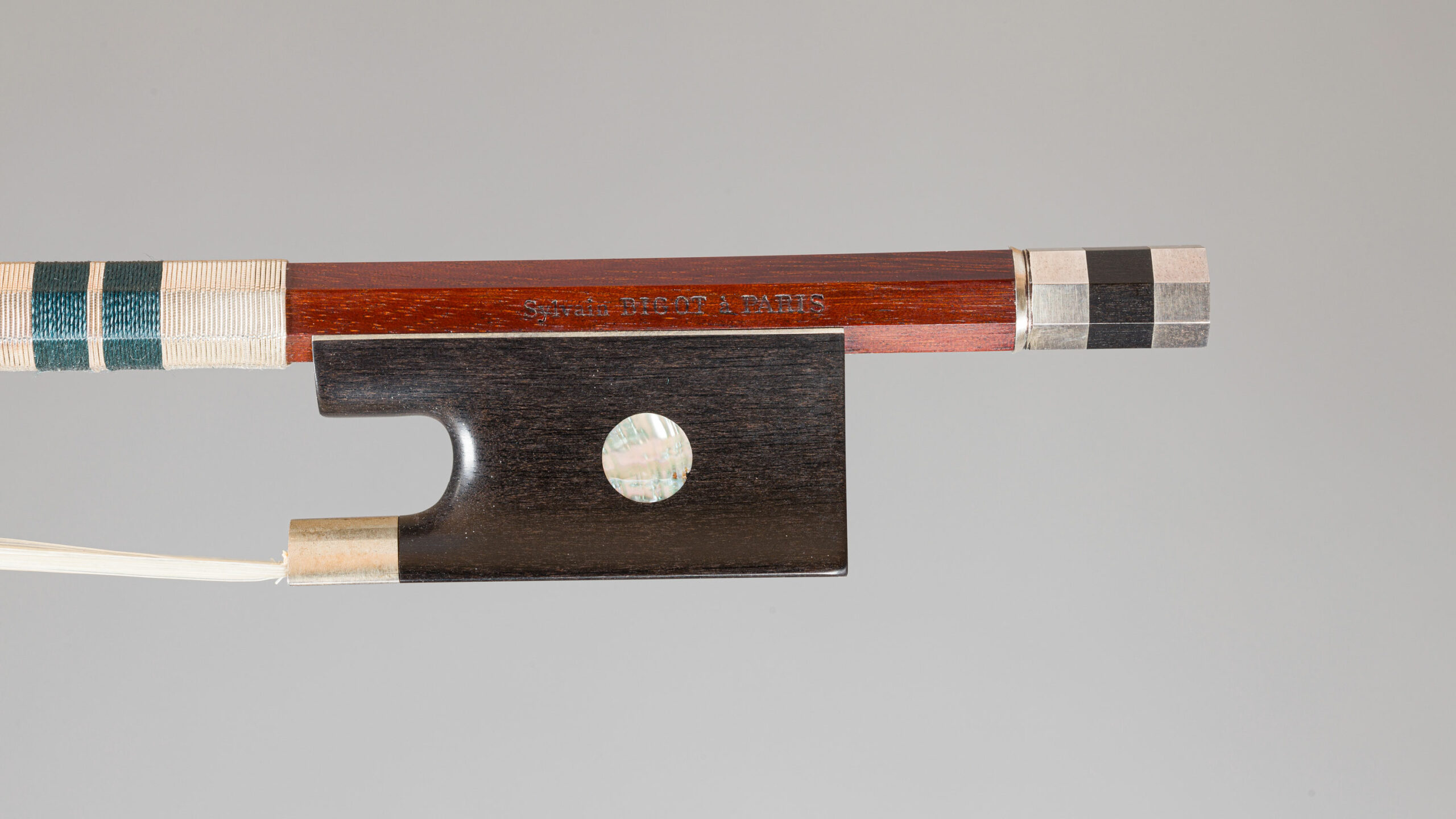
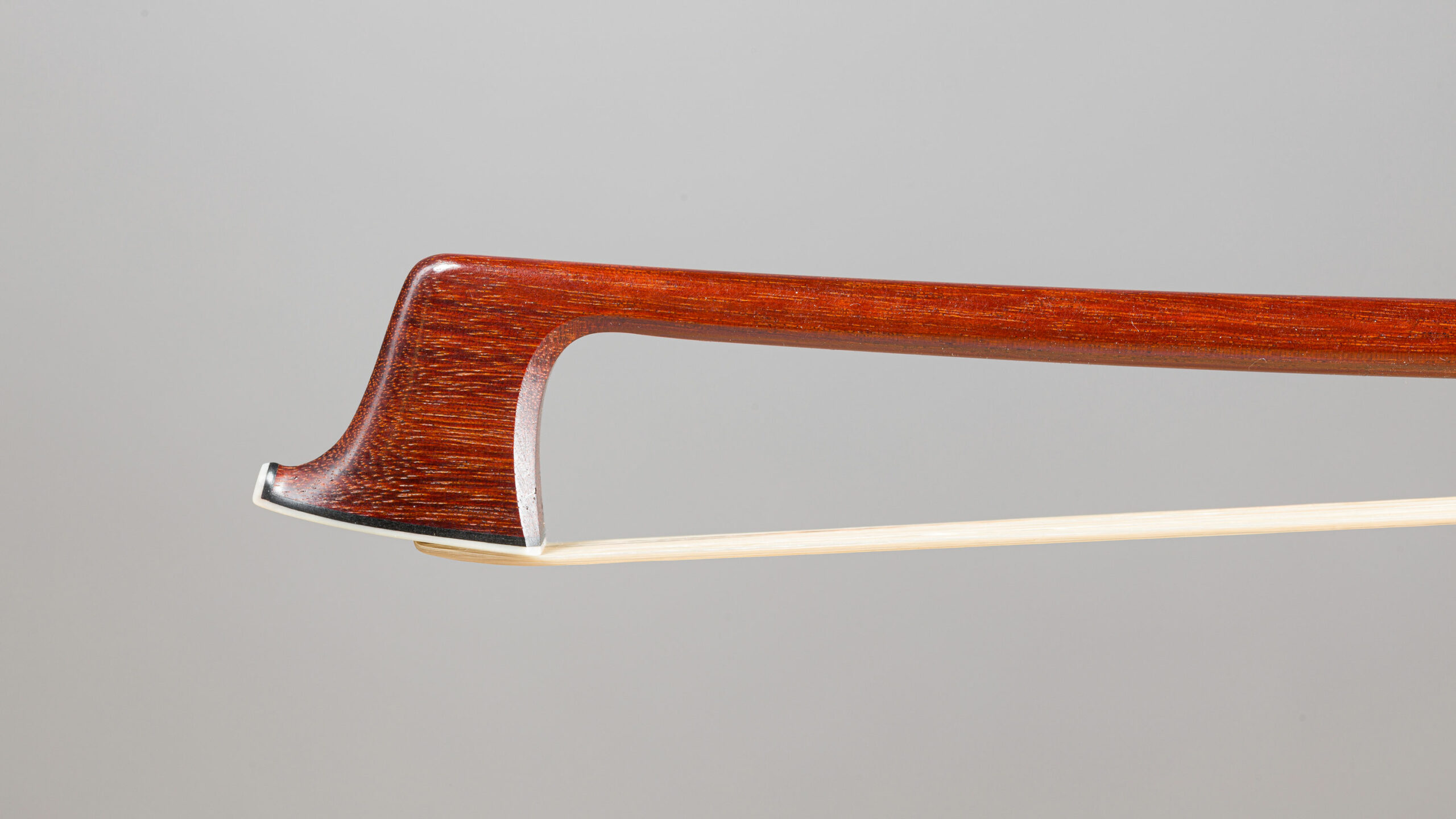
Le quatuor d’archets présenté à Vichy Enchères témoigne à la fois d’un moment précis de la carrière de Sylvain Bigot, mais également de son travail d’expertise fondé sur la connaissance des modèles historiques et la recherche de cohérence.
On 4 June 2026, Vichy Enchères will present a quartet of bows made by Sylvain Bigot in 2002. These remarkably well-preserved bows provide an opportunity to look back at the career of Sylvain Bigot, a bow maker now recognized as one of the leading specialists in this field, both for his making and restoration, as well as his appraisal work.
In 1987, Sylvain Bigot enrolled at the Jean-Baptiste Vuillaume national school of violin making in Mirecourt, where he received comprehensive training. In 1990, he earned a CAP and a Brevet de Technicien (both vocational qualifications in France) in instrument making, followed in 1992 by a Diplôme des Métiers d’Art (diploma in artistic crafts), for work undertaken on the tenor viola.
This training provided him with first-hand knowledge of stringed instruments and their inner workings, as well as with woodworking skills. He subsequently turned his attention to bow making, which was a natural step forward from the training he had received.
After completing his training, Sylvain Bigot began his career in Paris. He first worked in 1992 – 1993 as an assistant to the maker François Varcin, before joining Jean-François Raffin’s workshop in September 1993, where he remained until December 2002.
For nearly ten years, he honed his craft by making and restoring bows, while also developing his appraisal skills.
These years with Jean-François Raffin allowed him to study a large number of bows, compare their features and construction, and gradually sharpen his eye. In parallel, from 1996, he contributed to the publication L’Archet, written by Bernard Millant and Jean-François Raffin. This reference work, which is the fruit of the study, recording and documentation of examples, enriched and strengthened his expertise.
In February 2003, Sylvain Bigot set up on his own in Lyon. There, he developed his bow-making activity, making, restoring and rehairing bows.
From the very beginning, he also occasionally taught, by getting involved with the professional community. He was by then a member of the GLAAF, which he joined in 1997, and served as its vice-secretary from 2000 to 2004, while also presiding over the Amis de l’Ecole de Lutherie de Mirecourt association from 2001 to 2004.
Alongside his making, restoration and appraisal work, he developed a publishing activity with Jean-François Raffin, Yannick Le Canu, Arthur Dubroca and Lothair Mabru, culminating in 2015 with the creation of the imprint « Les Archetiers Français« , whose purpose is to publish reference works on bow making.
Sylvain Bigot’s career is marked by numerous accolades. In December 1999, he won a silver medal at the international violin and bow making competition in Paris.
He was shortlisted in 2010 for the Meilleurs Ouvriers de France competition, which he won in May 2011 in the violin and bow making section.
This distinction denoted his expertise and excellent craftsmanship.
That same year, in December 2011, he was registered on the list of court-appointed experts for the Court of Appeal of Lyon and, since 2025, for the Court of Appeal of Paris.
As early as 2010, he assisted Jean-François Raffin at auctions, in particular in Vichy. In June 2011, he started working as an assistant on the appraisal side alongside Yannick Le Canu.
In 2012, he became a partner in the firm SAS Cabinet d’archetiers experts Jean-François Raffin, alongside Jean-François Raffin (President) and Yannick Le Canu (Managing Director).
This activity expanded internationally, with periodic appraisals carried out in Europe, the United States and Asia. It encompasses the authentication, attribution and valuation of antique bows, as well as the assessment of major collections, such as that of Bernard Millant, whose sale took place at Vichy Enchères between 2017 and 2019.
Sylvain Bigot also contributed to several reference works on bow making. He contributed to the work L’Archet, published in 2000, and then on the one dedicated to the Archetiers de la famille Bazin: 1824 – 1987, published in 2021 by Les Archetiers français, with Jean-François Raffin and Yannick Le Canu. These publications are part of an effort to organize and synthesize knowledge, by gathering and structuring information obtained from the study of bow makers and their work.
The set presented at Vichy Enchères includes four bows – two for violins, one for viola and one for cello – made in 2002 from pernambuco wood, silver mounted, and preserved in near-mint condition. They originate from the collection of Hiroaki Okitsu and were commissioned directly from Sylvain Bigot.
As he explains himself:
“This quartet of bows was commissioned in 2002 by Hiroaki Okitsu for his collection. At the time, I was still working for Jean-François Raffin. As is often the case with international commissions, I was asked to make them on the Peccatte model, which resonates with many people and is highly regarded abroad.”
Interview with Sylvain Bigot, April 2026
This commission belongs to a particular time period. In the late 1990s and early 2000s, the reproduction of historical examples – particularly 19th-century French models – began to develop in certain workshops, in particular that of Jean-François Raffin:
“At the time, the idea of creating bows inspired by mid-19th-century French models was still in its infancy. This is indeed something that initiated, or was revived, in Jean-François Raffin’s workshop from 1998 – 2000 onwards.”
Interview with Sylvain Bigot, April 2026
The choice of the Peccatte model is consistent with this approach. Dominique Peccatte, a major figure in 19th-century bow making, had a distinctive style. His model, which is widespread, is now one of the most sought-after, particularly abroad, where it remains emblematic of French bow making.
In this instance, this model served as a guideline for the work overall. It allowed to have a common understanding from which the bows for the different quartet instruments could be consistently derived. As Sylvain Bigot explains:
“We are primarily working with square heads at the top, and with a cutaway with Peccatte that somewhat resembles the front of a hoof. The frogs are worked at right angles, with a unity further reinforced by the choice of abalone shell.”
These elements contribute to the sense of cohesion. They are not treated in isolation, but as markers which ensure continuity between the bows from a visual and construction point of view. In the case of a quartet, this coherence becomes essential.
“For instruments belonging to a quartet, we aim for four identical bows to achieve true unity. The quartet is, above all, a very interesting exercise in stylistic unity.”
The four bows therefore replicate the same model for the violin, viola and cello, with adjustments made to the proportions for each instrument, while remaining true to the common design. The bows presented are also notable for their state of preservation: they are virtually in their original condition, since they have probably never been played.
The quartet of bows presented at Vichy Enchères attests to both a specific moment in Sylvain Bigot’s career, and his appraisal work underpinned by knowledge of historical models and the pursuit of coherence.